
Real estate agents in 2025 face a marketing world that changes faster than ever. Eight years ago, almost no buyers used digital tools, but now 97% of homebuyers start their search online, according to the National Association of Realtors. That sounds like a golden opportunity, right? Not so fast. Because trust in agents is falling even as digital demand soars. The top challenges ahead are nothing like what agents have seen before.
Table of Contents
- Evolving Market Trends Impacting Marketing
- Building Trust And Standing Out Online
- Adapting To New Real Estate Technologies
- Effective Lead Generation And Conversion Strategies
Quick Summary
| Takeaway | Explanation |
|---|---|
| Leverage digital marketing strategies effectively | Agents must create engaging online experiences like virtual tours to meet buyer expectations. |
| Utilize data analytics for informed decisions | Advanced data-driven tools help agents predict market trends and tailor marketing strategies accordingly. |
| Establish authenticity and trust online | Developing a transparent online persona through genuine content can rebuild client trust in agents. |
| Implement robust technology and cybersecurity measures | Agents must integrate effective tech solutions while managing cybersecurity risks to protect client information. |
| Focus on multi-channel engagement strategies | Agents should create seamless communication across platforms to nurture leads and enhance client interactions. |
Evolving Market Trends Impacting Marketing
The real estate marketing landscape continues to transform at an unprecedented pace, presenting agents with complex challenges that demand innovative strategies. Understanding these evolving market trends becomes crucial for agents seeking to maintain a competitive edge and effectively connect with potential clients.
Digital Transformation in Property Marketing
The digital revolution has fundamentally reshaped how real estate marketing operates. Research from the National Association of Realtors reveals that 97% of homebuyers now use the internet as their primary search platform, underscoring the critical importance of robust digital marketing strategies. Agents must now navigate a multifaceted digital ecosystem that extends far beyond traditional advertising methods.
Agents are experiencing significant shifts in consumer behavior, with potential buyers expecting immersive, technology-driven experiences. Virtual tours, augmented reality property previews, and sophisticated online listings have become standard expectations rather than optional extras. The ability to create compelling digital narratives about properties has become as important as the physical attributes of the real estate itself.
Data-Driven Marketing Intelligence
Advanced data analytics are revolutionizing real estate marketing approaches. A groundbreaking study on housing market forecasting introduces sophisticated indices that enable agents to predict market trends with unprecedented accuracy. These emerging analytical tools allow agents to develop targeted marketing strategies based on granular insights into home showing events and potential buyer behaviors.
The integration of artificial intelligence and machine learning technologies enables agents to segment audiences more precisely, personalize communication, and anticipate market movements. Predictive analytics now help agents understand not just where the market is, but where it is likely to move, transforming marketing from a reactive to a proactive discipline.
Hyper-Personalized Communication Strategies
Consumer expectations have dramatically shifted towards personalized, immediate interactions. Modern real estate marketing requires agents to develop nuanced communication strategies that speak directly to individual client needs. This means moving beyond generic messaging and creating tailored content that resonates with specific demographic segments.
Multi-channel communication has become essential, with potential clients expecting seamless interactions across platforms. Learn more about advanced lead communication techniques that leverage AI-driven technologies to enhance response rates and client engagement. Successful agents will be those who can blend high-tech solutions with a human-centric approach, creating meaningful connections in an increasingly digital marketplace.
These evolving trends demonstrate that real estate marketing in 2025 is no longer about simply listing properties. It is about creating comprehensive, intelligent, and deeply personalized experiences that connect potential buyers with their future homes through sophisticated, data-driven strategies.
To clarify the main evolutions in real estate marketing trends described above, here’s a summary table outlining each trend and its impact on agents:
| Trend | Description | Impact for Agents |
|---|---|---|
| Digital Transformation | Shift to online platforms, virtual tours, immersive experiences | Need to create engaging, tech-enabled marketing experiences |
| Data-Driven Marketing Intelligence | Use of analytics, AI, and predictive tools | Enables precise targeting and proactive strategy adjustments |
| Hyper-Personalized Communication | Custom, client-focused messaging and multi-channel interactions | Increases engagement and expectations for individualized care |
Building Trust and Standing Out Online
In the increasingly competitive real estate marketing landscape, agents face unprecedented challenges in establishing credibility and differentiating themselves online. Recent research from Housing Wire highlights a concerning trend: while 91% of home sellers still plan to use real estate agents, trust levels have declined from 81% to just 70% in the past year, signaling a critical need for agents to rebuild their professional reputation.
Authenticity in Digital Representation
Digital platforms have transformed how potential clients perceive and evaluate real estate professionals. Agents must now craft a compelling online persona that goes beyond traditional marketing tactics. This means developing a transparent, consistent, and genuine digital presence that demonstrates expertise, integrity, and real human connection.
Successful online representation involves strategic content creation that showcases professional knowledge, market insights, and personal commitment. Video content, client testimonials, and detailed market analysis posts can help agents establish themselves as trusted local experts. The goal is to create a digital narrative that resonates with potential clients, showing them that you understand their unique needs and challenges.

Technology as a Trust-Building Tool
Research from LinkedIn indicates that emerging technologies like AI and blockchain are reshaping real estate transactions, potentially marginalizing agents who fail to adapt. Agents must leverage technology not as a replacement for human interaction, but as a sophisticated tool to enhance client experience and demonstrate professional competence.
Advanced communication platforms, AI-driven lead qualification systems, and transparent transaction tracking can significantly boost client confidence. Learn more about advanced lead communication strategies that help agents maintain consistent, personalized interactions throughout the client journey. By integrating cutting-edge technologies, agents can show they are forward-thinking professionals committed to providing exceptional service.
Transparent and Personalized Client Engagement
Modern clients expect more than transactional interactions. They seek agents who offer genuine guidance, demonstrate deep market understanding, and provide personalized support. This requires developing multi-channel communication strategies that prioritize responsiveness, clarity, and emotional intelligence.
Agents must be prepared to offer comprehensive, transparent information about market conditions, property details, and potential investment risks. Proactive communication, regular updates, and a willingness to address client concerns directly can help build the trust that is increasingly difficult to establish in the digital age.
Standing out online is no longer about having the most aggressive marketing approach. It is about creating meaningful connections, demonstrating genuine expertise, and showing potential clients that you are a reliable partner in their real estate journey. Success in 2025 will belong to agents who can seamlessly blend technological sophistication with authentic human connection.
Adapting to New Real Estate Technologies
The real estate industry stands at a critical technological crossroads, where adaptation is no longer optional but essential for survival. Research from a systematic review reveals that over 50% of real estate websites demonstrate significant technological improvement opportunities, highlighting the urgent need for agents to embrace digital transformation.
Navigating Technological Complexity
Technological adoption in real estate presents multifaceted challenges that extend far beyond simple software implementation. A comprehensive study identifies key obstacles including executive confusion about digital concepts, complex data source management, professional digital talent shortages, and organizational structural inefficiencies.
Agents must develop a strategic approach to technology integration that goes beyond surface-level implementations. This requires a holistic understanding of how emerging technologies can streamline operations, enhance client experiences, and provide competitive advantages. Learn more about AI-powered real estate tools that can transform traditional marketing approaches and operational workflows.
Cybersecurity and Digital Risk Management
Emerging research on real estate technology highlights critical challenges in digital transformation, particularly around cybersecurity risks. Online transactions, digital communications, and integrated systems introduce potential vulnerabilities that agents must proactively address.
Successful technology adaptation requires a comprehensive approach to digital risk management. This involves implementing robust security protocols, understanding potential technological vulnerabilities, and developing sophisticated strategies to protect client data and transaction integrity. Agents must become not just technology users, but technology guardians who can navigate complex digital landscapes with confidence and expertise.
Strategic Technology Integration
Effective technology adoption is not about implementing every available tool, but about strategically selecting technologies that genuinely enhance professional capabilities. Real estate agents must become discerning technology strategists, carefully evaluating how each digital solution contributes to their core business objectives.
This requires continuous learning, an openness to experimentation, and a willingness to invest in professional development. Agents who can successfully blend traditional real estate expertise with cutting-edge technological capabilities will be best positioned to thrive in an increasingly digital marketplace.
The future of real estate marketing belongs to professionals who view technology not as a threat, but as a powerful ally. By embracing digital transformation with strategic insight, agents can unlock unprecedented opportunities for growth, efficiency, and client satisfaction.
To help visualize the main technology challenges described, here’s a table summarizing key obstacles and actions for agents:
| Key Technological Challenge | Description | Required Agent Action |
|---|---|---|
| Executive Confusion | Unclear understanding of digital concepts among leadership | Invest in digital literacy and education |
| Complex Data Source Management | Difficulty managing multiple, disparate digital data sources | Adopt central, integrated data management solutions |
| Digital Talent Shortages | Lack of skilled professionals in technology | Seek ongoing training and recruit tech-savvy staff |
| Organizational Structural Inefficiencies | Outdated business models and workflows | Redesign processes for digital adaptability and efficiency |
| Cybersecurity Risks | Increased risk of data breaches with digital systems | Implement robust cyber risk management protocols |
Effective Lead Generation and Conversion Strategies
The real estate marketing landscape in 2025 demands sophisticated lead generation and conversion strategies that go beyond traditional approaches. Research from the National Association of Realtors reveals a stark reality: average lead conversion rates range between 4% and 12%, meaning for every 1,000 leads, only 40 to 120 potentially become buyers. This statistical insight underscores the critical need for agents to revolutionize their lead management techniques.
Precision Lead Qualification
A comprehensive survey by REsimpli highlights that one real estate deal emerges from every 66 leads, emphasizing the importance of targeted, efficient lead qualification processes. Agents must develop advanced filtering mechanisms that quickly identify high-potential prospects and allocate resources strategically.
Successful lead qualification requires a multi-dimensional approach. This involves leveraging data analytics, understanding client behavior patterns, and creating segmented communication strategies. Learn more about converting high-quality real estate leads to optimize your conversion funnel and maximize return on marketing investments.
Visual Marketing and Online Engagement
Research from Virtuance emphasizes the critical role of visual content in attracting qualified leads. Real estate professionals must prioritize creating immersive, high-quality visual experiences that capture potential buyers’ attention and differentiate listings in a crowded digital marketplace.
This means investing in professional photography, creating compelling video walkthroughs, developing interactive 3D property tours, and crafting narrative-driven content that goes beyond traditional property descriptions. The goal is to transform passive browsing into active engagement, compelling potential buyers to take the next step in their property journey.
Omnichannel Lead Nurturing
Modern lead generation demands a holistic, integrated approach that seamlessly connects multiple communication channels. Agents must develop sophisticated nurturing strategies that provide personalized, timely, and relevant interactions across digital platforms.
This requires implementing advanced communication technologies that enable rapid, contextual responses, track client interactions comprehensively, and create a seamless experience from initial contact through property acquisition. Successful agents will be those who can blend technological efficiency with genuine, empathetic communication.
The future of lead generation in real estate is not about quantity, but about creating meaningful, targeted connections that transform potential interest into confirmed transactions. By embracing data-driven strategies, leveraging advanced technologies, and maintaining a client-centric approach, agents can significantly improve their lead conversion rates and build sustainable business growth.
To put lead generation metrics into perspective, the following table outlines key statistics mentioned for agent reference:
| Metric | Value/Statistic | Source/Explanation |
|---|---|---|
| % Buyers Starting Online | 97% | NAR, almost all buyers use internet for search |
| Lead Conversion Rate Range | 4% – 12% | 1,000 leads = 40–120 buyers |
| Deals per Leads | 1 deal for every 66 leads | REsimpli survey |
| Sellers Planning to Use Agents | 91% | Housing Wire, 2025 trend |
| Agent Trust Level Decline | Dropped from 81% to 70% in one year | Housing Wire, shows trust issue |
Frequently Asked Questions
What are the biggest challenges for real estate agents in 2025?
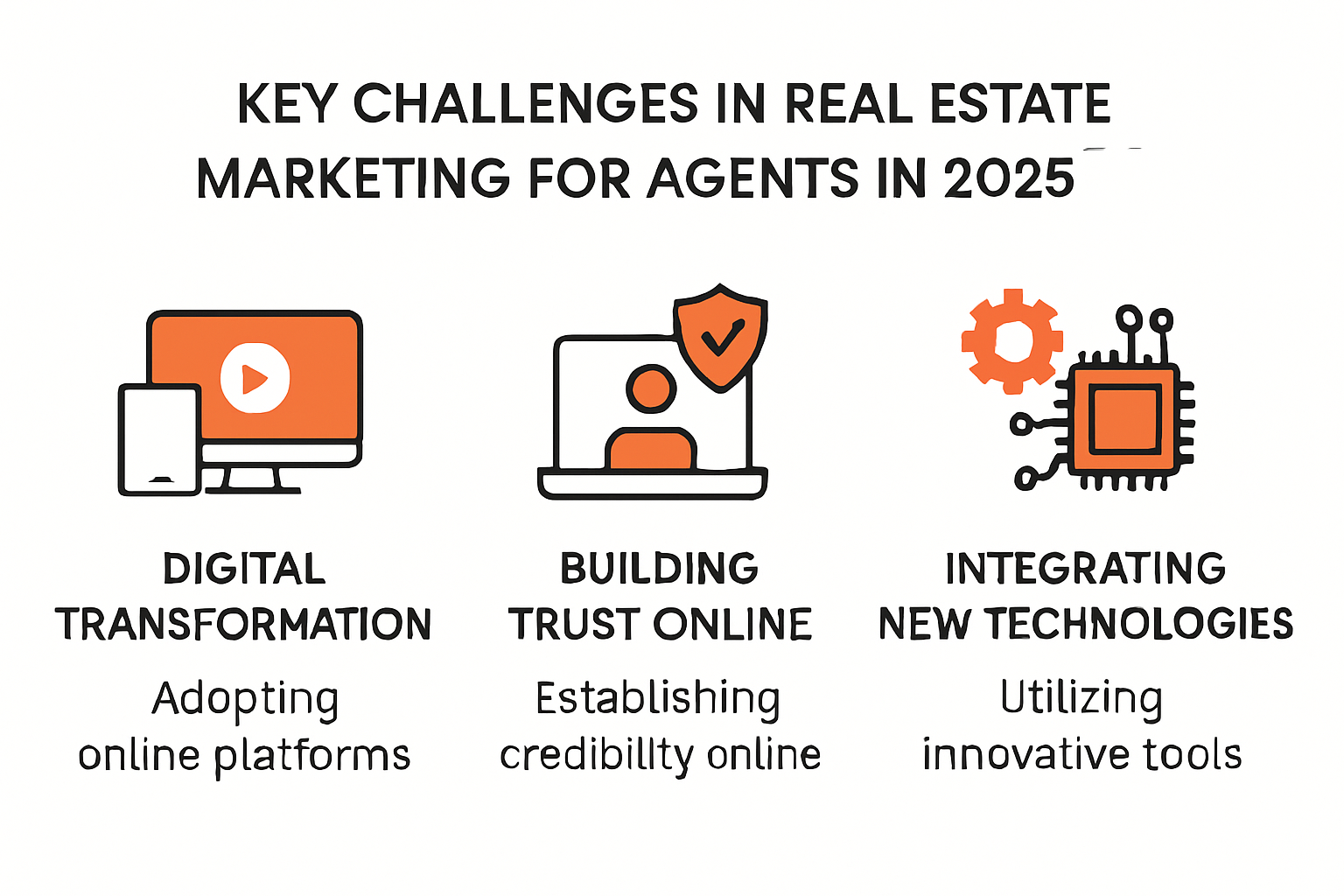
The major challenges include adapting to rapid digital transformation, building trust with clients, managing cybersecurity risks, and developing effective lead generation strategies.
How important is digital marketing for real estate agents today?
Digital marketing is crucial as 97% of homebuyers start their search online, making it essential for agents to leverage engaging online experiences and data-driven strategies.
How can real estate agents build trust online?
Agents can build trust by crafting authentic online personas, providing transparent client engagement, and showcasing expertise through valuable content like videos and testimonials.
What role does technology play in real estate marketing?
Technology plays a significant role by enabling precise data analytics, enhancing lead qualification, and facilitating personalized communication, all of which are essential for effective marketing strategies.
Ready to Overcome 2025’s Real Estate Marketing Challenges?
Are you struggling with missed leads, slow responses, and declining client trust as digital competition grows? The article above highlights how fast-changing technology, shifting buyer expectations, and the urgent need for smarter lead conversion strategies are transforming real estate. You should not lose valuable prospects to slow replies or overwhelming manual follow-ups. The pain of seeing qualified buyers slip away is real, especially when every minute counts in today’s market.

The smartest agents are transforming their approach by automating lead qualification, instant responses, and appointment bookings across every digital channel. Experience how easy it can be to nurture leads, boost your conversion rates, and build lasting client trust—all without extra staff or late nights. See proven results and testimonials from successful agents who have already reduced response times and grown their business with LeadLinker.co. Ready to turn every inquiry into a real opportunity? Start your journey today at LeadLinker.co and discover the power of AI-driven real estate marketing.