
Building a real estate team sounds like a big leap. There are more roles and tech options than ever before and the competition is fierce. But the real shock is that 91% of realtors already use social media for lead generation. This means just having a team or adopting the latest tools is not enough if you want to stand out. The real secret to success is in the way teams are structured and how each member is strategically trained and equipped for the fast-changing market.
Table of Contents
- Key Roles And Responsibilities In A Real Estate Team
- Steps To Recruit And Train Top Talent
- Best Team Structures For Real Estate Growth
- Effective Lead Generation And Marketing Strategies
Quick Summary
| Takeaway | Explanation |
|---|---|
| Establish clear leadership roles | Strong leadership is essential for setting vision and empowering team members. Ensure performance standards are well-defined for effective management. |
| Focus on specialized team roles | Designate roles like Transaction Coordinator and Lead Generation Specialist to streamline operations and enhance client satisfaction in your real estate team. |
| Invest in ongoing training and development | Provide continuous professional development to adapt to market changes and improve team members’ skills, fostering long-term success. |
| Utilize targeted recruitment strategies | Expand recruitment efforts beyond traditional methods, employing partnerships and internships to attract top talent to your team. |
| Leverage digital marketing and client engagement | Employ advanced lead generation techniques using digital marketing, personalized communication, and technology to build efficient client relationships. |
Key Roles and Responsibilities in a Real Estate Team
Building a successful real estate team requires strategic planning and a clear understanding of the essential roles that drive business growth. Each team member plays a critical part in creating a cohesive and high-performing unit that can effectively serve clients and generate revenue.
Leadership and Strategic Management
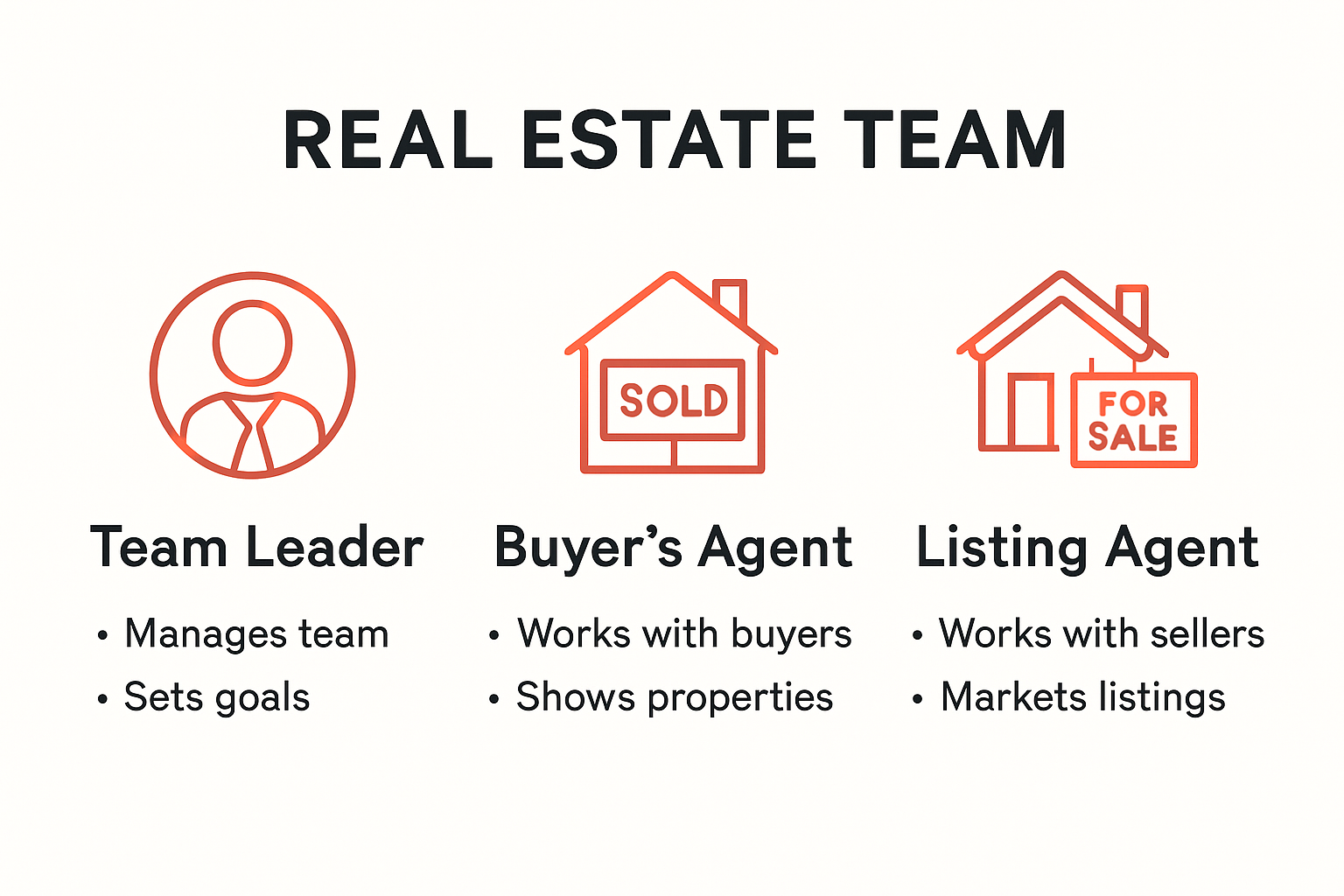
At the core of any successful real estate team is strong leadership. The team leader or broker is responsible for setting the overall vision, establishing performance standards, and creating a supportive environment that enables team members to excel. Learn more about effective team management strategies.
According to research from Colliers International, effective real estate teams require a multifaceted approach to team management. Key leadership responsibilities include:
- Strategic Planning: Developing long-term business goals and creating actionable roadmaps
- Performance Monitoring: Tracking individual and team metrics
- Resource Allocation: Ensuring team members have necessary tools and support
- Training and Development: Continuously improving team skills and knowledge
Specialized Team Roles
A comprehensive real estate team typically includes several specialized roles that work together to streamline operations and maximize client satisfaction. Research from AKADALearn highlights the critical responsibilities of different team members:
Transaction Coordinator: Manages the administrative aspects of real estate transactions, including document preparation, communication with clients, and ensuring compliance with legal requirements. This role is crucial in maintaining smooth and efficient transaction processes.
Lead Generation Specialist: Focuses on attracting and nurturing potential clients through various marketing channels. This team member uses targeted strategies to identify and engage prospects, ultimately supporting the team’s growth and revenue generation.
Client Relations Manager: Serves as the primary point of contact for existing and potential clients. This role involves building and maintaining relationships, providing exceptional customer service, and ensuring client satisfaction throughout the entire real estate journey.
Marketing Coordinator: Develops and implements comprehensive marketing strategies to promote listings, build brand awareness, and attract potential clients. This includes creating digital content, managing social media platforms, and coordinating professional photography and virtual tours.
By carefully defining and supporting these roles, real estate teams can create a dynamic and efficient operational structure that maximizes productivity and client satisfaction. The key is to ensure clear communication, mutual support, and a shared commitment to achieving team and individual goals.
Successful real estate teams recognize that each role is interconnected and contributes to the overall success of the organization. Investing in team development, providing ongoing training, and fostering a collaborative environment are essential strategies for building a high-performing real estate team in 2025 and beyond.
Here is a table summarizing key specialized roles in a real estate team and their primary responsibilities:
| Role | Main Responsibilities |
|---|---|
| Transaction Coordinator | Manages paperwork, client communication, and compliance with legal requirements for smooth transactions. |
| Lead Generation Specialist | Attracts and nurtures prospects, implements marketing strategies, and drives revenue growth. |
| Client Relations Manager | Builds/maintains relationships, ensures client satisfaction, and provides exceptional customer service. |
| Marketing Coordinator | Plans and executes marketing campaigns, manages digital content, and promotes listings/brand. |
Steps to Recruit and Train Top Talent

Recruiting and training top talent represents a critical strategic process for real estate teams seeking sustainable growth and competitive advantage in 2025. Success hinges on developing a comprehensive approach that attracts, develops, and retains exceptional professionals who can drive business performance.
Strategic Talent Acquisition
Effective talent recruitment begins with a proactive and targeted approach. According to NAIOP Research Foundation, organizations should expand their recruitment strategies beyond traditional methods. This involves creating robust talent pipelines through strategic partnerships with educational institutions and professional networks.
Key recruitment strategies include:
- Targeted Networking: Attend industry conferences, university career events, and professional meetups to identify potential candidates
- Internship Programs: Develop structured internship opportunities that provide real-world experience and serve as talent recruitment channels
- Competitive Compensation: Design compensation packages that attract high-performing professionals and reflect market standards
Comprehensive Training and Development
REALTOR4 Magazine outlines critical training components that transform new recruits into high-performing team members. The training process should be systematic and address both technical skills and psychological barriers that impede professional growth.
Training Focus Areas:
Database and CRM Mastery: Teach agents how to effectively manage and leverage customer relationship management systems. This includes lead tracking, segmentation, and automated follow-up strategies that maximize conversion potential.
Sales Funnel Understanding: Develop agents’ capabilities to recognize and nurture leads at various stages of the customer journey. This requires training on communication techniques, lead qualification processes, and strategic engagement methods.
Objection Handling and Closing Techniques: Provide comprehensive training on transforming potential client hesitations into opportunities. This involves developing communication skills, emotional intelligence, and persuasive negotiation strategies.
Here is a table outlining the core training focus areas for new real estate team members:
| Training Area | Description |
|---|---|
| Database & CRM Mastery | Effective use of CRM systems, lead tracking, segmentation, and automated follow-ups |
| Sales Funnel Understanding | Recognizing and nurturing leads at all customer journey stages, qualification processes |
| Objection Handling & Closing | Communication skills, handling hesitations, negotiation tactics, persuasive techniques |
Continuous Learning and Retention
Building a sustainable talent strategy extends beyond initial recruitment and training. National Apartment Association emphasizes the importance of creating an environment that supports continuous professional development and team member retention.
Key retention strategies include:
- Implementing mentorship programs that pair experienced professionals with new team members
- Offering ongoing professional development opportunities
- Creating clear career progression pathways
- Fostering a collaborative and supportive team culture
Real estate teams must recognize that talent development is an ongoing investment. By prioritizing strategic recruitment, comprehensive training, and continuous learning, organizations can build resilient teams capable of adapting to the dynamic real estate landscape of 2025 and beyond.
Ultimately, success depends on viewing team members not just as employees, but as valuable assets whose growth and development directly contribute to the organization’s long-term success.
Best Team Structures for Real Estate Growth
Designing an effective team structure is critical for real estate organizations seeking sustainable growth and competitive advantage in 2025. The right organizational framework can significantly impact productivity, client satisfaction, and overall business performance.
Collaborative Teaming Approaches
Research from Baylor University’s Keller Center reveals that collaborative team structures offer substantial benefits for real estate organizations. These interconnected networks enable agents to share resources, exchange expertise, and provide more comprehensive client services.
Key collaborative team models include:
- Hub and Spoke Model: A lead agent manages multiple supporting agents, creating a centralized knowledge and resource distribution system
- Specialized Role Teams: Agents focus on specific aspects like lead generation, client relations, or transaction management
- Cross-Functional Teams: Professionals from different backgrounds collaborate to solve complex client challenges
Scalable Organizational Structures
Inman’s analysis identifies multiple team structures that support growth and adaptability. These range from simple configurations to complex, multi-layered organizations.
Team Structure Variations:
Simple Team Structure: Typically includes a team leader and buyer’s agents. This model works well for smaller organizations focusing on direct client interactions and streamlined operations.
Complex Team Structure: Incorporates specialized roles like CEO, VP of Sales, and dedicated marketing professionals. This approach suits larger organizations requiring sophisticated management and strategic planning.
Outsourced Team Model: Leverages external resources and specialized contractors to fill skill gaps and provide flexible workforce solutions. Read more about optimizing team performance.
Here is a comparison table of different team structures and their features for real estate organizations:
| Team Structure | Key Features | Best For |
|---|---|---|
| Simple | Team leader + buyer’s agents; direct client interaction, streamlined operations | Small teams, start-ups |
| Complex | CEO, VP of Sales, specialists, marketing pros; multi-layered, strategic management | Large organizations |
| Outsourced | External contractors fill skill gaps; flexible, scalable, specialized expertise | Rapidly adapting organizations |
Strategic Alignment and Technology Integration
CBRE’s organizational research emphasizes the importance of aligning team structures with broader business objectives. Successful real estate teams integrate technology, data analytics, and change management strategies to enhance performance.
Critical considerations for modern team structures include:
- Implementing robust technology platforms for communication and collaboration
- Developing flexible organizational frameworks that can adapt to market changes
- Creating clear performance metrics and accountability mechanisms
- Fostering a culture of continuous learning and professional development
The most effective real estate teams in 2025 will be those that balance structural flexibility with strategic vision. By understanding different team models and selecting an approach that matches organizational goals, real estate leaders can create high-performing, adaptable teams capable of thriving in a dynamic market environment.
Ultimately, successful team structures are not one-size-fits-all. They require continuous evaluation, refinement, and a commitment to supporting individual and collective growth.
Effective Lead Generation and Marketing Strategies
In the competitive real estate landscape of 2025, successful lead generation and marketing strategies are paramount for teams seeking sustainable growth. Modern real estate professionals must leverage advanced techniques that combine digital innovation, personalized engagement, and strategic outreach.
Digital Marketing and Social Media Engagement
National Association of Realtors highlights that 91% of realtors are already utilizing social media, but true success lies in strategic, authentic interactions. Digital marketing requires a nuanced approach that goes beyond mere presence.
Key digital marketing strategies include:
- Content-Driven Social Media: Create valuable, informative content that addresses potential clients’ real estate concerns
- Targeted Advertising: Use platform-specific tools to reach specific demographics and geographic markets
- Video Marketing: Develop engaging video content that showcases expertise and property insights
Personalized Client Engagement Techniques
Building meaningful connections remains crucial in lead generation. Discover advanced lead capture techniques that transform casual interactions into potential client relationships.
Engagement Strategies:
Client Appreciation Events: NAR recommends hosting events that bring together professionals from an agent’s network. These gatherings create multiple touchpoints and maintain top-of-mind awareness, transforming prospects into advocates.
Personalized Communication: Develop communication strategies that provide value beyond transactional interactions. This includes sending market insights, neighborhood updates, and tailored property recommendations.
Referral Programs: Design systematic approaches that incentivize existing clients and professional networks to recommend your services.
Advanced Lead Nurturing Technologies
Embracing technological solutions is critical for modern lead generation. Real estate teams must integrate sophisticated tools that automate and personalize lead management processes.
Technological integration strategies include:
- Implementing AI-powered customer relationship management (CRM) systems
- Using predictive analytics to identify high-potential leads
- Creating automated follow-up sequences that maintain consistent engagement
- Developing multi-channel communication approaches
Successful lead generation in 2025 demands a holistic approach that combines technological innovation, personalized communication, and strategic marketing. Real estate teams must continuously adapt their strategies, leveraging data-driven insights and emerging technologies to stay competitive.
By focusing on creating genuine value, maintaining consistent communication, and utilizing advanced marketing technologies, real estate professionals can develop a robust lead generation ecosystem that supports long-term business growth and client satisfaction.
Frequently Asked Questions
How can I effectively recruit top talent for my real estate team in 2025?
To recruit top talent in 2025, employ targeted networking at industry events, develop internship programs, and offer competitive compensation packages. Utilize partnerships with educational institutions to create robust talent pipelines.
What are the key roles in a successful real estate team?
A successful real estate team typically includes a Team Leader for strategic management, Transaction Coordinators for administrative tasks, Lead Generation Specialists for attracting clients, and Client Relations Managers for maintaining client relationships.
How important is ongoing training for real estate professionals?
Ongoing training is crucial for adapting to market changes and enhancing skills. Provide continuous professional development opportunities and mentorship programs to foster growth and retention within your real estate team.
What are effective marketing strategies for real estate teams in 2025?
Effective marketing strategies include leveraging digital marketing through social media, personalized client engagement techniques, and advanced lead nurturing technologies that automate and personalize the lead management process.
Turn Real Estate Team Potential into Measurable Results with AI
Building a high-performing real estate team in 2025 is not just about hiring and training the right people. The article highlights how lead response delays, missed follow-ups, and overwhelm from manual lead management sabotage even the most skilled teams. Your goals—scaling without extra staff, boosting appointment bookings, and never missing a lead—are only possible if you have tools that keep up with market demands and support every specialized team role.
Ready to give your team 24/7 lead coverage, instant response, and fully automated qualification, all without increasing payroll? See how top-performing agents are already saving time and closing more deals with LeadLinker.co.
Discover how our AI-powered platform nurtures leads across SMS, email, Facebook, and Instagram, all while syncing seamlessly with your preferred CRM. Experience faster response times, higher conversion rates, and real savings. Book your free demo at LeadLinker.co and empower your team to operate at its true potential—starting today.