
Real estate agents dream of bigger commissions and more deals every year. But here’s something most people miss. Agents who set clear goals earn over $50,000 more a year on average than those who just wing it. It sounds simple but most overlook how a few well-placed targets can flip their entire career trajectory. The real secret is that the way you set your targets matters just as much as the targets themselves.
Table of Contents
- Why Real Estate Goal Setting Matters
- Creating SMART Goals For Agents And Teams
- Tools To Track And Measure Your Progress
- Staying Accountable And Motivated All Year
Quick Summary
| Takeaway | Explanation |
|---|---|
| Set SMART Goals | Apply the SMART framework to ensure your goals are Specific, Measurable, Attainable, Relevant, and Time-bound for clarity and focus. |
| Utilize Tracking Tools | Leverage digital tools like CRMs and apps to systematically track your progress, enabling effective performance management and timely adjustments. |
| Create Accountability Systems | Form partnerships or join groups for external accountability, increasing your commitment and motivation throughout the year. |
| Monitor and Adapt Goals | Regularly review and adapt your goals based on market conditions and personal progress to stay relevant and motivated. |
| Celebrate Milestones | Acknowledge and reward yourself for achieving incremental goals to maintain motivation and commitment over time. |
Why Real Estate Goal Setting Matters
Successful real estate professionals understand that goal setting is not just a motivational exercise but a strategic blueprint for sustainable growth and achievement. Real estate goal setting transforms abstract aspirations into concrete, actionable plans that drive professional development and business success.
The Financial Impact of Strategic Goal Setting
Statistics reveal the profound financial implications of intentional goal setting in real estate. According to McKissock Learning, real estate agents who establish and systematically pursue well-defined goals earn over $50,000 more annually compared to those who operate without clear objectives. This substantial income difference underscores the critical role of structured goal planning in professional advancement.
Goal setting provides a systematic approach to tracking performance, identifying growth opportunities, and maintaining consistent motivation. By breaking down long-term objectives into manageable milestones, agents can create a roadmap that transforms ambitious dreams into achievable realities. This methodical approach allows professionals to monitor progress, adjust strategies, and maintain momentum even during challenging market conditions.
Psychological Benefits of Goal Orientation
Research from the Louisiana REALTORS highlights that goal setting offers multiple psychological advantages beyond financial rewards. These benefits include enhanced motivation, improved accountability, and more effective time management. When real estate professionals establish clear, measurable goals, they create a sense of purpose that drives daily actions and long-term strategies.
The process of goal setting also cultivates a growth mindset. By continuously challenging themselves and setting progressively more ambitious targets, agents develop resilience, adaptability, and a proactive approach to professional development. This mindset becomes particularly crucial in the dynamic real estate market, where adaptability can mean the difference between stagnation and success.
Strategic Goal Development for Real Estate Professionals
Effective goal setting requires more than wishful thinking. As Forbes emphasizes, successful real estate professionals utilize the SMART framework – Specific, Measurable, Attainable, Realistic, and Time-bound. This approach ensures that goals are not merely aspirational but practical and achievable.
To maximize the impact of goal setting, agents should focus on diverse aspects of their professional growth. This might include lead generation targets, client satisfaction metrics, professional education milestones, and financial benchmarks. By creating a holistic goal strategy, real estate professionals can build a comprehensive approach to personal and professional advancement.
For agents looking to optimize their goal-setting process and improve their time management strategies, integrating technology and systematic tracking becomes paramount. Leveraging tools that enable precise monitoring and adjustment can transform goal setting from a theoretical exercise into a practical, results-driven methodology.
Ultimately, real estate goal setting is about creating a deliberate pathway to success. It requires commitment, self-reflection, and a willingness to challenge personal limitations. By embracing a structured approach to goal development, real estate professionals can unlock their full potential and navigate the competitive landscape with confidence and strategic insight.
To help clarify the different dimensions of real estate goal setting discussed so far, here is a summary table outlining the key benefits and impacts:
This table summarizes the main benefits of strategic goal setting mentioned in this section.
| Category | Benefit/Impact | Example/Detail |
|---|---|---|
| Financial | Increased Earnings | Over $50,000 more annually for goal-oriented agents |
| Motivation | Enhanced Drive | Clear, measurable goals create a strong sense of daily purpose |
| Accountability | Improved Personal Responsibility | External accountability via partners or groups |
| Time Management | Better Use of Time | Enables agents to prioritize effectively |
| Growth Mindset | Resilience & Adaptability | Continuous goal-setting fosters professional and personal growth |
| Opportunity | Identification of New Growth Areas | Systematic progress tracking reveals opportunities and challenges |
Creating SMART Goals for Agents and Teams
Effective real estate professionals understand that goal setting requires precision, strategy, and a systematic approach. The SMART framework provides a robust methodology for transforming vague aspirations into actionable, achievable objectives that drive meaningful progress in real estate careers and team performance.
Understanding the SMART Goal Framework
SMART is an acronym representing a goal-setting strategy that ensures objectives are Specific, Measurable, Attainable, Relevant, and Time-bound. According to Colibri Real Estate School, this approach helps agents create structured pathways to success by breaking down complex ambitions into manageable, trackable milestones.
For real estate professionals, a specific goal might look like generating 50 qualified leads monthly, rather than a generic statement like “grow my business.” Measurability allows tracking progress, such as monitoring conversion rates or tracking the number of closed transactions. Attainability ensures goals are challenging yet realistic, considering current market conditions and personal capabilities.
To provide a clear overview, here is a table summarizing the components of the SMART framework as presented in this section:
This table outlines the key aspects of the SMART goal framework for real estate professionals.
| SMART Component | Description | Real Estate Example |
|---|---|---|
| Specific | Clearly defined and unambiguous | “Generate 50 qualified leads per month” |
| Measurable | Progress can be tracked with metrics | “Track conversion rates and closed transactions” |
| Attainable | Realistic and achievable considering the context | “Set targets based on market and personal ability” |
| Relevant | Aligned with broader business or career goals | “Supports overall business growth and development” |
| Time-bound | Has a defined deadline or timeframe | “Achieve goal within a set month or quarter” |
Developing Comprehensive Goal Strategies
Zillow Premier Agent Blog recommends developing goals across multiple dimensions of professional life. This holistic approach encompasses business objectives, personal development, and even family considerations. Business goals might include increasing online presence, improving website traffic, or reducing client acquisition costs. Personal development goals could involve completing advanced certifications, attending industry conferences, or expanding professional networks.
Real estate teams can benefit from collaborative goal setting, where individual objectives align with broader organizational targets. This approach creates a synchronized environment where team members support and motivate each other, driving collective success. For instance, a team might set a collective goal of achieving 20% revenue growth while individual agents establish complementary personal targets.
Implementing and Tracking Goal Progress
Successful goal implementation requires consistent monitoring and adaptive strategies. Technology plays a crucial role in this process. Learn more about optimizing team performance through advanced tracking and management tools that provide real-time insights into goal progression.
Agents should establish regular review periods – monthly or quarterly – to assess goal achievement, identify potential obstacles, and recalibrate strategies. This dynamic approach prevents stagnation and ensures continuous improvement. Some recommended tracking methods include maintaining detailed spreadsheets, utilizing goal-tracking apps, or implementing visual progress boards that offer immediate performance feedback.
A key aspect of effective goal setting is maintaining flexibility. Market conditions, personal circumstances, and unexpected challenges can necessitate goal adjustments. Successful real estate professionals view their SMART goals as living documents that evolve with changing circumstances, not rigid, unchangeable mandates.
Ultimately, SMART goal setting transforms abstract ambitions into concrete action plans. By embracing this structured approach, real estate agents and teams can create clear roadmaps for success, maintain consistent motivation, and systematically advance their professional objectives. The combination of specificity, measurability, and adaptability makes the SMART framework an indispensable tool for ambitious real estate professionals seeking sustainable growth and achievement.
Tools to Track and Measure Your Progress
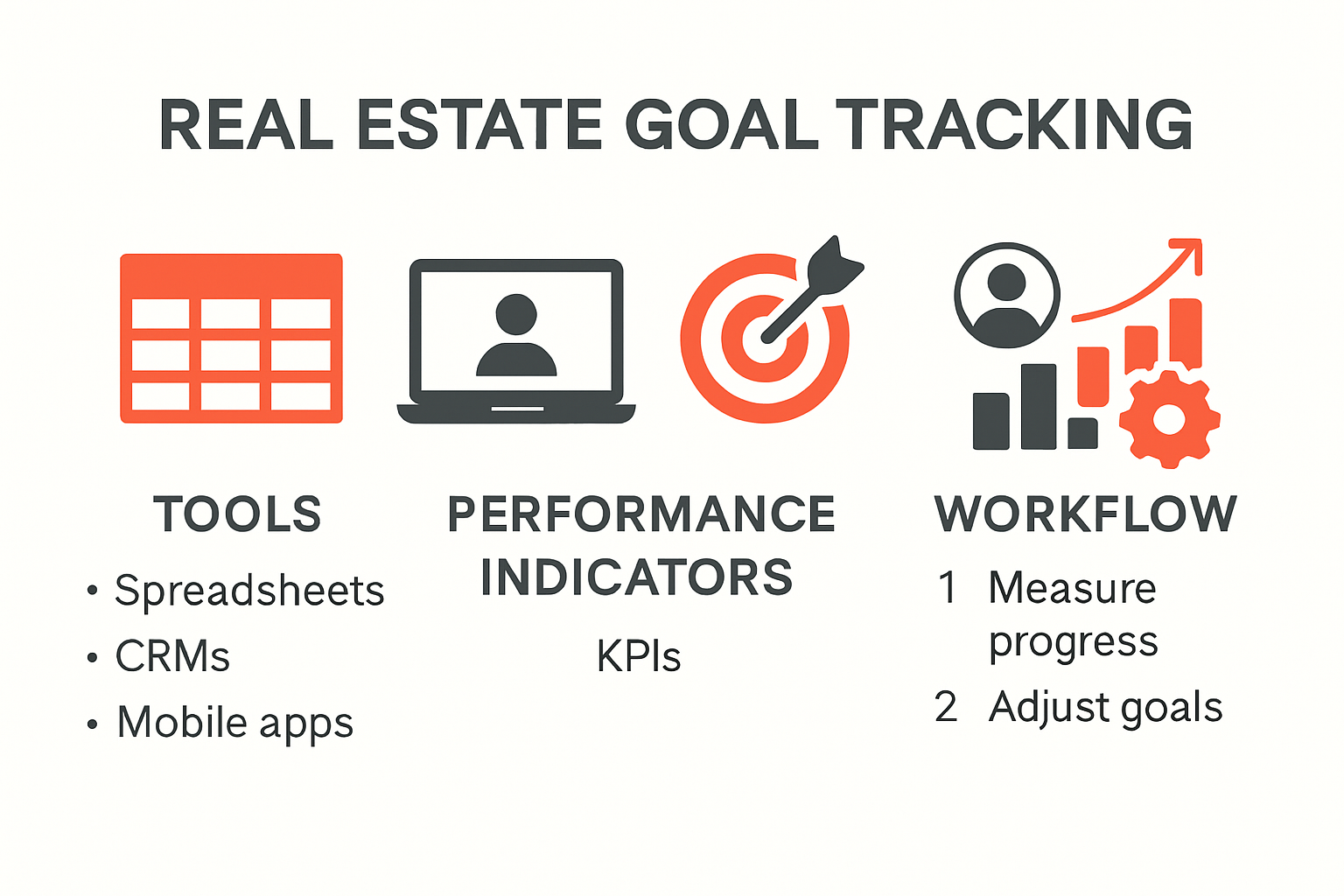
Traacking and measuring progress is a critical component of successful real estate goal setting. Without robust measurement tools, agents and teams risk losing momentum and failing to understand their true performance trajectory. Modern technology offers an array of sophisticated solutions that transform goal tracking from a cumbersome task into a streamlined, insightful process.
Digital Tracking and Performance Management
According to Purdue Global University, documenting goals and systematically monitoring activities significantly increases the likelihood of achievement. Real estate professionals can leverage various digital tools designed specifically for performance tracking and goal management.
Spreadsheet applications like Google Sheets and Microsoft Excel remain powerful options for creating custom tracking dashboards. These platforms allow agents to build detailed goal tracking templates, including columns for specific objectives, target dates, current progress, and percentage of completion. Customizable graphs and charts provide visual representations of advancement, making it easier to understand performance trends at a glance.
Specialized real estate Customer Relationship Management (CRM) systems offer comprehensive tracking capabilities. These platforms integrate lead generation, client interactions, transaction management, and goal tracking into a single interface. Advanced CRM tools can automatically generate performance reports, track key performance indicators, and provide predictive analytics that help agents make data-driven decisions.
Comprehensive Progress Monitoring Strategies
California State University San Marcos recommends a multifaceted approach to goal tracking that combines digital tools with traditional monitoring techniques. This might include maintaining a physical goal journal alongside digital tracking systems, allowing for more reflective and nuanced progress assessment.
Mobile applications designed for goal setting can provide real-time progress updates and motivational prompts. Apps like Trello, Asana, and Todoist enable agents to break down larger goals into smaller, manageable tasks, set reminders, and track completion rates. These tools are particularly useful for managing complex, multi-step objectives that require consistent attention and incremental progress.
Strategic Measurement and Accountability
Local Housing Solutions emphasizes the importance of systematic measurement in achieving organizational objectives. For real estate teams, this means implementing regular review cycles and creating transparent accountability mechanisms.
Quarterly performance reviews provide an opportunity to assess goal achievement, identify obstacles, and recalibrate strategies. Learn more about optimizing team performance and sales strategies through comprehensive tracking and management approaches.
Key performance indicators (KPIs) should be carefully selected to provide meaningful insights. For real estate professionals, these might include metrics such as:
- Number of new leads generated
- Conversion rates from leads to clients
- Average time to close a transaction
- Client satisfaction scores
- Revenue generated per transaction
- Networking event attendance and connections made
The most effective tracking systems combine quantitative metrics with qualitative assessment. This holistic approach ensures that agents are not just meeting numerical targets but also developing skills, building relationships, and progressing towards long-term professional goals.
Ultimately, successful progress tracking is about creating a dynamic, responsive system that provides clear insights, maintains motivation, and supports continuous improvement. By leveraging a combination of digital tools, strategic monitoring techniques, and regular reflection, real estate professionals can transform their goal-setting process from a static exercise into a powerful driver of professional growth and success.
The following table organizes the main tools and methods for tracking real estate goal progress as described in this section.
| Tool/Method | Main Function | Example Features/Uses |
|---|---|---|
| Spreadsheets (Google/Excel) | Custom tracking dashboards | Set goals, track progress, visualize trends with charts |
| Real Estate CRM Systems | Integrated goal/performance tracking | Track leads, client interactions, automate performance reports |
| Goal Journals (Physical) | Reflective, qualitative monitoring | Written entries, self-assessment, nuance in goal tracking |
| Mobile Goal Apps (Trello, Asana, Todoist) | Task breakdown, reminders, on-the-go tracking | Manage steps, get notifications, monitor completion rates |
| Visual Progress Boards | Immediate visual feedback on progress | Kanban boards, milestone tracking |
Staying Accountable and Motivated All Year
Maintaining motivation and accountability throughout the year represents one of the most significant challenges for real estate professionals. Consistent momentum requires strategic approaches that go beyond initial goal setting, transforming aspirational objectives into sustained performance and achievement.
Creating Robust Accountability Systems
According to FortuneBuilders, research by Dr. Gail Matthews demonstrates that individuals who document their goals and share progress with a friend increase their achievement probability by 33%. This statistic underscores the power of external accountability in maintaining professional commitment.
Effective accountability strategies involve multiple layers of support and tracking. Real estate agents can establish accountability partnerships with colleagues, join professional mastermind groups, or work with performance coaches who provide objective feedback and motivation. These relationships create external pressure and support systems that help professionals stay focused on their objectives, even during challenging periods.
Technology offers additional accountability mechanisms. Automated progress tracking apps, shared digital dashboards, and regular check-in platforms can create structured environments that encourage consistent performance. Learn more about optimizing team performance and communication through advanced collaborative tools that promote transparency and mutual support.
Psychological Strategies for Sustained Motivation
Research from the Louisiana REALTORS highlights that motivation is not just about external systems but also internal psychological approaches. Breaking large annual goals into smaller, quarterly, or monthly milestones creates a sense of continuous achievement and prevents overwhelm.
Visualization techniques can play a crucial role in maintaining motivation. Creating vision boards, using digital goal tracking platforms with visual progress indicators, and regularly reviewing personal and professional aspirations help real estate professionals stay connected to their long-term objectives. These practices transform abstract goals into tangible, emotionally resonant targets.
Adapting and Recommitting to Goals
According to Locke and Latham’s goal-setting theory, specific and challenging goals drive higher performance. However, top-performing real estate professionals understand that goals are not static documents but dynamic frameworks requiring periodic reassessment and adaptation.
Quarterly review sessions provide critical opportunities to evaluate goal progress, celebrate achievements, and recalibrate strategies. These sessions should include honest self-assessment, analysis of external market conditions, and potential adjustments to original objectives. Successful agents view goal modification not as failure but as intelligent response to changing circumstances.
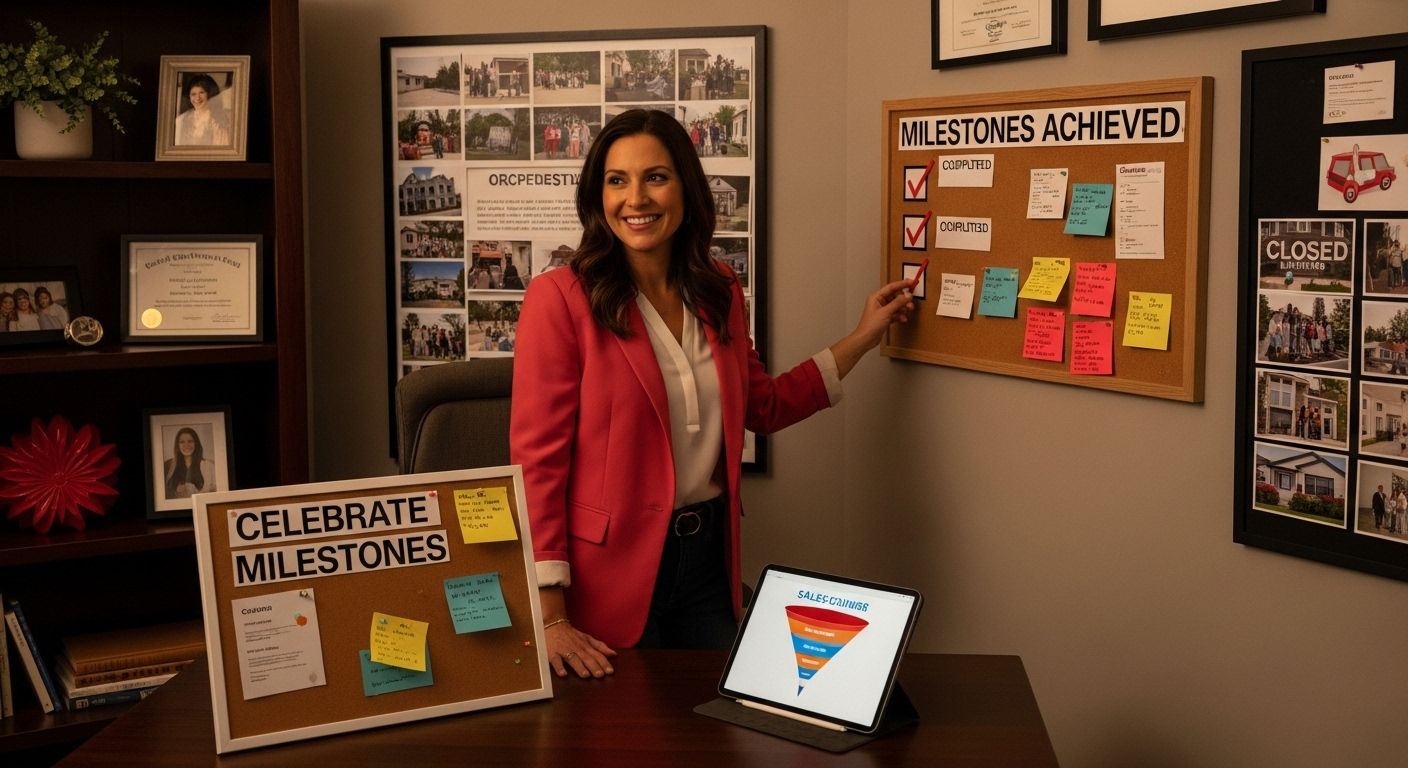
Maintaining motivation also requires acknowledging and celebrating incremental progress. Implementing reward systems for milestone achievements, sharing successes with professional networks, and practicing self-compassion during challenging periods can help sustain long-term commitment.
Ultimately, staying accountable and motivated is a holistic process combining external support systems, psychological strategies, and flexible goal management. Real estate professionals who approach their objectives with strategic intentionality, emotional intelligence, and adaptable mindsets are best positioned to transform their annual goals from theoretical concepts into tangible professional achievements.
Frequently Asked Questions
What are SMART goals in real estate?
SMART goals are specific, measurable, attainable, relevant, and time-bound objectives that provide clarity and focus for real estate professionals. They help agents create structured pathways to success by breaking down complex ambitions into manageable milestones.
How can I track my real estate goal progress?
You can track your real estate goal progress using digital tools like spreadsheets, CRM systems, and goal-tracking apps. These tools allow you to create custom dashboards, monitor key performance indicators, and visualize your progress over time.
Why is accountability important in setting real estate goals?
Accountability is crucial in goal setting because it helps maintain your commitment and motivation. Establishing partnerships or joining mastermind groups can provide external pressure and support, increasing your likelihood of achieving your objectives.
How often should I review my real estate goals?
You should review your real estate goals at least quarterly. Regular review sessions allow you to assess your progress, celebrate achievements, and make necessary adjustments based on changing market conditions or personal circumstances.
Supercharge Your 2025 Real Estate Goals with AI-Driven Lead Management
Struggling to turn SMART goals and performance tracking into real results? Many agents find that consistent lead response, qualification, and follow-up can drain time and energy, making it tough to achieve those ambitious targets outlined in your goal-setting plan. Missed opportunities, delayed responses, and inconsistent communication often hold back even the most motivated professionals from reaching the next level.

Take action now and transform your approach with LeadLinker.co. Automate lead capture, qualify prospects instantly, and never miss another appointment opportunity. Let our AI assistant respond to leads 24/7 across all your key channels and book appointments directly in your calendar. Give your business the edge it needs to hit every milestone this year. Get started today at LeadLinker.co and see how reliable, scalable lead management helps you achieve your 2025 success plan.
Recommended
-
Lead Capture Strategies for Real Estate Agents in 2025 – Lead Linker
-
30 Real Estate Text Message Ideas for Agents in 2025 – Lead Linker
-
[
Video Marketing Strategies for US Business Owners 2025
](https://peakdigital.pro/2025/07/23/video-marketing-strategies-for-us-business-owners-2025)