
Everyone in real estate wants more high-quality referrals. Some agents spend months chasing leads only to discover that a focused network of just ten motivated referrers can outproduce hundreds of casual contacts. This totally flips the script on what matters most. Building your referral business is not about bigger lists, it’s about smarter relationships and knowing exactly when and how to ask.
The following table provides an overview of the six main steps to building a successful real estate referral strategy, including key actions and outcomes for each step.
| Step | Key Action | Primary Outcome |
|---|---|---|
| 1. Identify Target Audience | Analyse current clients to define ideal referral sources | Build a focused, high-quality referral network |
| 2. Prepare Referral Script | Develop and practise an effective, conversational request | Confidently ask for referrals without awkwardness |
| 3. Engage Consistently | Maintain meaningful connections with your network | Nurture relationships and keep referrals top of mind |
| 4. Time Your Request | Ask for referrals immediately after client satisfaction peaks | Maximise likelihood of positive recommendations |
| 5. Follow Up & Thank | Show timely, sincere gratitude for referrals | Strengthen ongoing relationships and encourage repeat referrals |
| 6. Track & Measure | Monitor referral origins, conversion rates, and outcomes | Continuously improve referral strategies and business growth |
Table of Contents
- Step 1: Identify Your Target Audience For Referrals
- Step 2: Prepare Your Referral Request Script
- Step 3: Engage With Your Network Consistently
- Step 4: Ask For Referrals At The Right Time
- Step 5: Follow Up And Thank Your Referrers
- Step 6: Track And Measure Referral Success
Quick Summary
| Key Point | Explanation |
|---|---|
| 1. Identify Your Target Audience | Define your ideal referral sources based on existing client characteristics to create a strong referral network. |
| 2. Create a Referral Request Script | Develop a natural-sounding script that includes acknowledgment, value proposition, and a clear request for referrals. |
| 3. Engage with Your Network Consistently | Maintain regular contact with your network through meaningful interactions to build relationships and encourage referrals. |
| 4. Ask for Referrals at Strategic Times | Time your referral requests immediately after a successful transaction when client satisfaction is highest. |
| 5. Follow Up and Show Appreciation | Express genuine gratitude to referrers, enhancing your professional relationships and encouraging future referrals. |
Step 1: Identify Your Target Audience for Referrals
Referrals represent the lifeblood of successful real estate businesses, but not all referrals are created equal. The strategic foundation of generating quality referrals begins with precisely identifying your target audience. Understanding who can and will most likely recommend your services transforms random connections into a structured referral network.
Successful real estate professionals recognize that referrals are not random occurrences but deliberate outcomes of strategic relationship building. According to University of Florida’s Career Connections Center, defining your market characteristics is crucial for developing targeted referral strategies.
Start by examining your existing client base and identifying common characteristics that suggest potential referral sources. Look beyond simple demographics and consider factors like professional networks, past transaction types, geographic regions, and personal connections. Real estate agents who understand their client profiles can more effectively cultivate relationships with individuals most likely to generate high-quality referrals.
Consider creating client personas that represent your ideal referral sources. These might include:
- Local business professionals in complementary industries
- Previous clients who had positive experiences
- Community leaders and networked professionals
- Friends and family members of existing clients
Analyze your past successful referrals to understand patterns. What industries do these referral sources represent? What common characteristics do they share? By mapping these connections, you create a targeted approach to expanding your referral network.
Remember that effective targeting is about quality, not quantity. A focused network of ten highly connected, motivated referral sources will outperform hundreds of passive contacts. Invest time in understanding each potential referral source’s motivations, professional networks, and communication preferences.
Verify your targeting strategy by tracking the origin and conversion rates of your referrals. Continuously refine your approach based on actual performance data, ensuring your referral network remains dynamic and responsive to changing market conditions.
Step 2: Prepare Your Referral Request Script
Crafting a compelling referral request script transforms awkward conversations into smooth, professional interactions that naturally encourage clients to recommend your services. A well-prepared script acts as your strategic roadmap for generating high-quality referrals with confidence and authenticity.
According to Baylor University’s Keller Center for Research, the most effective referral requests balance personal connection with clear, value-driven messaging. Your script should communicate professionalism while maintaining a warm, genuine tone that reflects your unique personality and real estate expertise.
Begin by developing a script framework that includes three critical components: acknowledgment, value proposition, and clear request. Start with a sincere appreciation for your existing relationship. For example, “I wanted to thank you for trusting me with your home sale last year” establishes a positive emotional foundation before making your referral request.
Next, articulate your specific value proposition. Highlight what makes your real estate service unique. Emphasize the tangible benefits potential clients receive, such as personalized market insights, streamlined transaction processes, or your deep understanding of local market dynamics. Phrases like “I specialize in helping families find their perfect home quickly and with minimal stress” demonstrate your professional commitment.
The request itself should be direct yet comfortable. Use language that feels natural and gives your contact an easy opportunity to help. Consider statements like, “If you know anyone looking to buy or sell a home, I would be grateful if you could mention my name” or “I’m always looking to help more families in our community. Would you be comfortable introducing me to colleagues who might need real estate support?”
Practice your script until it sounds conversational and authentic. Record yourself and listen critically, ensuring you sound genuine rather than rehearsed. Your goal is to create a script that feels like a natural part of your conversation, not a sales pitch.
Verify your script’s effectiveness by testing it with trusted friends or colleagues. Their feedback can help you refine the language, tone, and overall approach. Remember, the most powerful referral scripts feel like genuine connections, not transactional requests.
Step 3: Engage with Your Network Consistently
Consistent engagement transforms a passive contact list into an active referral powerhouse. Network nurturing is not a one-time event but an ongoing relationship-building process that requires strategic, thoughtful interaction with your potential referral sources.
According to University of Georgia’s Small Business Development Center, the ‘Givers Gain’ philosophy underpins successful referral strategies. This approach means proactively supporting your network before expecting returns, creating a culture of mutual professional support.
Develop a systematic communication strategy that keeps you connected without becoming intrusive. This involves creating a structured approach to maintaining relationships through regular, meaningful touchpoints. Schedule periodic check-ins with your network using a combination of communication methods such as personalized emails, quick text messages, social media interactions, and occasional phone calls.
Implement a quarterly relationship maintenance cycle. This might involve sending market updates, sharing interesting local real estate insights, or highlighting community events that might interest your contacts. Each interaction should provide genuine value, demonstrating your expertise and commitment to your professional community.
Utilize technology to streamline your engagement efforts. Customer relationship management (CRM) tools can help track interactions, set reminders for follow-ups, and ensure no contact falls through the cracks. Consider creating a digital calendar that prompts you to reach out to different segments of your network at regular intervals.
Remember that meaningful engagement goes beyond self-promotion. Share resources, offer assistance, and demonstrate authentic interest in your contacts’ professional and personal lives. The most powerful referral networks are built on genuine relationships, not transactional interactions.
Some practical engagement strategies include:
- Sending personalized birthday or professional milestone congratulations
- Sharing relevant market reports or local economic insights
- Offering introductions between contacts who might benefit from knowing each other
- Providing helpful resources without expecting immediate returns
Verify your engagement strategy’s effectiveness by tracking the frequency of your interactions and monitoring the quality of your relationships. Look for increased communication, reciprocal referrals, and a sense of mutual professional respect. Adjust your approach based on the responses and engagement levels you observe, ensuring your network remains dynamic and supportive.
Step 4: Ask for Referrals at the Right Time
Timing is everything when requesting referrals, transforming a potentially awkward interaction into a natural, mutually beneficial conversation. The art of asking for referrals hinges on recognizing the precise moment when your client feels most satisfied and appreciative of your services.
According to Keller Center for Research at Baylor University, the most opportune moment to request referrals is immediately following a successful transaction when client satisfaction is at its peak. This window of positive emotion represents your best chance to convert satisfied clients into active advocates for your real estate business.
Pinpoint optimal referral request moments by understanding the emotional journey of your clients. Immediately after closing a sale or helping a client find their dream home, emotions are high and gratitude is abundant. This is when clients are most likely to feel generous about recommending your services. For sellers, wait until they have successfully completed their home sale and are feeling relieved and satisfied. For buyers, the ideal time is shortly after they have settled into their new home and are experiencing the excitement of homeownership.
Develop a strategic post-transaction communication plan that creates natural opportunities for referral requests. This might involve sending a personalized thank-you note, following up with a home-warming gift, or scheduling a brief check-in call that allows you to gauge their satisfaction and subtly introduce the referral conversation.
Be mindful of the subtle art of asking. Your request should feel like a natural extension of your relationship, not a transactional demand. Use language that makes it easy for clients to help, such as “I’m always looking to help more families find their perfect home. If you know anyone searching for real estate support, I would be grateful if you could mention my name.”
Consider creating a referral reward system that provides additional motivation. This could include:
- Gift cards or small tokens of appreciation
- Charitable donations in the client’s name
- Future service discounts
- Personalized home maintenance resources
Learn more about maximizing your referral potential by converting real estate leads with proven strategies.
Verify your referral timing strategy by tracking the frequency and quality of referrals received. A successful approach will result in an increase in unsolicited recommendations and a higher conversion rate from referral sources.
Step 5: Follow Up and Thank Your Referrers
Expressing genuine gratitude transforms referral relationships from transactional interactions into lasting professional partnerships. The final and often most overlooked step in the referral process is creating meaningful acknowledgment that makes your referral sources feel truly appreciated and valued.
According to research published in the International Journal of Environmental Research and Public Health, professional gratitude significantly enhances social capital and long-term business outcomes. This means your thank-you strategy is more than a courtesy—it’s a critical business development technique.
Develop a multi-layered gratitude approach that goes beyond a simple thank-you message. Immediate acknowledgment should happen within 24 hours of receiving a referral. Send a personalized text or email expressing your sincere appreciation. Be specific about the referral, demonstrating that you genuinely recognize their effort. For instance, “Thank you for introducing me to [Name]. I appreciate you thinking of me for their real estate needs.”
Create a tiered recognition system that matches the impact of the referral. For smaller referrals, a heartfelt email or text might suffice. For significant referrals that result in substantial transactions, consider more substantial gestures like a handwritten note, a small gift, or even a charitable donation in the referrer’s name.
Track and document each referral source meticulously.
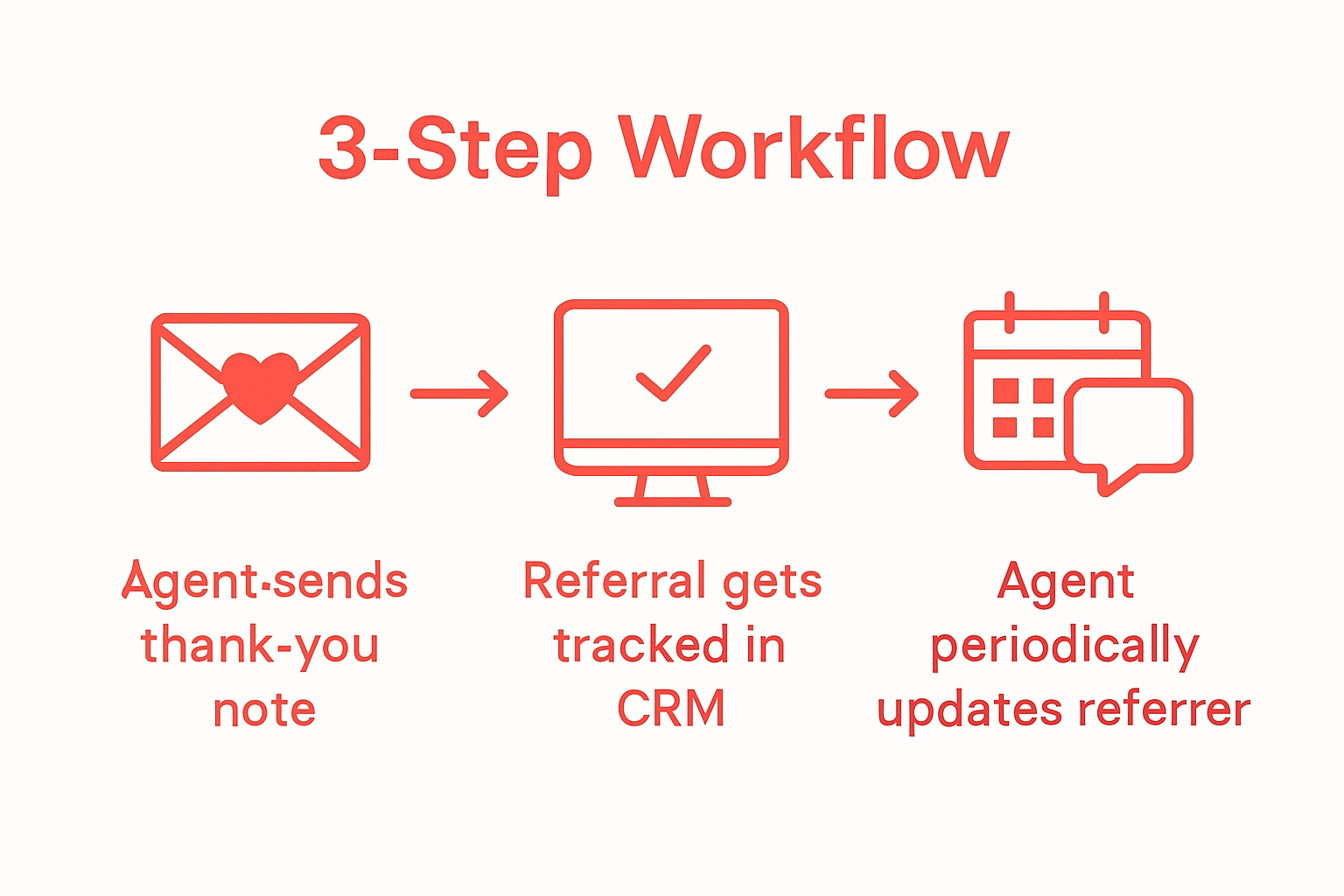 Implement a customer relationship management system that helps you record not just contact details, but the specifics of each referral. This allows you to personalize your follow-up and demonstrates your commitment to the relationship.
Consider these meaningful ways to show appreciation:
- Sending a personalized gift card
- Writing a LinkedIn recommendation
- Offering a professional networking introduction
- Sharing a market report tailored to their interests
Go beyond simple transactional thank-yous by providing ongoing value. Share periodic updates about how their referral progressed, including successful transaction details (while maintaining client confidentiality). This approach shows transparency and reinforces the value of their recommendation.
Verify the effectiveness of your follow-up strategy by monitoring referral frequency and relationship longevity. A successful approach will result in repeat referrals, increased trust, and a growing network of professional advocates who are eager to recommend your services.
This table compares different methods of showing appreciation to referrers, helping you match your gratitude approach to the value of each referral.
| Gratitude Method | When to Use | Example or Purpose |
|---|---|---|
| Personal Thank-You Message | For any referral received | Immediate email or text acknowledging the referral |
| Handwritten Note | For significant or long-term referrers | Shows extra effort and personal touch |
| Gift Card | For substantial referrals leading to transactions | Tangible token of appreciation |
| Charitable Donation | For special or high-impact referrals | Reflects community values and personal connection |
| Professional Networking Introduction | For business-savvy referrers | Helps expand their network in return |
| LinkedIn Recommendation | For professional contacts | Enhances their professional profile |
| Market Report or Resource | For ongoing engagement | Offers lasting value related to their interests |

Step 6: Track and Measure Referral Success
Measuring referral success transforms intuition into strategic insight, turning your real estate referral program from a hopeful endeavor into a precise, data-driven business growth mechanism. Tracking allows you to understand which strategies work, who your most valuable referral sources are, and how to continually optimize your approach.
According to research on characterizing efficient referrals in social networks, systematic tracking can predict referral effectiveness with remarkable accuracy. This means your measurement approach is not just administrative but a powerful predictive tool for business development.
Establish a comprehensive tracking system that captures multiple dimensions of referral performance. Create a dedicated spreadsheet or utilize customer relationship management (CRM) software to document each referral’s journey. Track critical metrics such as referral source, conversion rate, transaction value, and time from referral to closing. The more granular your tracking, the more actionable your insights become.
Implement a scoring system that helps you quantify the value of different referral sources. Assign points based on factors like referral frequency, conversion rate, and total transaction value. This approach allows you to identify and nurture your most productive referral networks systematically.
Utilize technology to streamline your tracking process. Many modern CRM platforms offer automated tracking and reporting features that can simplify data collection. Look for tools that integrate seamlessly with your existing systems and provide visual dashboards for quick performance assessment.
Key metrics to consistently monitor include:
- Number of referrals received per month
- Conversion rate of referrals
- Average transaction value from referral sources
- Response time to referral inquiries
- Client satisfaction scores from referred transactions
Regularly review and analyze your referral data. Schedule quarterly performance reviews where you deeply examine your tracking metrics. Look for emerging patterns, identify top-performing referral sources, and recognize any declining trends that might require strategic intervention.
Verify the effectiveness of your tracking system by observing tangible business outcomes. A successful tracking approach will demonstrate clear correlations between your referral strategies and business growth. You should see consistent improvements in referral quality, conversion rates, and overall business revenue.
Take Your Referral Strategy from Manual to Effortless with AI
You have worked hard to identify ideal referral partners, perfect your referral request script, and nurture every relationship. But even with the right steps in place, it is easy to feel overwhelmed by keeping every lead and conversation organized. Too many real estate professionals still struggle with missed follow-ups, slow response times, and lost opportunities because manual tracking simply cannot keep up with a growing referral network. If you are seeking a way to maximize the value of every referral and build lasting trust with your clients, you need a system that goes beyond spreadsheets and sticky notes.

Imagine combining the techniques from this guide with instant lead response and automated follow-up for a truly comprehensive approach. LeadLinker.co empowers you to nurture referrals by handling responses, qualifying leads, and booking appointments around the clock. Experience how our AI-powered platform boosts conversion rates, so you can focus on what you do best—building relationships and closing deals. Start your free demo today and make every referral count before you miss your next opportunity.
Frequently Asked Questions
How can I identify my target audience for referrals in real estate?
To identify your target audience for referrals, analyze your existing client base for common characteristics such as demographics, professional networks, and geographic locations. Consider creating client personas to represent your ideal referral sources.
What should I include in my referral request script?
Your referral request script should include three components: acknowledgment of your relationship, a clear value proposition that highlights your unique services, and a direct yet comfortable request for referrals.
When is the best time to ask for referrals from clients?
The best time to ask for referrals is immediately after a successful transaction when client satisfaction is at its peak. Whether it’s after closing a sale or when clients are excited about their new home, these moments create a natural opportunity to request referrals.
How can I express gratitude to those who refer clients to me?
You can express gratitude by sending personalized thank-you messages within 24 hours of receiving a referral, and consider tiered recognition based on the significance of the referral. Gestures such as gift cards, handwritten notes, or charitable donations can enhance your appreciation of their support.