
Every real estate conversation in 2025 seems to run into familiar roadblocks. Clients worry about pricing, market shifts, and making the wrong move. Now get this. A survey found that 38 percent of agents say becoming defensive is their number one objection handling mistake. Most people expect objections to mean the deal is off, but the real secret is that these pushbacks are just invitations to build deeper trust and turn hesitation into action.
Table of Contents
- Key Common Real Estate Objections Explained
- Effective Scripts To Overcome Objections
- Proven Strategies For Building Client Trust
- Real Estate Objection Handling Mistakes To Avoid
Quick Summary
| Takeaway | Explanation |
|---|---|
| Understand client pricing concerns deeply | Provide thorough market analyses to address objections about property pricing and market value. Utilizing comparative sales data is essential. |
| Educate clients about market timing | Help potential buyers and sellers understand that waiting for the ‘perfect’ market moment could result in missed opportunities. Clarify the long-term value of real estate investments. |
| Use empathetic communication | Listen actively and validate clients’ emotional concerns. Addressing their feelings fosters trust and opens avenues for deeper conversations. |
| Avoid defensive communication | Recognize objections as opportunities for engagement rather than confrontations to build trust, not tension. Maintain calm and understanding. |
| Recognize objections as inquiries, not rejections | Treat objections as a chance for further discussion instead of final refusals. Clients express concerns seeking clarity and reassurance, not outright dismissal. |
Key Common Real Estate Objections Explained
Real estate professionals encounter numerous objections throughout their sales process, each presenting a unique challenge that requires strategic navigation. Understanding these common real estate objections is crucial for agents seeking to convert leads and build trust with potential clients.
Price and Market Value Concerns
One of the most prevalent objections agents face revolves around property pricing and perceived market value. Realtor.com highlights that clients frequently challenge listing prices, often relying on online home value estimates that may not reflect true market conditions. Buyers and sellers alike tend to have preconceived notions about property worth, creating significant friction in transactions.
Savvy agents must be prepared to provide comprehensive market analysis, demonstrating the rationale behind pricing strategies. This involves presenting comparable sales data, discussing recent neighborhood trends, and explaining the nuanced factors that influence property valuation. Transparent communication becomes the key to overcoming these pricing objections.
To clarify the most common real estate objections and how agents can effectively overcome them, the following table summarizes objection examples from the article alongside recommended strategies for response.
| Objection Type | Example Client Statement | Recommended Response Approach |
|---|---|---|
| Price & Market Value | “I think the home is overpriced.” | Provide thorough market analysis and comparable sales data |
| Timing & Market Uncertainty | “I want to wait for the market to improve.” | Educate on market dynamics and long-term investment value |
| Personal & Emotional Barriers | “I’m not sure I’m ready to leave this house.” | Listen empathetically, validate feelings, offer reassurance |
| Perceived Risks in Selling/Buying | “What if I make the wrong decision?” | Guide with expert advice and present data-driven insights |
| Overreliance on Online Estimates | “Zillow says it’s worth more/less.” | Explain nuances of valuation and show local data |
Timing and Market Uncertainty
Another critical objection stems from market timing concerns. Inman research reveals that potential buyers and sellers often hesitate due to uncertainty about economic conditions, interest rates, and potential market fluctuations. Clients might delay decisions, waiting for what they perceive as the “perfect” market moment.
Effective agents counter these objections by providing educational insights into market dynamics. This involves explaining that waiting for ideal conditions can potentially mean missing valuable opportunities. By presenting data on long term real estate appreciation and discussing personal financial goals, agents can help clients understand that real estate investment is typically a strategic long term decision rather than a short term speculation.
Personal and Emotional Barriers
Beyond financial considerations, real estate transactions involve significant emotional components. Potential clients may have deep seated reservations about moving, selling family properties, or committing to substantial financial decisions. Learn more about navigating client emotions with our AI-powered lead management system.
Successful agents recognize these emotional objections and approach them with empathy and understanding. This means actively listening to client concerns, validating their feelings, and providing reassurance through professional guidance. By transforming objections from potential roadblocks into opportunities for deeper conversation, agents can build trust and demonstrate their commitment to client success.
Mastering the art of handling common real estate objections requires continuous learning, adaptability, and a genuine commitment to understanding client needs. Agents who approach these challenges with knowledge, empathy, and strategic communication will consistently outperform those who view objections as mere obstacles.
Effective Scripts to Overcome Objections
Navigating real estate objections requires more than memorizing generic responses. Successful agents develop nuanced communication strategies that transform potential roadblocks into meaningful dialogue and opportunities for connection.
Crafting Authentic Responses
According to Inman’s expert insights, modern objection handling demands a psychology driven approach that goes beyond traditional scripted responses. Agents must understand the underlying emotions and concerns driving client hesitation. This means moving away from rigid, one size fits all scripts towards personalized, empathetic communication.
For instance, when a client says “I want to wait for the market to improve,” an effective response might sound like: “I understand your concern. Can you tell me more about what specific market conditions you’re hoping to see? Many clients I work with have similar thoughts, and together we often discover opportunities they might otherwise miss.”
Structure and Emotional Intelligence
Research from C21 Edge suggests developing a flexible script framework that allows for genuine human connection. Key elements of an effective objection response include:
- Active Listening: Demonstrate that you genuinely hear and validate the client’s concerns
- Empathy: Show understanding of their perspective
- Value Proposition: Clearly articulate how your expertise addresses their specific situation
- Soft Close: Invite further conversation without applying aggressive pressure
Scenario Specific Strategies
Different objections require tailored approaches. StreetEasy’s expert toolkit recommends developing scenario specific responses that reflect current market realities.
For price objections: “I appreciate you wanting to understand the pricing. Would you be interested in seeing the detailed market analysis that supports this valuation? I’ve prepared a comprehensive report that breaks down comparable properties and recent neighborhood trends.”
For timing concerns: “I hear your hesitation about current market conditions. Learn how our AI lead management system can help you navigate market uncertainties, providing real time insights and strategic guidance.”
Mastering objection handling is an ongoing process of learning, adapting, and refining communication skills. The most successful real estate professionals view objections not as obstacles, but as opportunities to demonstrate value, build trust, and guide clients towards informed decisions.
Proven Strategies for Building Client Trust
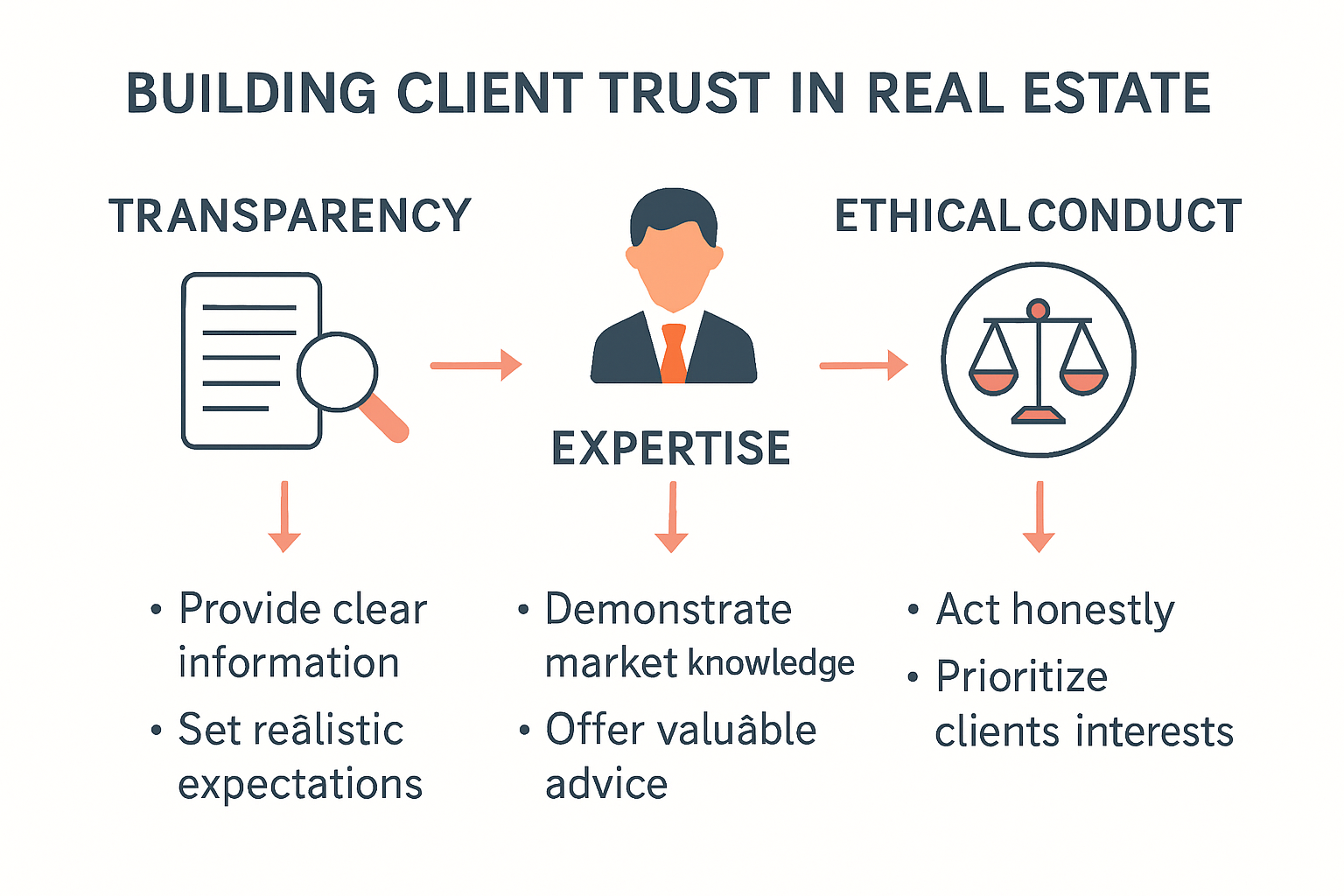
Trust represents the cornerstone of successful real estate relationships. Without genuine connection and credibility, agents struggle to convert leads and maintain long term client partnerships. Understanding and implementing strategic trust building techniques becomes essential in today’s competitive real estate market.
Transparency and Authentic Communication
Research from Baylor University’s Keller Center emphasizes that client trust fundamentally depends on honesty, candor, and reliability. Agents must create an environment of complete transparency where clients feel informed and respected throughout every transaction stage.
Authentic communication means providing clear, straightforward information about market conditions, potential challenges, and realistic expectations. Honest dialogue prevents misunderstandings and demonstrates professional integrity. When agents proactively share both positive and potentially challenging insights, clients perceive them as trustworthy advisors rather than mere transaction facilitators.
Demonstrating Expertise and Value
According to Inman’s expert strategies, building trust involves consistently demonstrating professional competence. This goes beyond presenting market data it requires showing genuine understanding of clients’ unique needs and goals.
Effective agents accomplish this by:
- Actively listening to client concerns
- Providing personalized recommendations
- Explaining complex processes in accessible language
- Offering insights that extend beyond immediate transaction requirements
Consistent and Ethical Professional Conduct
ResearchGate’s comprehensive study highlights that trust emerges from consistent ethical behavior. Real estate professionals must maintain high standards of conduct across every interaction.
This involves:
- Responding promptly to client communications
- Following through on commitments
- Maintaining professional boundaries
- Protecting clients from potential real estate risks
Trust is not established through grand gestures but through repeated small actions that demonstrate reliability, expertise, and genuine commitment to client success. Modern real estate professionals recognize that building trust is an ongoing process requiring continuous effort, emotional intelligence, and unwavering professional integrity.
The most successful agents understand that trust transforms transactional relationships into long term partnerships. By prioritizing transparency, expertise, and ethical conduct, real estate professionals can create meaningful connections that extend far beyond individual property transactions.
Real Estate Objection Handling Mistakes to Avoid
Navigating client objections requires sophisticated communication skills and strategic thinking. Even experienced real estate professionals can inadvertently sabotage potential deals by making critical errors in their approach to handling client concerns.
Becoming Defensive and Argumentative
According to a survey by Inman, 38% of real estate professionals identify becoming defensive as their most significant objection handling mistake. When agents perceive client questions as challenges to their expertise, they often respond with tension and rigidity, effectively destroying trust and communication.
Defensive responses typically manifest as:
- Interrupting clients before they finish explaining their concerns
- Using confrontational language
- Attempting to prove the client wrong
- Showing visible frustration or impatience
Instead, successful agents recognize objections as opportunities for deeper understanding. Emotional intelligence becomes the key to transforming potentially contentious moments into collaborative discussions.
Rushing to Solve Without Understanding
Research from HubSpot emphasizes that prematurely offering solutions without fully comprehending the client’s underlying concerns is a critical error. Agents frequently jump to recommendations before genuinely listening and exploring the root of a client’s hesitation.
Effective objection handling requires:
- Active and patient listening
- Asking clarifying questions
- Demonstrating genuine interest in the client’s perspective
- Validating their concerns before proposing solutions
Treating Objections as Absolute Rejections
Advisorpedia’s expert analysis reveals that many agents mistakenly interpret objections as definitive deal breakers. This pessimistic approach leads to premature disengagement and missed opportunities.
Clients raise objections not to reject an opportunity, but to seek reassurance and additional information. Learn how our AI-powered lead management system can help you navigate complex client interactions and transform potential obstacles into successful transactions.
Professional objection handling is an art that requires continuous learning, emotional maturity, and a genuine commitment to understanding client needs. Agents who view objections as collaborative conversations rather than confrontations will consistently outperform those trapped in adversarial mindsets.
To help agents avoid common pitfalls in handling client objections, the table below outlines typical mistakes and provides practical tips from the article on how to steer clear of them.
| Common Mistake | Description | How to Avoid/Correct |
|---|---|---|
| Becoming Defensive/Argumentative | Responding with tension, trying to prove client wrong | Stay calm, listen, use emotional intelligence |
| Rushing to Solve Without Listening | Offering solutions before fully understanding | Ask clarifying questions, validate concerns |
| Treating Objections as Rejections | Seeing objections as deal breakers, disengaging early | Use objections as a chance for dialogue |

Successful real estate professionals understand that objections are not roadblocks but invitations to demonstrate value, build trust, and guide clients towards making informed decisions. By avoiding these common mistakes and adopting a strategic, empathetic approach, agents can turn potential challenges into opportunities for meaningful connection and successful transactions.
Frequently Asked Questions
What are common objections real estate agents face in 2025?
Real estate agents often encounter objections related to pricing and market value, timing and market uncertainty, and personal and emotional barriers. Understanding these objections helps agents address client concerns effectively.
How can real estate agents overcome pricing objections?
To overcome pricing objections, agents should provide comprehensive market analyses, including comparable sales data and neighborhood trends. Transparent communication about pricing strategies helps build trust with clients.
What strategies can agents use to build trust with clients?
Agents can build trust by maintaining transparency, demonstrating expertise, and consistently practicing ethical professional conduct. Active listening and authentic communication are also crucial in fostering client relationships.
What mistakes should agents avoid when handling objections?
Agents should avoid becoming defensive, rushing to solutions without understanding the client’s concerns, and treating objections as absolute rejections. Instead, focus on using objections as opportunities for dialogue and connection.
Turn Every Objection Into an Opportunity With AI-Powered Lead Management
Agents today face objections about pricing, timing, and emotional readiness in nearly every conversation. The challenges outlined in this article—handling tough questions, avoiding defensive responses, and converting uncertain leads—demand more than just great people skills. You need solutions that anticipate these barriers, respond with empathy, and never miss a potential deal.

Imagine having an AI assistant that responds instantly to every inquiry, nurtures sceptical leads, and overcomes objections right where they start. With LeadLinker.co, you can stop losing opportunities due to slow follow-ups or unanswered questions. Let your business grow while our platform automates lead qualification, 24/7 messaging, and seamless appointment booking. See for yourself how top agents are booking more meetings and closing more deals by exploring the LeadLinker experience. Take the first step to transforming client pushback into profitable conversations—try it now and move ahead of the competition before market conditions change again.