
Real estate agents juggle client meetings, paperwork, and market shifts all in one day. Most people think surviving this grind comes down to hustling harder. But surprisingly, the real breakthrough happens when agents rethink their approach to time itself. Top agents who follow intentional routines and use digital tools can reclaim hours every week—studies show that using structured time management frameworks and CRMs can boost productivity by over 30 percent—making less about chaos and more about choice.
Table of Contents
- Understanding Time Management Challenges In Real Estate
- Practical Daily Routines For Real Estate Agents
- Top Digital Tools For Real Estate Time Management
- Team Strategies For Real Estate Productivity
Quick Summary
| Takeaway | Explanation |
|---|---|
| Implement Strategic Time Management Frameworks | Utilize tools like the Eisenhower Matrix to prioritize tasks effectively, ensuring energy is spent on high-impact activities that drive business growth and client satisfaction. |
| Establish Consistent Daily Routines | Develop structured morning and evening routines that focus on preparation and reflection to optimize daily productivity and maintain continuity in work tasks. |
| Leverage Digital Tools for Efficiency | Employ comprehensive CRM systems, productivity apps, and virtual communication platforms to streamline workflows and enhance client engagement, reducing administrative burdens. |
| Foster Clear Communication and Role Alignment in Teams | Define roles within real estate teams distinctly to promote accountability and ensure everyone contributes to team objectives, enhancing overall performance. |
| Prioritize Performance Measurement and Continuous Improvement | Establish KPIs and regular review processes to cultivate a culture of accountability and growth, supporting collaborative success within real estate teams. |
Understanding Time Management Challenges in Real Estate
Real estate professionals face unprecedented time management complexities in a rapidly evolving market. The dynamic nature of real estate demands exceptional organizational skills and strategic approaches to maximize productivity and client satisfaction.
The Complex Landscape of Real Estate Workflows
Real estate agents operate in a high-stakes environment where every minute counts. Mastering lead management strategies becomes critical for success. According to TrueHold research, agents simultaneously manage multiple clients, properties, administrative tasks, and complex communication channels, creating significant time management challenges.
The typical real estate workflow involves numerous interconnected activities: lead generation, client communication, property showings, negotiations, paperwork processing, and continuous market research. Each of these tasks requires focused attention and precise time allocation. Agents often struggle with unpredictable schedules, last-minute client requests, and the need to be constantly available across various communication platforms.
Strategic Time Management Frameworks
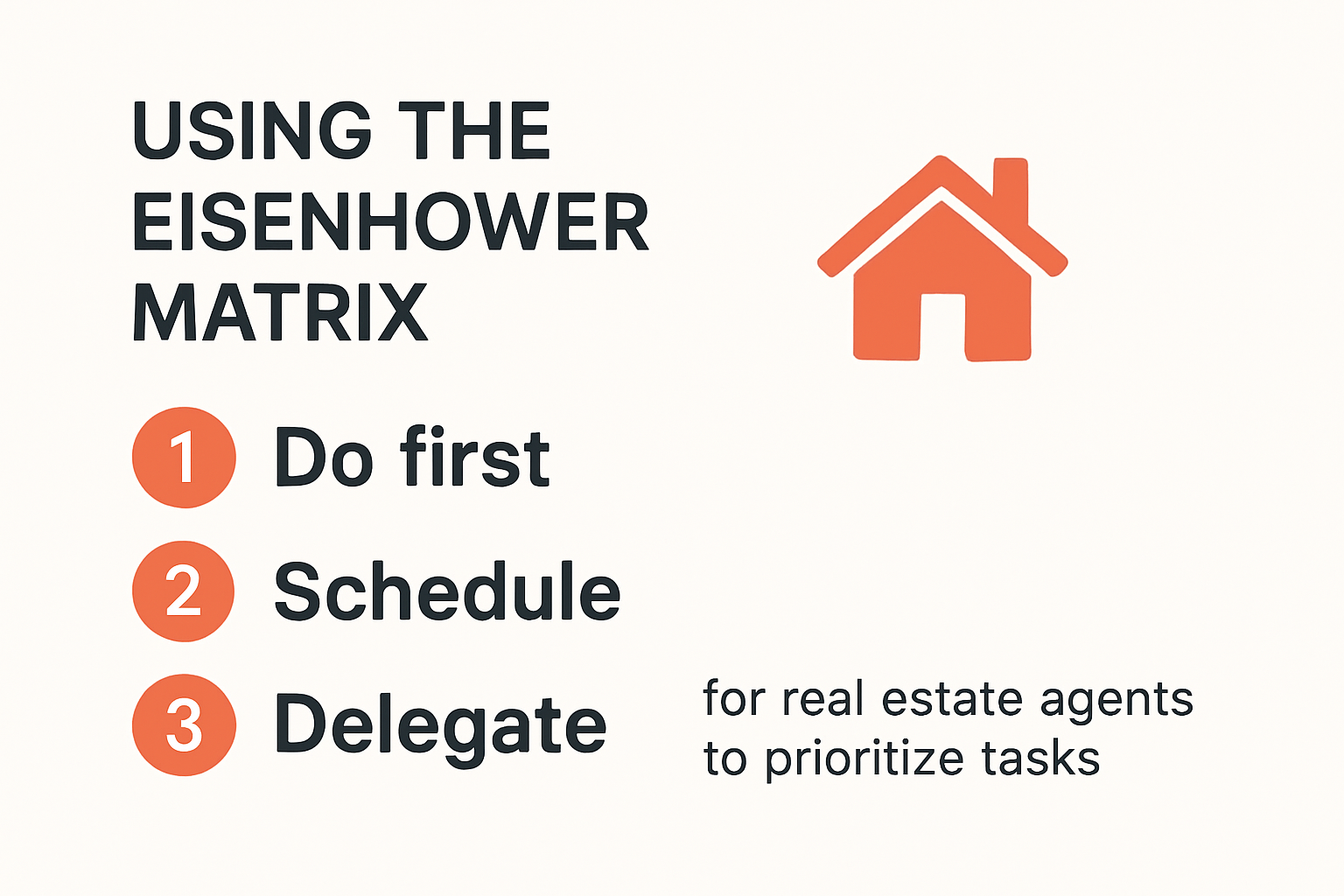
Successful real estate professionals recognize that effective time management is not about working harder but working smarter. The Eisenhower Matrix emerges as a powerful tool for prioritizing tasks. This method categorizes activities into four critical quadrants:
- Urgent and Important: Immediate client needs, contract deadlines
- Important but Not Urgent: Long-term business development, skill enhancement
- Urgent but Not Important: Interruptions, non-critical communications
- Neither Urgent nor Important: Time-wasting activities to be eliminated
By systematically applying this framework, agents can allocate their energy more effectively, focusing on high-impact activities that drive business growth and client satisfaction.
Technology and Time Management
Modern real estate professionals cannot ignore the transformative potential of technological solutions. Digital tools and AI-powered platforms now offer unprecedented capabilities for streamlining workflows, automating repetitive tasks, and creating more efficient communication channels.
According to Inman research, creating a structured to-do list the night before can dramatically improve daily productivity. This practice allows agents to start each day with clear objectives, minimizing decision fatigue and maximizing focus.
The most successful agents view time management not as a constraint but as a strategic advantage. By understanding these challenges and implementing systematic approaches, real estate professionals can transform potential overwhelm into structured, purposeful productivity.
Practical Daily Routines for Real Estate Agents
Successful real estate agents understand that consistent daily routines are the foundation of professional excellence. Developing a strategic approach to daily workflow can transform ordinary performance into exceptional results.
Morning Preparation and Mindset Optimization
Top-performing agents recognize that the first hours of the day set the tone for overall productivity. According to Inman research, a structured morning routine is crucial for peak performance. This involves more than just coffee and emails.
Begin with fundamental wellness practices: hydration, brief exercise, and mental preparation. Exploring strategic sales funnel techniques can help agents design their morning routine around lead generation and client engagement. Successful agents typically allocate the first 90 minutes to high-priority tasks such as reviewing client communications, updating property listings, and planning client interactions.
According to Brokers Bridge, an effective morning routine should include:
- Mental Preparation: 15 minutes of meditation or goal visualization
- Lead Generation: Systematic review of potential client contacts
- Administrative Organization: Prioritizing daily tasks and communications

Below is a table summarizing the components of an effective morning routine for real estate agents to optimize their daily performance.
| Component | Activity | Estimated Time |
|---|---|---|
| Mental Preparation | Meditation or goal visualization | 15 minutes |
| Lead Generation | Review of potential client contacts | Part of first 90 min |
| Administrative Organization | Prioritizing daily tasks and communications | Part of first 90 min |
| Wellness Practices | Hydration and brief exercise | Early morning |
| High-Priority Work | Reviewing client comms, updating listings, planning | First 90 minutes |
Structured Client Engagement and Communication
Effective real estate agents view their day as a carefully choreographed series of strategic interactions. Century 21 Edge highlights the importance of cognitive preparation and emotional resilience in client interactions.
Block your day into focused segments: dedicated time for property showings, client consultations, market research, and administrative work. Implement strict time management techniques such as the Pomodoro method, which involves 25-minute intense work periods followed by short breaks. This approach helps maintain high concentration and prevents burnout.
Utilize technology to streamline communication. Automated response systems and strategic communication templates can save significant time while maintaining personalized client interactions. Allocate specific time slots for responding to emails, returning phone calls, and managing social media inquiries.
Evening Review and Next-Day Planning
The end of the day is equally crucial as the morning. Successful agents spend 20-30 minutes reviewing their day’s accomplishments, updating client records, and preparing for the next day. This practice ensures continuity and prevents tasks from falling through the cracks.
Create a comprehensive to-do list for the following day, prioritizing tasks based on urgency and potential impact. Review financial records, track lead conversion rates, and reflect on professional development opportunities. This evening ritual transforms daily work into a continuous improvement process.
Remember, consistency is key. While no two days in real estate are identical, a robust routine provides the framework for managing unpredictability. By implementing these strategic daily practices, real estate agents can optimize their time, enhance client satisfaction, and drive sustainable business growth.
Top Digital Tools for Real Estate Time Management
In the rapidly evolving real estate landscape, digital tools have become essential for agents seeking to optimize their time management and productivity. Exploring AI integration in real estate reveals a transformative approach to managing professional workflows more efficiently.
Comprehensive Customer Relationship Management (CRM) Systems
Modern real estate professionals rely on sophisticated CRM platforms that go beyond traditional contact management. According to ResearchGate research, digital applications are revolutionizing how agents track, engage, and nurture client relationships.
Key features of advanced CRM tools include:
- Automated Communication: Scheduling follow-up emails and messages
- Lead Tracking: Monitoring client interactions and potential opportunities
- Performance Analytics: Generating insights on conversion rates and client engagement
These systems eliminate manual data entry, reduce administrative overhead, and provide real-time insights into business performance. By centralizing client information and communication history, agents can make more informed decisions and personalize their approach.
To help evaluate the main categories of digital tools for time management in real estate, the table below compares their key functions and benefits as discussed in the article.
| Tool Type | Key Features | Main Benefit |
|---|---|---|
| CRM Systems | Automated communication, lead tracking, analytics | Centralizes client management |
| Productivity/Time-Blocking | Calendar integration, task prioritization, reminders | Maximizes scheduling efficiency |
| Virtual Communication/Collab | Multi-channel messaging, chatbots, secure docs | Streamlines team/client interactions |
Productivity and Time-Blocking Applications
National Center for Biotechnology Information research highlights the significant impact of digital tools in streamlining real estate workflows. Time-blocking and productivity applications have emerged as critical solutions for managing complex schedules and maximizing efficiency.
Top productivity tools offer features such as:
- Calendar Integration: Seamless scheduling across multiple platforms
- Task Prioritization: Intelligent task management and reminder systems
- Virtual Meeting Capabilities: Video conferencing and screen sharing
Agents can now allocate specific time blocks for different activities, track their productivity, and ensure no critical tasks slip through the cracks. These tools provide visual representations of daily, weekly, and monthly schedules, helping professionals maintain a strategic overview of their commitments.
Virtual Communication and Collaboration Platforms
According to Ashby & Graff Careers, technology solutions have dramatically transformed client communication and collaboration processes. Virtual platforms enable real estate agents to manage interactions more efficiently, reducing time spent on repetitive tasks.
Emerging digital communication tools offer:
- Multi-Channel Communication: Integrated messaging across email, SMS, and social platforms
- Automated Response Systems: AI-powered chatbots for initial client inquiries
- Document Sharing and Collaboration: Secure digital workspaces for contracts and negotiations
These technologies not only save time but also provide a more responsive and professional client experience. By leveraging automated systems and intelligent communication tools, agents can focus on high-value interactions and strategic business development.
The future of real estate time management lies in strategic digital tool integration. Agents who embrace these technologies will find themselves better equipped to handle complex workflows, deliver exceptional client experiences, and maintain a competitive edge in an increasingly digital marketplace.
Team Strategies for Real Estate Productivity
Effective team management represents a critical component of success in the competitive real estate landscape. Enhancing your sales funnel strategy can transform how real estate teams collaborate and achieve collective goals.
Communication and Role Alignment
According to the National Association of REALTORS4 Magazine, high-performing real estate teams prioritize clear communication and strategic role alignment. This approach ensures that each team member understands their specific responsibilities and contributes to the overall team objectives.
Effective team strategies involve:
- Clear Role Definition: Establishing precise job descriptions and expectations
- Strengths-Based Assignment: Matching team members to tasks that leverage their individual skills
- Regular Performance Reviews: Providing constructive feedback and growth opportunities
The Journal of Real Estate Practice and Education emphasizes that successful teams recognize and cultivate individual talents while maintaining a unified team vision.
Collaborative Technology and Workflow Integration
Modern real estate teams leverage advanced technological solutions to streamline communication and enhance productivity. Technology serves as a critical bridge connecting team members and facilitating seamless information exchange.
Key technological integration strategies include:
- Shared Digital Workspaces: Cloud-based platforms for document sharing and collaboration
- Real-Time Communication Tools: Instant messaging and video conferencing systems
- Centralized Customer Relationship Management (CRM) Systems: Unified platforms for tracking client interactions
Dotloop research identifies poor communication as a significant barrier to team productivity, highlighting the importance of implementing consistent digital communication channels.
Performance Measurement and Continuous Improvement
Successful real estate teams establish robust performance measurement systems that go beyond traditional metrics. These systems create a culture of accountability, continuous learning, and collective growth.
Comprehensive performance strategies involve:
- Key Performance Indicators (KPIs): Establishing measurable team and individual goals
- Regular Team Meetings: Structured discussions about challenges, opportunities, and progress
- Professional Development Programs: Ongoing training and skill enhancement initiatives
By creating an environment that values transparency, mutual support, and continuous improvement, real estate teams can transform individual potential into collective excellence. The most successful teams view productivity not as a competition between members, but as a collaborative journey toward shared success.
Ultimately, team productivity in real estate hinges on creating a culture that balances individual strengths with collective goals. Teams that master this delicate balance will consistently outperform their competitors, delivering exceptional value to clients and creating sustainable business growth.
Frequently Asked Questions
What are effective time management strategies for real estate agents?
Effective time management strategies for real estate agents include implementing frameworks like the Eisenhower Matrix for prioritization, establishing consistent daily routines, leveraging digital tools such as CRM systems, and fostering clear communication within teams.
How can technology improve time management for real estate professionals?
Technology can significantly improve time management for real estate professionals by automating administrative tasks, streamlining communication through virtual platforms, and providing advanced CRM systems that centralize client interactions, making workflows more efficient.
Why are consistent daily routines important for real estate agents?
Consistent daily routines are important for real estate agents as they help optimize productivity by creating structured time for lead generation, client communication, and administrative work, allowing agents to manage unpredictability in their schedules effectively.
What tools can help real estate agents with productivity and time management?
Real estate agents can benefit from tools such as comprehensive CRM systems for managing client relationships, productivity and time-blocking applications for effective scheduling, and virtual communication platforms to enhance client interactions and teamwork.
Transform Your Time Management Into Real Results
You have just seen how complex time management in real estate can be. Juggling client communication, lead follow-up, and ever-changing appointments often leaves agents feeling stretched thin. The article highlights pain points like staying on top of urgent but important work, reducing administrative burdens, and increasing productivity using smarter technology. Imagine if you could instantly reply to every lead, qualify prospects around the clock, and book appointments without the daily scramble.

Now is the moment to turn efficiency into your advantage. Discover how LeadLinker’s AI platform empowers Canadian real estate professionals to automate lead response, nurture every inquiry through multi-channel outreach, and reduce response times using advanced technology. Take a practical step toward intentional routines and sustainable business growth. Ready to reclaim your hours and see real results? Visit LeadLinker.co to start your transformation today. Learn more about streamlining your appointment scheduling workflow and set yourself up for success in 2025.
Recommended
- Real Estate Sales Funnel Guide for Agents and Teams 2025
- 30 Real Estate Text Message Ideas for Agents in 2025 – Lead Linker
- Converting Real Estate Leads: Proven Tips for 2025 Success – Lead Linker
- Real Estate Lead Nurturing Strategies for 2025 Success
- Real Estate Promotional Products: Boost Your Brand Visibility
- How to Enhance Personal Productivity in 2025: Strategies for All Professionals – Peuneo