
Real estate agents are juggling more receipts than ever and the tax rules keep changing. But wait. Despite all the chaos, up to 25 percent of your net earnings can legally be sheltered in a retirement account as a deduction. Most agents actually leave thousands on the table by missing these simple moves.
Table of Contents
- Essential Tax Deductions for Real Estate Pros
- Common Tax Mistakes Real Estate Agents Make
- Smart Record-Keeping for Tax Season
- Planning Ahead: Tax Strategies for 2025
Quick Summary
| Takeaway | Explanation |
|---|---|
| Maximize Tax Deductions | Claim expenses like vehicle mileage, marketing, and home office costs to lower your tax burden effectively. |
| Avoid Tax Misclassification | Keep personal and business finances separate to prevent costly tax errors and misreported income. |
| Implement Digital Record-Keeping | Use cloud storage and expense tracking apps to maintain organized financial records for easier tax preparation. |
| Plan Retirement Contributions | Increase retirement account contributions to reduce taxable income and secure future financial stability. |
| Select Optimal Business Structure | Choose the right business entity (LLC, S-Corp) to enhance tax efficiency and align with your objectives. |
Essential Tax Deductions for Real Estate Pros
Navigating tax deductions as a real estate professional requires strategic planning and detailed documentation. Understanding which expenses qualify can significantly reduce your tax liability and maximize your financial potential.
Professional Expenses That Lower Your Tax Burden
Real estate agents and brokers have unique opportunities to claim substantial tax deductions directly related to their professional activities. According to IRS Publication 535, business expenses must be ordinary and necessary to qualify for tax deductions.
Key professional expenses typically include:
-
Vehicle Expenses: Mileage driven for business purposes can be deducted either through standard mileage rate or actual vehicle expenses. The Internal Revenue Service provides annual updates on standard mileage rates for business use.
-
Marketing and Advertising: Costs associated with professional marketing materials, website development, business cards, and promotional activities are generally tax-deductible.
-
Technology and Communication: Smartphone plans, internet services, computer equipment, and professional software subscriptions used primarily for business operations can be claimed.
Here’s a table summarizing the main categories of tax-deductible expenses for real estate professionals and relevant examples:
| Expense Category | Example Deductible Items | Documentation Tip |
|---|---|---|
| Vehicle Expenses | Mileage, fuel, maintenance, lease payments | Maintain mileage logs and keep receipts |
| Marketing & Advertising | Web design, business cards, online ads | Save invoices and ad copies |
| Technology & Communication | Smartphone, internet, professional software | Track monthly bills and licensing info |
| Home Office | Portion of rent/mortgage, utilities, office supplies | Take photographs and floor plans |
| Professional Development | Licensing, courses, conference fees, memberships | Keep registration and payment records |
Home Office and Professional Development Deductions
For many real estate professionals working remotely or maintaining a dedicated home office, tax deductions become even more critical. The home office deduction allows agents to write off a proportional share of housing expenses directly related to their professional workspace.
To qualify for home office deductions, your workspace must meet specific IRS requirements:
- The space must be used exclusively and regularly for business
- It should be your primary work location
- The area must be clearly defined and measurable
Additionally, professional development expenses such as licensing fees, continuing education courses, real estate association memberships, and conference attendance can often be deducted. National Association of Realtors provides comprehensive guidance on professional expense classifications.
Strategic Record-Keeping for Maximum Tax Benefits
Maintaining meticulous records is crucial for real estate professionals seeking to optimize their tax strategy. Digital tools and detailed expense tracking can help streamline documentation and ensure you capture every potential deduction.
Recommended documentation practices include:
- Saving digital and physical receipts for all business expenses
- Using accounting software to categorize and track professional expenditures
- Separating personal and business expenses with distinct bank accounts and credit cards
- Consulting with a tax professional specializing in real estate professional tax strategies
By understanding and strategically applying these tax deduction principles, real estate agents and brokers can significantly reduce their tax liability while investing in their professional growth and development.
Common Tax Mistakes Real Estate Agents Make
Tax compliance is a complex landscape for real estate professionals, with numerous potential pitfalls that can lead to costly errors. Understanding and avoiding these common mistakes can save agents significant financial stress and potential legal complications.
Misclassification of Income and Expenses
One of the most frequent errors real estate agents make involves improper income and expense classification. Internal Revenue Service (IRS) guidelines emphasize the critical importance of accurately distinguishing between personal and business expenses.
Common misclassification mistakes include:
- Mixing Personal and Business Finances: Failing to maintain separate bank accounts and credit cards for professional and personal transactions
- Incorrect Expense Reporting: Claiming non-qualifying expenses or overlooking legitimate business deductions
- Inconsistent Income Tracking: Not documenting all sources of income, including commission splits and referral fees
Neglecting Quarterly Tax Payments and Record-Keeping
Real estate agents typically work as independent contractors, which means they are responsible for their own tax payments. According to Tax Foundation research, many agents fail to make estimated quarterly tax payments, leading to significant penalties and cash flow challenges.
Critical record-keeping mistakes to avoid:
- Not setting aside sufficient funds for tax obligations
- Failing to track mileage and business-related expenses consistently
- Losing or improperly storing financial documentation
Misunderstanding Business Structure and Tax Implications
Choosing the wrong business structure can have substantial tax consequences for real estate professionals. National Association of Realtors highlights the importance of selecting an appropriate business entity that optimizes tax efficiency.
Potential structural mistakes include:
- Remaining as a sole proprietorship when an LLC or S-Corporation might provide better tax advantages
- Not understanding the tax implications of different business structures
- Failing to consult with a tax professional who specializes in real estate professional taxation
To mitigate these risks, real estate agents should implement robust tracking systems and seek professional tax guidance. Proactive tax planning can help agents avoid costly mistakes and maximize their financial potential.
Key strategies for preventing tax errors include:
- Maintaining detailed and organized financial records
- Working with a qualified tax professional who understands real estate industry nuances
- Staying informed about current tax laws and regulations
- Implementing digital tools for expense tracking and financial management
By recognizing and addressing these common tax mistakes, real estate agents can protect their financial interests and focus on growing their professional success.
Smart Record-Keeping for Tax Season
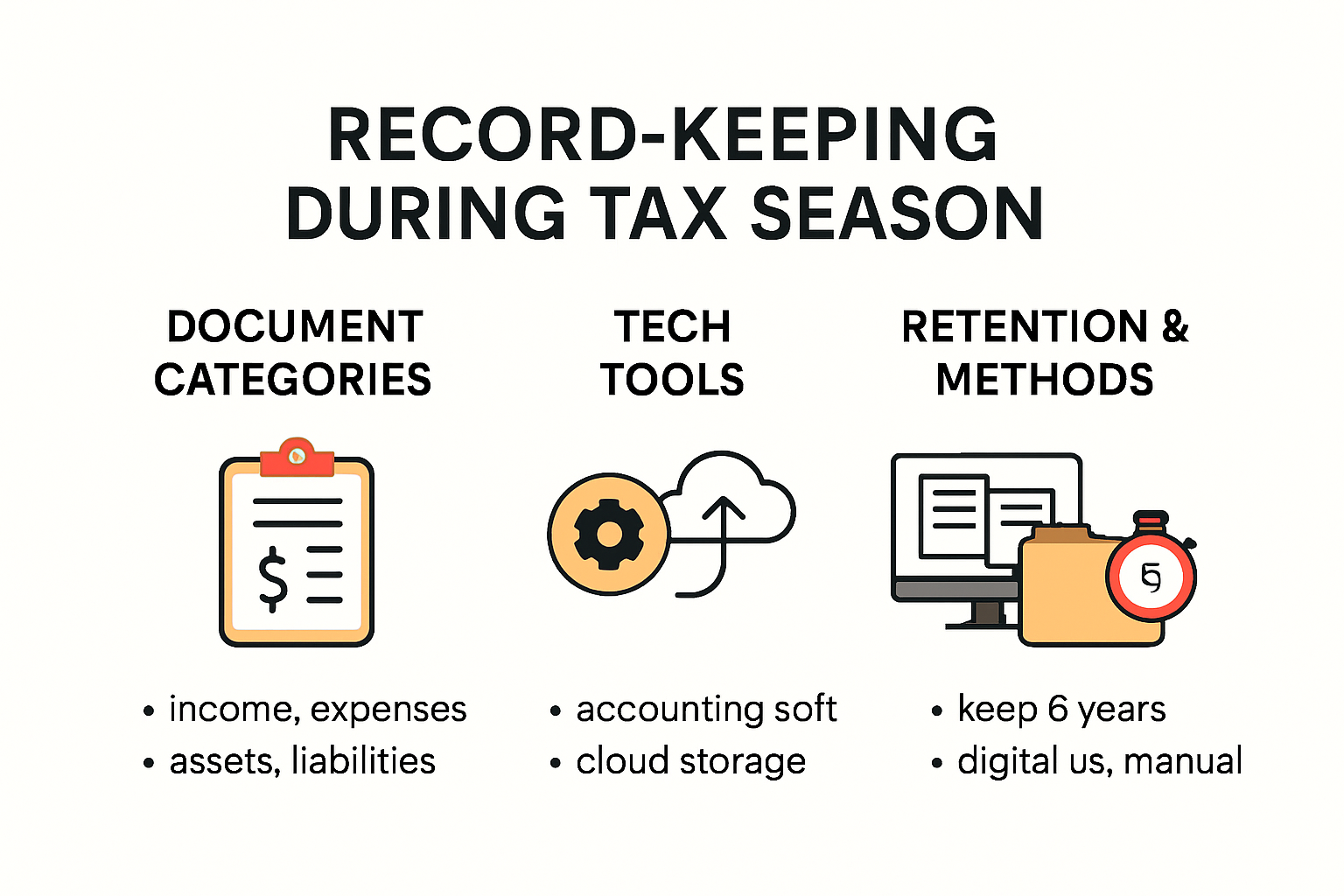
Effective record-keeping is the cornerstone of successful tax management for real estate professionals. Maintaining organized and comprehensive financial documentation not only simplifies tax preparation but also provides critical protection during potential audits.
Digital Documentation Strategies
In the digital age, real estate agents have powerful tools to streamline record-keeping. IRS Publication 583 emphasizes the importance of maintaining accurate and systematic financial records. Digital solutions offer several advantages for tracking business expenses and income.
Key digital documentation strategies include:
- Cloud Storage Systems: Utilize secure cloud platforms to store digital copies of receipts, invoices, and financial documents
- Scanning Technology: Immediately digitize paper documents to create a comprehensive electronic archive
- Expense Tracking Apps: Leverage mobile applications that automatically categorize and log business expenses
To help you evaluate effective digital record-keeping methods, here’s a table comparing popular approaches for real estate professionals:
| Record-Keeping Method | Key Benefits | Example Tools |
|---|---|---|
| Cloud Storage | Access from anywhere, secure backups | Google Drive, Dropbox |
| Scanning Technology | Eliminates paper clutter, quick access | Adobe Scan, CamScanner |
| Expense Tracking Apps | Automatic expense categorization, reminders | Expensify, QuickBooks |
| Accounting Software | Financial reporting, integrates with banking | Xero, FreshBooks |
Categorizing and Organizing Financial Records
Precise categorization is crucial for effective tax preparation. According to IRS guidance for small businesses, real estate professionals should maintain detailed records that clearly distinguish between different types of income and expenses.
Recommended organizational practices:
- Create separate folders for different expense categories (marketing, transportation, professional development)
- Maintain a consistent naming convention for digital files
- Use spreadsheets or accounting software to track income and expenses
- Retain financial records for the recommended period (typically 3-7 years)
Comprehensive Documentation for Tax Compliance
Comprehensive record-keeping goes beyond simple expense tracking. Real estate professionals must document various financial aspects of their business to ensure accurate tax reporting.
Essential documents to preserve include:
- Commission statements
- Mileage logs
- Marketing expense receipts
- Professional membership and licensing fees
- Home office expense documentation
- Vehicle use records
Automated tracking solutions can significantly simplify this process, helping agents capture and organize financial information with minimal manual effort.
Additional best practices for comprehensive record-keeping:
- Reconcile bank statements monthly
- Separate personal and business finances
- Backup digital records in multiple locations
- Consult with a tax professional annually to review documentation strategies
By implementing robust record-keeping systems, real estate professionals can transform tax season from a stressful experience into a systematic and manageable process. Proactive documentation not only ensures compliance but also provides valuable insights into business financial performance.
Planning Ahead: Tax Strategies for 2025
Successful real estate professionals understand that strategic tax planning is not a last-minute activity but a year-round commitment. As we approach 2025, proactive tax strategies can significantly impact financial outcomes and help agents maximize their earnings while maintaining compliance.
Leveraging Retirement Account Contributions
Retirement accounts offer powerful tax advantages for real estate professionals. PRC Accounting & Taxation highlights the importance of strategic retirement account contributions as a key tax planning tool.
Key retirement account strategies include:
- SEP IRA Contributions: Self-employed real estate agents can contribute up to 25% of their net earnings, reducing taxable income
- Solo 401(k) Plans: Allows for higher contribution limits compared to traditional employee retirement accounts
- Roth IRA Conversions: Strategic conversions can provide tax-free growth and flexible withdrawal options
Maximizing Business Deductions and Credits
The tax landscape for real estate professionals continues to evolve, with new opportunities for strategic deductions. According to Wolters Kluwer tax research, understanding the nuanced tax strategies can provide significant financial benefits.
Advanced deduction strategies for 2025:
- Fully utilize the Qualified Business Income (QBI) deduction
- Take advantage of bonus depreciation before phase-out periods
- Optimize home office deductions with precise documentation
- Consider strategic entity structuring for tax efficiency
Strategic Business Entity Selection
Choosing the right business structure can dramatically impact your tax liability. Real Estate Agent’s Tax Strategy Playbook emphasizes the importance of selecting an entity that aligns with your specific business goals and tax optimization strategies.
Considerations for business entity selection:
- Limited Liability Company (LLC)
- S-Corporation
- Sole Proprietorship
- Partnership structures
Each entity type offers unique tax advantages and potential limitations. Consulting with a tax professional can help determine the most beneficial structure for your specific situation.
Automated tracking solutions can support these strategies by providing comprehensive financial insights and helping agents maintain meticulous records throughout the year.
Additional forward-looking tax planning recommendations:
- Stay informed about changing tax regulations
- Conduct mid-year tax reviews
- Maintain separate business and personal financial accounts
- Work closely with tax professionals who understand real estate industry nuances
By implementing these strategic approaches, real estate professionals can transform tax planning from a compliance requirement into a proactive tool for financial growth and optimization. Thoughtful preparation and continuous learning are the keys to navigating the complex tax landscape of 2025 and beyond.

Frequently Asked Questions
What are the essential tax deductions for real estate agents and brokers?
Real estate agents can deduct professional expenses such as vehicle expenses, marketing and advertising costs, and technology-related expenses to lower their tax burden.
How can I maximize my retirement contributions as a real estate agent?
You can maximize your retirement contributions by using plans like a SEP IRA or a Solo 401(k), allowing you to contribute a percentage of your net earnings and reduce your taxable income.
What are common tax mistakes to avoid for real estate professionals?
Common mistakes include misclassifying personal and business expenses, neglecting to make quarterly tax payments, and misunderstanding the implications of your chosen business structure.
What strategies should I implement for effective record-keeping as a real estate agent?
Implement digital documentation strategies using cloud storage, categorize and organize your financial records accurately, and maintain comprehensive documentation for tax compliance.
Simplify Tax Season and Free Up Time With LeadLinker
Are you tired of the constant stress of managing receipts, tracking expenses, and juggling appointments as another tax season approaches? This article highlights how critical it is for real estate agents to keep airtight records, respond to leads quickly, and avoid the costly mistake of missing deductions or opportunities. If you find yourself buried in paperwork and losing valuable time to manual tasks, LeadLinker can help you reclaim your productivity and peace of mind.

Save hours every week by letting LeadLinker automate your lead response and appointment scheduling across SMS, email, and social media. With our AI assistant, you can focus on your clients and keep your records organized for optimal tax compliance. Thousands of agents have already discovered how easy it is to work smarter and boost their bottom line using our platform. Ready to cut down on administrative headaches and stay ahead in 2025? Get started today at LeadLinker.co and experience real efficiency for your real estate business. Learn more about time-saving strategies and seamless integration on our main site.
Recommended
- 30 Real Estate Text Message Ideas for Agents in 2025 – Lead Linker
- Lead Capture Strategies for Real Estate Agents in 2025 – Lead Linker
- Real Estate Sales Funnel Guide for Agents and Teams 2025
- Real Estate Agent Time Management: Strategies for Success 2025 – Lead Linker
- blog | siift | When to Register a Business: A 2025 Guide for Side Hustlers and New Founders
- Top Lead Generation Tactics for 2025 | Web Spider Solutions