Getting referrals is the engine behind thriving real estate businesses and every agent knows word of mouth can do what no ad ever could. Here is what might surprise you. A staggering 36 percent of sellers and 40 percent of buyers find their agent through referrals according to the National Association of Realtors. Chasing leads is costly and exhausting but it turns out the strongest growth often comes from relationships you already have.
Table of Contents
- Building Strong Relationships With Clients
- Leveraging Social Proof And Testimonials
- Creating A Simple Referral Program
- Using Digital Marketing To Increase Referrals
Quick Summary
| Takeaway | Explanation |
|---|---|
| Build Trust through Expertise | Establish credibility by providing honest insights and prioritizing clients’ best interests. This fosters client loyalty and referral potential. |
| Personalize Client Interactions | Tailor communications and services to individual client needs, enhancing relationships and loyalty that lead to referrals. |
| Utilize Testimonials Effectively | Collect specific, authentic testimonials, and showcase them across platforms to build credibility and attract new clients. |
| Create an Attractive Referral Program | Design a simple referral program with clear incentives that motivate clients to refer your services. |
| Leverage Digital Marketing | Use social media and content marketing to showcase your expertise and engage potential clients, expanding your network for referrals. |
Building Strong Relationships with Clients
Successful real estate professionals understand that building strong client relationships is the cornerstone of getting more referrals. The foundation of trust and genuine connection determines whether clients will recommend you to their network. Learn more about nurturing client connections and transform casual interactions into long-term professional partnerships.
Understanding Client Expectations and Communication
Client relationships begin with exceptional communication and setting clear expectations from the initial interaction. According to the National Association of Realtors, 36% of sellers and 40% of buyers find real estate agents through referrals, highlighting the critical importance of creating memorable client experiences.
Effective communication involves more than just responding to messages. It means actively listening to clients’ needs, providing transparent updates, and demonstrating genuine care throughout their real estate journey. This approach requires consistent engagement, prompt responses, and a proactive attitude towards addressing potential concerns.
Personalizing Client Interactions
Each client brings unique circumstances, preferences, and expectations to their real estate transaction. Successful agents recognize that a one-size-fits-all approach rarely works. Personalizing interactions means understanding individual client motivations, adapting communication styles, and tailoring service delivery to match specific client requirements.
This personalization extends beyond the transaction itself. Following up after the sale, remembering important dates, and maintaining periodic contact can transform a transactional relationship into a lasting professional connection. Small gestures like sending birthday cards, market updates, or checking in periodically demonstrate that you value the relationship beyond the immediate business opportunity.
Building Trust Through Expertise and Integrity
Trust remains the most crucial element in client relationships. Real estate professionals must consistently demonstrate expertise, transparency, and ethical conduct. This means providing honest market insights, offering realistic expectations, and always prioritizing the client’s best interests over immediate financial gains.
By developing a reputation for reliability and professionalism, you create a powerful referral network. Clients who feel genuinely supported and understand the value you bring are more likely to recommend your services to friends, family, and colleagues. Your commitment to excellence becomes your most potent marketing tool in generating consistent referrals.
Remember, getting more referrals is not about aggressive marketing tactics but about creating meaningful connections that inspire clients to become your most enthusiastic brand ambassadors.
Leveraging Social Proof and Testimonials
In the competitive real estate market, social proof has emerged as a powerful strategy for getting more referrals. Discover how to amplify your professional reputation through strategic testimonial management and client endorsements.
The Psychological Impact of Testimonials
Testimonials are more than just positive statements about your services. According to research published in the Journal of Consumer Research, social proof significantly increases consumer trust and intent to transact. Potential clients are more likely to choose a real estate professional when they see authentic experiences from previous clients.
The power of testimonials lies in their ability to create emotional connection and credibility. When prospective clients read detailed, genuine accounts of successful transactions, they can envision themselves achieving similar outcomes. This psychological mechanism transforms abstract service offerings into tangible, relatable experiences.
Strategic Collection and Presentation of Client Testimonials
Collecting compelling testimonials requires a systematic approach. Not all client feedback is equally effective. The most powerful testimonials are specific, highlight unique value propositions, and address potential client concerns. Focus on collecting stories that showcase your problem solving skills, market expertise, and commitment to client satisfaction.
A Harvard Business School working paper emphasizes the importance of perceived authenticity in online reviews. This means avoiding generic praise and instead capturing detailed, nuanced client experiences that demonstrate your professional capabilities.
Multichannel Testimonial Distribution
Testimonials are most effective when strategically distributed across multiple platforms. This includes your professional website, social media profiles, LinkedIn, Google Business Profile, and printed marketing materials. Each platform offers unique opportunities to showcase client success stories.
The following table summarizes the main avenues for leveraging social proof and testimonials, along with their distinct advantages as presented in the article. This can help agents decide where and how to share client testimonials for the greatest impact.
| Channel/Method | Advantage |
|---|---|
| Professional Website | Central, easily accessible showcase for testimonials and success stories |
| Social Media Profiles | Wide audience reach and engagement through regular updates and story sharing |
| Builds credibility among peers and expands professional network | |
| Google Business Profile | Trusted platform for new clients searching reviews |
| Printed Marketing Materials | Tangible proof shared during meetings and open houses |
| Video Testimonials/Case Studies | Enhanced emotional impact and relatability through engaging multimedia content |
Consider creating multimedia testimonials that go beyond text. Video testimonials, client interviews, and before-and-after case studies can provide deeper insights into your professional approach. These formats offer more engaging and convincing social proof compared to traditional written recommendations.
Remember, getting more referrals is not just about collecting testimonials but about curating a narrative that highlights your unique value as a real estate professional. Authentic, strategic social proof transforms satisfied clients into enthusiastic brand ambassadors who actively recommend your services.
Creating a Simple Referral Program
Referral programs are strategic tools for real estate professionals seeking consistent business growth. Explore effective referral strategies that transform satisfied clients into active business partners.
Designing an Attractive Referral Structure
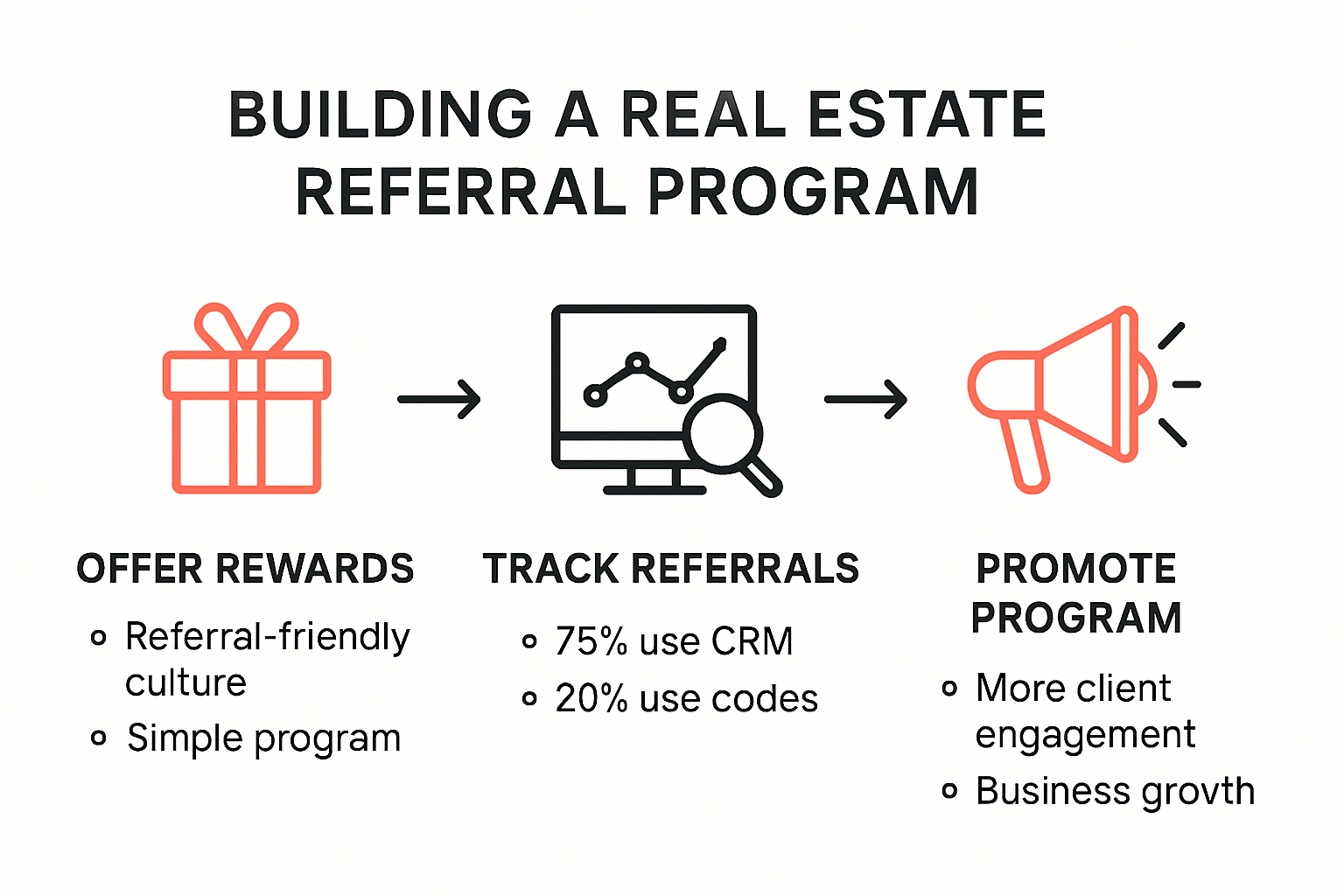
A successful referral program requires clear, compelling incentives that motivate clients to recommend your services. The structure should be transparent, easy to understand, and valuable enough to encourage participation. Consider offering rewards that genuinely excite your clients, such as gift cards, service credits, or targeted financial compensation.
Key components of an effective referral program include establishing straightforward qualification criteria, defining precise reward mechanisms, and maintaining consistent communication about program details. Complexity can discourage participation, so prioritize simplicity and clarity in your approach.
To help real estate professionals systematically enhance their referral programs, the following table breaks down the key components for designing and managing a simple, effective referral program as discussed in the article.
| Component | Description |
|---|---|
| Incentive Structure | Clear, exciting rewards such as gift cards, service credits, or financial compensation |
| Qualification Criteria | Simple, straightforward guidelines on who and what qualifies for referral rewards |
| Reward Mechanism | Transparent and easy-to-understand process for earning and delivering rewards |
| Communication | Consistent updates and clear information about the program to encourage participation |
| Tracking Tools | Use CRMs, referral codes, or personalized links for accurate and transparent management |
| Client Engagement | Educate clients at key touchpoints and keep participation effortless and natural |
Tracking and Managing Referral Performance
Implementing a robust tracking system is crucial for monitoring referral program effectiveness. Utilize customer relationship management (CRM) tools that can automatically record and validate referrals, ensuring accurate attribution and timely reward distribution. Digital platforms enable real-time tracking, helping you understand which clients are your most active referral sources.
Consider creating unique referral codes or personalized tracking links for each client. These tools not only simplify tracking but also provide clients with a sense of ownership and engagement in the referral process. Transparent reporting builds trust and encourages continued participation.
Cultivating a Referral-Friendly Culture
Beyond monetary incentives, creating a referral-friendly culture requires consistently exceptional service. Clients are more likely to recommend professionals who demonstrate genuine care, expertise, and reliability. Regular communication, personalized follow-ups, and going above client expectations transform transactional relationships into long-term professional networks.
Educate your clients about the referral program during key interaction points. This might include closing meetings, follow-up communications, or periodic newsletters. Make the program feel like a natural extension of your commitment to client satisfaction rather than a sales pitch.
Remember, getting more referrals is about building relationships, not just implementing a transactional program. Your reputation, combined with a well-designed referral strategy, becomes your most powerful marketing tool.
Using Digital Marketing to Increase Referrals
Digital marketing has transformed how real estate professionals approach referral generation. Learn strategic digital marketing techniques to expand your professional network and attract quality referrals.
Strategic Social Media Engagement
Social media platforms offer unprecedented opportunities for getting more referrals. According to Florida Realtors, crafting a genuine online presence involves more than occasional posting. Successful digital marketing requires consistent, valuable content that demonstrates your expertise and builds trust with potential clients.
Effective social media strategies include sharing market insights, local community updates, client success stories, and practical real estate advice. By positioning yourself as a knowledgeable resource, you encourage followers to view you as a trusted professional worth recommending. Interactive content like live Q&A sessions, property tours, and market trend analyses can significantly boost engagement and referral potential.
Content Marketing and Referral Optimization
Content marketing serves as a powerful mechanism for generating organic referrals. Create informative blog posts, videos, and infographics that address common real estate challenges and provide genuine value to potential clients. The goal is to establish yourself as an authoritative voice in the real estate industry.
According to Baylor University’s Keller Center for Research, offering material benefits can significantly increase referral rates. Consider developing downloadable resources like first-time homebuyer guides, market analysis reports, or neighborhood investment guides that users can share, extending your digital reach.
Leveraging Digital Networking Platforms
Professional networking platforms like LinkedIn provide targeted opportunities for referral generation. Optimize your profile to showcase client testimonials, professional achievements, and specialized expertise. Engage with professional groups, share industry insights, and connect with complementary professionals such as mortgage brokers, home inspectors, and local business owners.
Implement a systematic approach to digital networking. This includes regular content posting, meaningful interactions in professional forums, and strategic relationship building. Utilize platform features like recommendations and endorsements to enhance your professional credibility.
Remember, digital marketing for referrals is about building genuine connections. Your online presence should reflect the same professionalism, expertise, and client-focused approach you demonstrate in personal interactions.
Frequently Asked Questions
What are some effective strategies for getting more referrals in real estate?
Building strong relationships with clients, personalizing interactions, utilizing testimonials, and creating an attractive referral program are proven strategies for increasing referrals in real estate.
How can I personalize my communication with clients to encourage referrals?
Understanding individual client preferences and adapting your communication style, along with following up after transactions and maintaining contact, can significantly enhance client relationships and encourage referrals.
Why are testimonials important for real estate referrals?
Testimonials provide social proof that builds trust and credibility for real estate professionals. They demonstrate successful experiences from previous clients, making potential clients more likely to choose you based on the positive feedback.
How can I effectively manage a referral program?
Design a simple referral structure with clear incentives, track performance using CRM tools, and cultivate a referral-friendly culture by consistently providing exceptional service and communication.
Transform Referrals Into Lasting Growth With Effortless AI Support
You have learned how crucial relationships and rapid follow-up are for generating more referrals in real estate. But even the most dedicated professional can struggle with responding instantly, handling objections with confidence, and tracking every opportunity—especially when new leads reach out across multiple channels. Missing just one message or being slow to respond can mean losing that next valuable referral or falling short of your business goals.

Imagine delighting every referral with prompt, personalized communication, every time. With LeadLinker.co, you can automate your lead response, qualification, and appointment scheduling using cutting-edge AI. Our platform ensures you never miss a referral or inquiry, tackles objections in real time, and seamlessly syncs data to your existing CRM, all while letting you focus on building meaningful client connections. Ready to elevate your business and see how top agents use AI to maximize referrals? Discover real results and experience the transformation right here. Act now to capture every referral before your competition does.