
Building a strong real estate business starts with knowing your clients inside and out. Many agents rely on generic buyer personas to shape their marketing and end up missing the real opportunities in the market. The real difference comes when you realize that real estate agents need to recognize that generic personas provide little value unless they are built on detailed goals and real data. Why settle for broad guesses when the path to genuine client connection lies just a few steps deeper?
Table of Contents
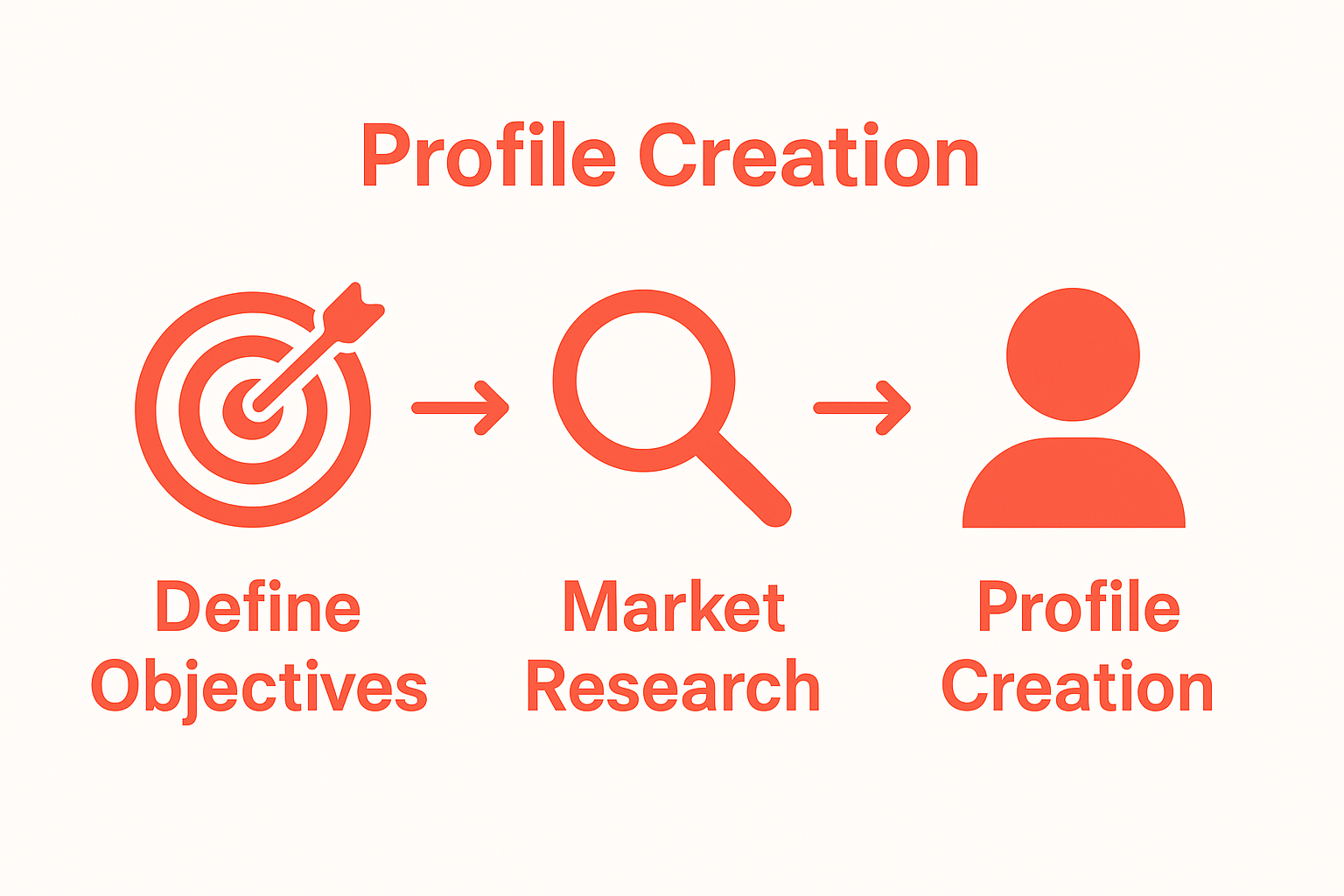
- Step 1: Define Your Goals And Objectives
- Step 2: Conduct In-Depth Market Research
- Step 3: Identify Key Demographic And Psychographic Traits
- Step 4: Create Detailed Buyer Persona Profiles
- Step 5: Validate And Adjust Your Personas
- Step 6: Implement Personas In Your Marketing Strategy
Quick Summary
| Key Point | Explanation |
|---|---|
| 1. Establish Clear Goals | Define specific, measurable objectives aligned with your real estate business plans to ensure impactful buyer personas. |
| 2. Conduct Comprehensive Market Research | Gather both quantitative and qualitative data to understand client motivations, preferences, and behaviors accurately. |
| 3. Blend Demographic and Psychographic Insights | Combine demographic traits with psychographic factors to create more nuanced and engaging buyer personas. |
| 4. Develop Detailed Buyer Personas | Create vivid, narrative-focused profiles that embody your target client segments for effective marketing strategies. |
| 5. Regularly Validate and Adjust Personas | Continuously review and refine your personas based on client feedback and market trends to maintain relevance. |
Step 1: Define Your Goals and Objectives
Successful buyer persona development starts with crystal clear goal setting. Real estate professionals must establish precise objectives that transform abstract customer understanding into actionable marketing strategies. This initial step involves creating a strategic roadmap that identifies exactly what you want to achieve through your buyer persona research.
Begin by conducting an introspective assessment of your real estate business goals. Are you aiming to increase client conversions, specialize in a particular property market segment, or expand your geographic service area? Your buyer persona goals must directly align with your broader business objectives. Real estate agents need to recognize that generic personas provide little value without specific, measurable outcomes in mind.
To develop meaningful goals, consider critical metrics that matter in your real estate practice. These might include reducing lead response times, improving client acquisition rates, or targeting specific demographic groups more effectively. Explore our comprehensive goal setting guide to refine your strategic approach. Specific objectives could range from increasing first-time homebuyer client interactions to developing targeted marketing campaigns for luxury property investors.
Your objectives should be structured using the SMART framework: Specific, Measurable, Achievable, Relevant, and Time-bound. For instance, instead of a vague goal like “attract more clients,” create a precise target such as “Increase millennial first-time homebuyer client base by 25% within six months through targeted digital marketing personas.” This approach transforms abstract intentions into concrete, trackable strategies that provide genuine business value.
Verify your goal-setting success by ensuring each objective passes a simple litmus test: Can you quantify the outcome? Does the goal directly connect to your broader business strategy? Will achieving this objective meaningfully impact your real estate practice’s growth and client engagement? If you can confidently answer “yes” to these questions, you have successfully completed the first critical step in buyer persona development.
Step 2: Conduct In-Depth Market Research
Market research is the cornerstone of developing accurate and effective buyer personas in real estate. This critical step transforms raw data into meaningful insights that illuminate your potential clients’ motivations, preferences, and behaviors. Comprehensive market research goes far beyond basic demographic information and requires a strategic, multifaceted approach to understanding your target audience.
Begin by gathering quantitative and qualitative data from multiple sources. Leverage local real estate transaction records, census data, and community demographic reports to understand population trends, income levels, and housing market dynamics. Municipal planning departments and real estate boards often provide valuable statistical information that can reveal emerging market segments and client characteristics. Learn more about crafting targeted property descriptions that resonate with these identified market segments.
Qualitative research demands a more nuanced approach. Conduct interviews with existing clients, attend local community events, and engage with real estate networking groups to capture the subtle narratives that numbers cannot reveal. Pay attention to recurring themes in client conversations about their housing needs, financial considerations, and lifestyle preferences. These personal insights will help you develop buyer personas that feel authentic and genuinely representative of your target market.
Utilize digital tools and platforms to supplement your research. Online surveys, social media listening tools, and real estate market analysis platforms can provide deeper insights into client behaviors and preferences. Analyze search trends, engagement metrics, and online interactions to understand how potential clients research and approach real estate decisions. The most successful buyer personas emerge from a combination of hard data and empathetic understanding.
Verify the completeness of your market research by ensuring you have a comprehensive view of your target audience. Can you articulate their primary motivations? Do you understand their financial constraints, lifestyle preferences, and decision-making triggers? If you can confidently answer these questions with specific, data-driven insights, you have successfully completed the market research phase of buyer persona development.
Step 3: Identify Key Demographic and Psychographic Traits
Transforming raw market research into actionable buyer personas requires a deep dive into both demographic and psychographic characteristics. Real estate professionals must go beyond surface-level statistics to create truly meaningful client representations that capture the nuanced motivations driving property decisions.
Demographic traits provide the foundational framework of your buyer persona. Analyze concrete characteristics such as age range, income levels, occupation, family status, and geographic location. For real estate specifically, these details might include first-time homebuyers in their early 30s, professional couples with dual incomes, or retirees seeking downsizing opportunities. Discover strategies for targeted client communication that speak directly to these specific demographic segments.
Psychographic traits add depth and emotional intelligence to your persona development. These characteristics explore the underlying motivations, values, lifestyle preferences, and personal challenges that influence property purchasing decisions. Consider elements like career ambitions, family goals, lifestyle aspirations, personal values, and emotional drivers behind real estate investments. A young professional might prioritize urban convenience and networking opportunities, while a growing family could emphasize school districts and community safety.
To effectively map these traits, conduct comprehensive interviews with existing clients, review transaction histories, and analyze behavioral patterns across different client segments. Utilize social media insights, community engagement data, and professional networking platforms to uncover subtle nuances that traditional demographic research might miss. Successful buyer personas blend quantitative data with qualitative understanding, creating a holistic representation of potential clients.
Verify the completeness of your demographic and psychographic research by assessing whether your persona feels like a real, three-dimensional individual. Can you describe their typical day? Understand their professional challenges? Predict their property search behaviors? If you can construct a narrative that feels authentic and comprehensive, you have successfully identified the key traits that will drive your real estate marketing and client engagement strategies.
The following table provides a quick reference checklist to confirm your buyer personas are comprehensive and actionable based on the guide’s verification strategies.
| Completion Criteria | Questions to Verify |
|---|---|
| Goal Alignment | Can you quantify the outcome and does it connect to your business strategy? |
| Research Completeness | Can you articulate client motivations, constraints, and preferences? |
| Persona Realism | Can you describe their typical day, challenges, and property search habits? |
| Actionability | Can the persona profiles predict client behaviour and guide marketing? |
| Validation Success | Have you adjusted personas based on real feedback and market shifts? |
| Implementation Performance | Are your personas increasing engagement, conversion, and client satisfaction? |
Step 4: Create Detailed Buyer Persona Profiles
Crafting comprehensive buyer persona profiles transforms abstract research into actionable client representations that drive real estate marketing strategies. The most effective personas are living, breathing narratives that capture the essence of your potential clients beyond mere statistical data. This step requires imagination, empathy, and a strategic approach to synthesizing your market research findings.
Begin by creating a narrative framework for each persona, giving them a name and a visual representation that makes them feel like real individuals. For instance, “Sarah Thompson, 35-year-old urban professional” or “Mark and Elena Rodriguez, first-time suburban homebuyers.” These fictional characters should include detailed backstories that incorporate the demographic and psychographic traits uncovered during your previous research. Explore advanced lead qualification techniques to refine your persona development process.
Detail each persona with comprehensive information that goes beyond basic demographics. Include specific career details, family dynamics, lifestyle preferences, financial goals, and personal challenges. Consider creating a comprehensive profile that covers their typical day, communication preferences, technology usage, and decision-making triggers. A luxury property investor persona might include details about their professional background, investment strategies, and aesthetic preferences, while a first-time homebuyer persona would focus on financial constraints, career aspirations, and family planning considerations.
Ensure your personas are actionable by mapping their potential interactions with your real estate services. Anticipate their questions, concerns, and emotional drivers throughout the property search and purchasing process. Include specific scenarios that illustrate how each persona might approach real estate decisions, their preferred communication channels, and the types of properties that would most appeal to them.
Verify the effectiveness of your buyer personas by testing them against real client interactions. Can you use these profiles to predict client behavior? Do they genuinely represent the diverse segments of your target market? If your personas feel like authentic, multidimensional individuals who could walk into your real estate office at any moment, you have successfully created detailed and valuable buyer persona profiles.

Step 5: Validate and Adjust Your Personas
Validation transforms theoretical buyer personas into powerful, actionable marketing tools. Real estate professionals must treat personas as living documents that continuously evolve with market dynamics and client interactions. This critical step ensures your meticulously crafted personas remain relevant, accurate, and genuinely representative of your target audience.
Initiate the validation process by conducting comprehensive feedback sessions with existing clients who closely match your created personas. Schedule in-depth interviews or focus groups that allow you to compare your persona assumptions against real-world experiences. Ask probing questions that explore whether your documented motivations, challenges, and preferences align with their actual decision-making processes. Learn advanced techniques for qualifying potential leads to refine your persona validation approach.
Utilize multiple validation methods to ensure robust insights. Analyze recent transaction data, client communication records, and feedback surveys to identify patterns that confirm or challenge your persona profiles. Pay close attention to discrepancies between your initial persona assumptions and actual client behaviors. Look for subtle shifts in preferences, emerging lifestyle trends, or changing financial considerations that might require persona adjustments. Technology tools like CRM analytics and client relationship management platforms can provide quantitative evidence to support or modify your persona representations.
Persona validation is an ongoing strategic process, not a one-time exercise. Establish a quarterly review system that systematically reassesses your buyer personas against current market conditions and client interactions. Consider economic shifts, demographic changes, and emerging real estate trends that might impact your target audience’s motivations and behaviors. Develop a flexible framework that allows for rapid persona refinement, ensuring your marketing strategies remain agile and responsive.
Verify the effectiveness of your validation efforts by assessing whether your adjusted personas demonstrate increased accuracy and predictive power. Can you anticipate client needs more precisely? Do your marketing messages resonate more deeply with potential clients? If your refined personas feel more authentic and your client engagement metrics show improvement, you have successfully completed the crucial validation and adjustment phase of buyer persona development.
Step 6: Implement Personas in Your Marketing Strategy
Implementing buyer personas transforms theoretical research into actionable marketing strategies that resonate deeply with your target audience. Successful implementation requires a holistic approach that touches every aspect of your real estate marketing ecosystem, from digital communications to personal interactions.
Begin by tailoring your communication channels and messaging to align precisely with each persona’s preferences and communication styles. A young professional persona might respond best to concise, mobile-friendly content delivered through Instagram and LinkedIn, while a family-focused persona may prefer detailed email newsletters and community-oriented Facebook groups. Discover strategies for crafting compelling property descriptions that speak directly to each persona’s unique motivations and interests.
Develop targeted content marketing strategies that address the specific challenges and aspirations of each persona. Create blog posts, video content, and social media campaigns that directly speak to their unique real estate journey. For instance, a first-time homebuyer persona might benefit from educational content about mortgage processes and first-time homeowner tips, while an investment-focused persona would appreciate market analysis and property valuation insights. Customize your visual content, including property photography and virtual tours, to reflect the aesthetic preferences and lifestyle expectations of each persona.
Personalization extends beyond digital marketing to every client touchpoint. Train your real estate team to recognize and adapt their communication and service approach based on persona characteristics. This might involve adjusting presentation styles, preparing tailored property shortlists, and anticipating specific questions or concerns unique to each persona type. Consider developing persona-specific onboarding processes, follow-up communications, and client care strategies that demonstrate a deep understanding of individual client needs.
Verify the effectiveness of your persona implementation by tracking key performance metrics. Monitor engagement rates, conversion metrics, and client satisfaction scores across different persona segments. Are your targeted strategies generating more qualified leads? Do clients feel more understood and supported throughout their real estate journey? If your marketing efforts show increased resonance and improved client relationships, you have successfully implemented your carefully developed buyer personas.
Ready to Bring Your Buyer Personas to Life With Real Results?
You have mastered the art of uncovering buyer motivations, defining your ideal clients, and refining strategic personas for real estate success. Now it is time to make that insight work for you in real-world lead generation, qualification, and conversion. Pain points such as slow response times, manual lead nurturing, and generic follow-up messages can undo all your careful persona-building. When you want to connect each unique persona with personalized, timely outreach, you need an intelligent solution that never sleeps.

Make your next move count. Discover how LeadLinker.co supercharges persona-driven marketing by automating responses, qualifying leads in context, and booking appointments through channels your clients prefer. Put your client research into action and watch your conversion rates climb. Start your free trial and see how your tailored personas can transform into lasting relationships—visit LeadLinker.co and take control of your lead management today.
Frequently Asked Questions
What is a buyer persona in real estate?
A buyer persona in real estate is a semi-fictional representation of your ideal client, created based on market research and real data about your existing customers. It includes demographic and psychographic traits that help you understand their motivations, challenges, and preferences when purchasing property.
How do I define goals for my buyer personas?
To define goals for your buyer personas, align them with your broader business objectives using the SMART framework: Specific, Measurable, Achievable, Relevant, and Time-bound. For example, aim to increase the client base of first-time homebuyers by a specific percentage within a set timeframe.
What types of research should I conduct to develop buyer personas?
You should conduct both quantitative and qualitative research. Quantitative research includes analyzing local real estate transaction data and census statistics, while qualitative research involves interviewing existing clients and engaging with community events to capture deeper insights into client motivations and preferences.
How often should I validate and adjust my buyer personas?
You should validate and adjust your buyer personas regularly—ideally on a quarterly basis. This allows you to account for changes in market dynamics, evolving client preferences, and emerging trends, ensuring your personas remain accurate and effective for your marketing strategies.