
Conversational AI is changing the way people and businesses talk to each other. In real estate, these systems can now handle client questions, schedule appointments, and analyze leads around the clock using natural language processing and machine learning. Here is something surprising: over 70 percent of real estate professionals report faster response times and better client engagement with AI-powered communication tools. Most agents still believe personal touch is unmatched, but the truth is, conversational AI is quietly setting a new standard for client service and operational efficiency.
Table of Contents
- Defining Conversational Ai: Core Concepts And Principles
- The Importance Of Conversational Ai In Real Estate
- How Conversational Ai Works: The Technology Behind It
- Key Features Of Conversational Ai Relevant To Real Estate
- Real-World Applications And Benefits Of Conversational Ai In Real Estate
Quick Summary
| Takeaway | Explanation |
|---|---|
| Conversational AI enhances client communication. | It delivers instant responses and personalized interactions, making client engagement seamless. |
| AI automates lead management effectively. | The technology qualifies and prioritizes leads automatically, streamlining the sales process for real estate agents. |
| Operational efficiency reduces costs significantly. | By automating routine tasks, conversational AI minimizes administrative burden and operational costs for real estate professionals. |
| NLP and machine learning enable nuanced understanding. | These technologies allow conversational AI to grasp human language complexities, initiating more natural conversations. |
| AI adapts to professional communication standards. | It understands specific industry terminology and caters to individual client preferences, enhancing interaction quality. |
Defining Conversational AI: Core Concepts and Principles
Conversational AI represents an advanced technological framework where artificial intelligence systems engage in human-like dialogues, understanding context, interpreting intent, and generating intelligent responses. These sophisticated systems combine natural language processing, machine learning, and computational linguistics to create interactive communication experiences that mimic human conversation patterns.
The table below breaks down foundational conversational AI technologies and their respective functions, providing a clear overview of each component mentioned in the article.
| Technology | Function |
|---|---|
| Natural Language Processing (NLP) | Allows machines to comprehend, interpret, and generate human language |
| Machine Learning Algorithms | Enable systems to learn from interactions and improve response accuracy |
| Neural Network Architectures | Simulate human brain processing for more nuanced understanding |
Understanding Foundational Technologies
At its core, conversational AI relies on several critical technologies that enable sophisticated interaction. Learn more about AI technologies that power intelligent communication systems. The primary components include:
- Natural Language Processing (NLP): Enables machines to comprehend, interpret, and generate human language
- Machine Learning Algorithms: Allow systems to learn from interactions and improve response accuracy
- Neural Network Architectures: Simulate human brain processing for more nuanced understanding
The research from the International Journal of Current Science Research and Review highlights that effective conversational AI must incorporate purpose-driven strategies, emotional design considerations, and adaptive behavioral models.
Practical Implementation in Professional Contexts
In professional environments like real estate, conversational AI transforms communication by providing instantaneous, contextually relevant interactions. These systems can handle complex inquiries, schedule appointments, pre-qualify leads, and provide personalized information without human intervention. The technology adapts to specific industry communication requirements, understanding sector-specific terminology and interaction protocols.
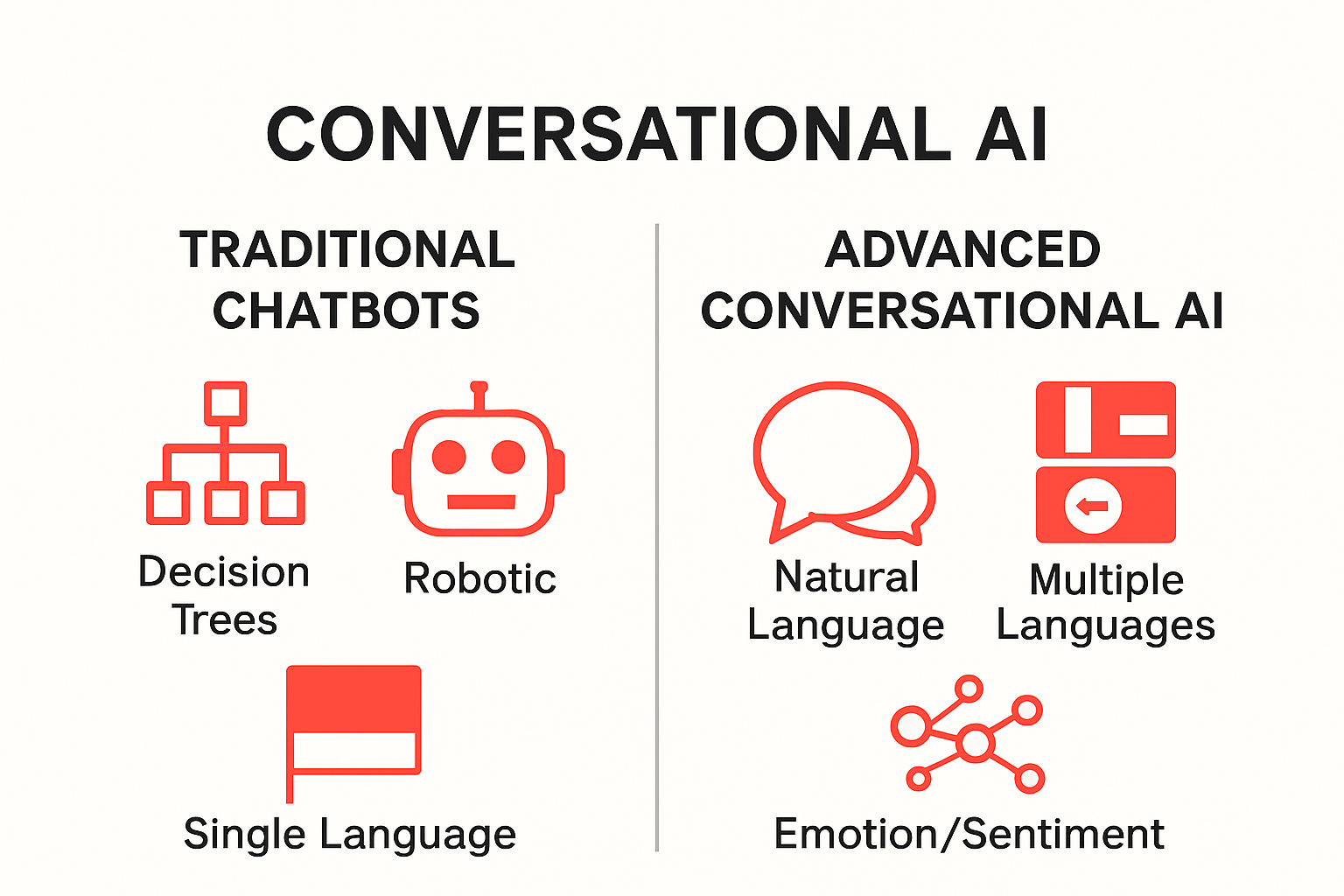
Unlike traditional rule-based chatbots, advanced conversational AI systems leverage deep learning to understand nuanced human communication, making interactions feel more natural and responsive. They can detect sentiment, manage multi-turn conversations, and provide increasingly sophisticated responses based on accumulated interaction data.
The Importance of Conversational AI in Real Estate
Conversational AI is revolutionizing the real estate industry by transforming how agents interact with potential clients, manage leads, and streamline communication processes. Explore AI tools for real estate professionals that are reshaping the industry landscape. These intelligent systems offer unprecedented capabilities that address critical challenges faced by real estate agents and brokers.
Enhancing Lead Management and Communication
In the competitive real estate market, speed and personalization are crucial. Conversational AI enables agents to:
- Instant Response: Provide immediate answers to client inquiries 24/7
- Lead Qualification: Automatically screen and prioritize potential clients
- Personalized Interactions: Deliver tailored communication based on individual client needs
According to research exploring virtual assistants in real estate, these AI systems can significantly reduce response times and improve overall client engagement rates.
Operational Efficiency and Cost Reduction
Conversational AI dramatically transforms operational workflows by automating repetitive tasks and reducing manual intervention. Real estate professionals can leverage these technologies to:
- Minimize administrative workload
- Reduce operational costs
- Scale communication capabilities without additional staffing
- Capture and nurture leads more effectively
By integrating advanced natural language processing and machine learning, conversational AI systems can handle complex interactions, schedule appointments, and provide contextually relevant information without human oversight. This technological approach allows real estate agents to focus on high-value activities such as relationship building and closing deals, while maintaining consistent and responsive client communication.
How Conversational AI Works: The Technology Behind It
Conversational AI operates through a sophisticated technological ecosystem that transforms raw communication inputs into intelligent, contextually relevant responses. Discover advanced AI communication strategies that power modern interaction systems.
Natural Language Processing and Understanding
At the core of conversational AI lies Natural Language Processing (NLP), a complex computational approach that enables machines to comprehend human language. This technology breaks down communication into several critical stages:
- Tokenization: Dividing text into smallest meaningful units
- Syntactic Analysis: Understanding grammatical structures
- Semantic Interpretation: Extracting deeper contextual meanings
According to research on explainable AI systems, these processes allow machines to translate human language into machine-readable formats, enabling nuanced understanding beyond simple keyword matching.
Machine Learning and Response Generation
Once language is processed, machine learning algorithms generate intelligent responses through advanced techniques. These systems leverage:
- Deep neural networks that simulate human cognitive processing
- Predictive models trained on extensive conversational datasets
- Adaptive algorithms that improve response accuracy over time
Machine learning enables conversational AI to not just respond, but to understand intent, detect sentiment, and provide increasingly sophisticated interactions.
The system continuously learns from each interaction, refining its communication capabilities and developing more natural, context-aware responses.
This technological framework allows conversational AI to move beyond scripted interactions, creating dynamic communication experiences that adapt to individual user needs and communication styles.
Key Features of Conversational AI Relevant to Real Estate
Conversational AI introduces transformative capabilities specifically tailored to address complex communication challenges in real estate. Explore cutting-edge AI tools for real estate professionals that are revolutionizing industry interactions.
Intelligent Lead Engagement and Qualification
In real estate, conversational AI delivers unprecedented lead management capabilities through sophisticated features:
- 24/7 Instant Communication: Provide immediate responses to client inquiries
- Contextual Understanding: Interpret nuanced property-related questions
- Automated Lead Scoring: Prioritize and categorize potential clients based on interaction quality
According to research on AI-powered chatbots, these systems can dramatically improve initial client engagement rates by offering consistent, personalized communication.
Advanced Communication and Interaction Capabilities
Conversational AI transcends traditional communication models by offering intelligent interaction features unique to real estate contexts:
- Multilingual communication support
- Sentiment analysis for understanding client emotions
- Adaptive communication strategies based on individual client profiles
- Seamless integration with existing customer relationship management systems
These advanced capabilities enable real estate professionals to deliver highly personalized, efficient communication experiences that adapt to individual client needs and preferences. By leveraging machine learning and natural language processing, conversational AI transforms how agents interact with potential buyers, sellers, and investors.
The following table summarizes the key features of conversational AI in real estate, helping readers quickly compare functionalities that address common industry challenges.
| Feature | Description |
|---|---|
| 24/7 Instant Communication | Provides immediate responses to client inquiries at any time |
| Contextual Understanding | Interprets nuanced, property-related questions |
| Automated Lead Scoring | Prioritizes and categorizes leads based on quality of interactions |
| Multilingual Support | Communicates with clients in multiple languages |
| Sentiment Analysis | Detects client emotions during interactions |
| CRM Integration | Seamlessly connects with existing customer relationship management systems |
Real-World Applications and Benefits of Conversational AI in Real Estate
Conversational AI is transforming real estate operations by providing intelligent, responsive communication solutions that address complex industry challenges. Discover practical AI implementation strategies that are revolutionizing professional practices.
Lead Generation and Client Interaction
In the competitive real estate market, conversational AI serves as a powerful tool for generating and nurturing potential leads:
- Instant Engagement: Capture client interest immediately through 24/7 responsive communication
- Personalized Screening: Automatically qualify leads based on detailed interaction analysis
- Comprehensive Information Delivery: Provide instant property details, neighborhood insights, and scheduling options
According to research from the National Association of Realtors, technology adoption is accelerating, with AI-driven tools significantly improving client communication efficiency.
Operational Efficiency and Cost Management
Conversational AI delivers substantial operational benefits for real estate professionals by:
- Reducing manual administrative tasks
- Minimizing response time to client inquiries
- Providing consistent, accurate information across multiple communication channels
- Enabling agents to focus on high-value interaction and deal closure
By automating routine communication processes, real estate teams can optimize their resources, reduce operational costs, and create more scalable business models.
 The technology allows professionals to manage larger client portfolios without compromising personalized service quality, ultimately driving business growth and client satisfaction.
Take Control of Your Real Estate Leads with AI-Powered Efficiency
Are you tired of missing valuable opportunities because you cannot respond instantly to every client inquiry? This article highlighted how conversational AI can solve slow lead response and manual qualification issues that cost real estate professionals both time and potential sales. With growing client expectations for 24-7 communication and personalized engagement, falling behind means losing out on high-quality leads and risking lower conversion rates.

Experience first-hand how LeadLinker.co leverages conversational AI to automatically respond to inquiries, qualify prospects, and book appointments across all your communication channels. See how our AI assistant can save you hours every week, reduce staffing costs, and help you capture every lead with instant, customized responses. Explore real case studies and discover how top agents increased appointment bookings and grew their businesses with our platform. Make your next move – visit LeadLinker.co today and discover how easy it can be to transform your real estate workflow with the power of AI.
Frequently Asked Questions
What is Conversational AI?
Conversational AI refers to a technological framework that enables artificial intelligence systems to engage in human-like dialogues, using natural language processing and machine learning to understand context and generate intelligent responses.
How does Conversational AI work in the real estate sector?
In real estate, Conversational AI helps agents by automating communication processes such as answering client inquiries, scheduling appointments, and qualifying leads, thereby enhancing operational efficiency and client engagement.
What technologies drive Conversational AI?
Conversational AI is powered by technologies including Natural Language Processing (NLP), machine learning algorithms, and neural network architectures that enable machines to comprehend and respond to human language effectively.
What are the benefits of using Conversational AI for real estate agents?
Using Conversational AI allows real estate agents to provide instant responses to client inquiries, improve lead management through automated screening, and enhance overall communication efficiency, ultimately saving time and reducing operational costs.