
Tax season can sneak up fast on realtors who juggle client meetings, showings, and paperwork every day. Here is a wild fact. About 25-30% of your income could be lost to taxes if you do not plan ahead. Most agents think deductions are just about saving receipts but the real unlock is knowing exactly which moves keep the most cash in your pocket. Get ready for tax tips that flip the script on what you thought you knew.
Table of Contents
- Essential Tax Deductions For Realtors
- Best Record-Keeping Practices For Real Estate Teams
- Tax Planning Strategies For Realtors And Brokers
- Common Tax Mistakes Realtors Should Avoid
Quick Summary
| Takeaway | Explanation |
|---|---|
| Leverage Home Office Deductions | Deduct expenses for a dedicated home workspace to lower your taxable income. |
| Track Vehicle and Travel Expenses | Use mileage logs and expense tracking to deduct transportation costs effectively. |
| Invest in Professional Development | Deduct marketing and education expenses to enhance your business and reduce taxes. |
| Establish Systematic Record-Keeping | Utilize digital tools to maintain organized financial records, easing tax preparation. |
| Avoid Common Misclassification Errors | Ensure accurate categorization of expenses to prevent audits and penalties. |
Essential Tax Deductions for Realtors
Navigating tax deductions can transform your financial strategy as a real estate professional. The right approach to tax deductions can significantly reduce your taxable income and keep more money in your pocket. Learn how to optimize your tax strategy with these critical deduction strategies tailored specifically for realtors.
Home Office Deductions
Real estate professionals spend considerable time working outside traditional office spaces. The home office deduction offers a valuable opportunity to reduce your tax burden. According to IRS Publication 535, you can deduct expenses directly related to your home workspace if it meets specific criteria. This includes a dedicated space used exclusively and regularly for your real estate business.
To qualify, your home office must be your primary work location or a place where you consistently meet clients. You can choose between two calculation methods: the simplified method (which allows a standard $5 per square foot deduction) or the actual expense method. The actual expense method requires detailed tracking of mortgage interest, property taxes, utilities, insurance, and home maintenance costs proportional to your office space.
Here is a comparison table summarizing the two main home office deduction methods as described above, to help you quickly see the differences at a glance:
| Method | Calculation Basis | Main Requirements | Documentation Needed |
|---|---|---|---|
| Simplified Method | $5 per sq. foot (up to 300 sq. ft) | Must be dedicated, exclusive workspace in your home | Minimal, basic space measure |
| Actual Expense Method | Portion of actual home expenses | Must track all related expenses and apportion correctly | Detailed receipts & records |
Vehicle and Travel Expenses
Real estate professionals rely heavily on transportation, making vehicle expenses a critical tax deduction area. IRS Topic No. 510 provides clear guidelines on deducting business-related vehicle expenses. You have two primary calculation methods: the standard mileage rate or actual expense tracking.
The standard mileage rate allows you to deduct a set amount per business mile driven. For 2025, this rate is typically adjusted annually by the IRS. Alternatively, the actual expense method involves tracking all vehicle-related costs including gas, maintenance, insurance, and depreciation. Careful documentation is crucial. Keep a detailed mileage log that records the date, destination, purpose, and miles driven for each business trip.

Marketing and Professional Development Expenses
Investing in your professional growth and marketing efforts can provide significant tax advantages. Expenses related to marketing materials, advertising, professional subscriptions, continuing education courses, and networking events are typically tax-deductible. This includes costs for business cards, website maintenance, social media advertising, professional photography, and real estate conference attendance.
Professional development expenses such as licensing fees, exam preparation materials, and industry-specific training can also be deducted. These investments not only support your business growth but also offer potential tax benefits. Remember to retain receipts and documentation for all expenses to substantiate your deductions during tax filing.
By understanding and strategically applying these tax deductions, real estate professionals can optimize their financial outcomes. Consult with a tax professional to ensure you’re maximizing your deductions while remaining compliant with current tax regulations.
Best Record-Keeping Practices for Real Estate Teams
Effective record-keeping is the backbone of financial management for real estate teams. Proper documentation not only simplifies tax preparation but also provides critical insights into business performance. Discover advanced time management strategies that can help streamline your record-keeping processes and maximize operational efficiency.
Digital Documentation Systems
In 2025, real estate professionals must embrace digital record-keeping solutions that offer comprehensive and secure document management. According to IRS Guidelines, maintaining accurate and organized records is crucial for substantiating income, deductions, and credits. Digital platforms allow real estate teams to centralize financial documents, ensuring easy access and reducing the risk of lost paperwork.
Key digital documentation features to prioritize include cloud storage, automatic categorization, receipt scanning capabilities, and integration with accounting software.
These systems enable real-time tracking of expenses, mileage, client interactions, and financial transactions. Look for solutions that offer secure backup, version control, and multi-user access to support collaborative record-keeping across your team.
Systematic Expense Tracking
Developing a systematic approach to expense tracking is essential for real estate teams. Create a standardized process for documenting all business-related expenses, including client meetings, marketing materials, travel costs, and professional development investments. Each team member should be trained to capture and submit expenses promptly, using digital tools that timestamp and categorize transactions.
Implement a consistent workflow where expenses are logged immediately, with digital receipts uploaded to a centralized system. Categorize expenses by type (marketing, transportation, professional development) to simplify tax preparation and financial analysis. Utilize expense tracking apps that integrate with accounting software, allowing for real-time monitoring and generating comprehensive financial reports.
Retention and Audit Preparation
Real estate teams must develop a robust document retention strategy that complies with tax regulations and protects the business during potential audits. The IRS recommends maintaining financial records for a minimum of three years from the date of tax filing. Create a structured digital filing system that organizes documents by year, type, and category, making retrieval simple and efficient.
Establish clear protocols for document retention, including guidelines for scanning physical documents, naming conventions, and secure storage procedures. Consider implementing a document retention policy that outlines how long different types of records should be kept, ensuring compliance with legal and tax requirements. Regularly backup digital records to multiple secure locations, protecting your team against potential data loss.
By adopting these comprehensive record-keeping practices, real estate teams can transform financial management from a complex challenge into a streamlined, efficient process. Invest in the right digital tools, train your team on best practices, and maintain a disciplined approach to documentation to support your business’s financial health and success.
Tax Planning Strategies for Realtors and Brokers
Tax planning is a critical component of financial success for real estate professionals. Developing a proactive approach to tax management can significantly impact your bottom line and help you retain more of your hard-earned income. Explore advanced tax optimization techniques that can transform your financial strategy in 2025.
Estimated Tax Payment Strategies
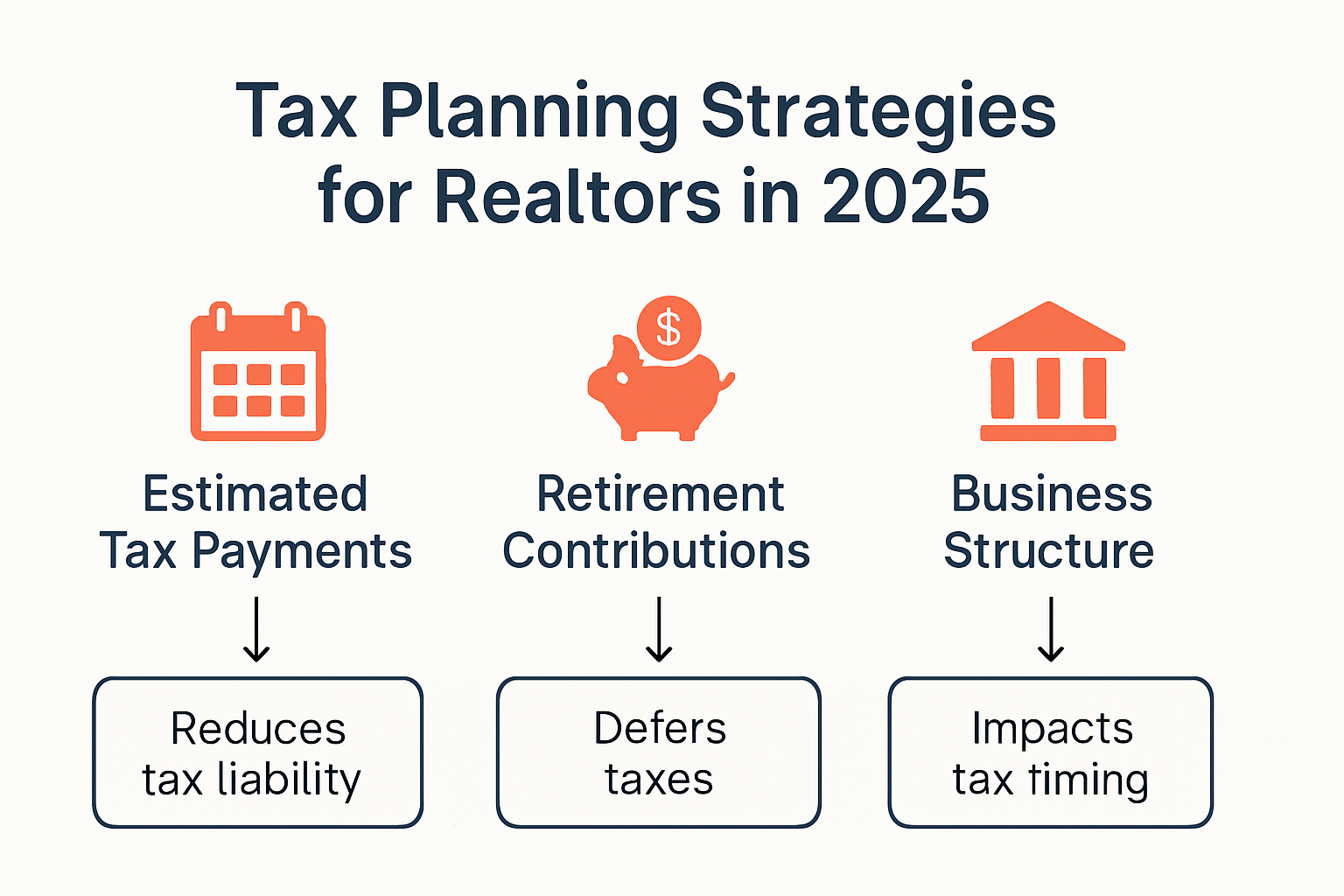
Real estate professionals typically operate as independent contractors, which means managing quarterly estimated tax payments becomes crucial. According to the U.S. Small Business Administration, failing to make accurate estimated tax payments can result in penalties and unexpected financial strain. Develop a systematic approach to estimating and paying taxes by calculating your projected annual income and setting aside approximately 25-30% for federal and state tax obligations.
Implement a robust cash flow management system that automatically allocates funds for tax payments. Consider opening a separate savings account dedicated to tax reserves, ensuring you have sufficient funds when quarterly payments are due. Use accounting software that can help predict your tax liability based on your current income and previous year’s tax performance. This proactive approach prevents last-minute financial scrambling and potential penalties.
Retirement and Investment Tax Optimization
Strategic retirement planning can provide significant tax advantages for realtors and brokers. IRS Publication 334 outlines various retirement account options that offer tax benefits for self-employed professionals. Explore retirement vehicles like Solo 401(k) plans, SEP IRAs, and Simple IRAs, which allow for substantial tax-deductible contributions and potential tax-deferred growth.
Maximize your retirement contributions to reduce your taxable income while simultaneously building long-term financial security. For 2025, investigate the contribution limits for different retirement accounts and develop a strategy that balances immediate tax savings with future financial goals. Consider consulting with a financial advisor who specializes in real estate professional tax strategies to create a personalized retirement and investment plan that aligns with your specific financial circumstances.
The following table summarizes retirement plan options for realtors, as discussed above, highlighting key features and tax benefits:
| Retirement Plan | Who It’s For | Main Benefits | Tax Advantages |
|---|---|---|---|
| Solo 401(k) | Self-employed, no staff | High contribution limits | Tax-deductible, tax deferral |
| SEP IRA | Self-employed, any size | Simple setup, flexible funding | Tax-deductible contributions |
| Simple IRA | Small businesses, few staff | Easy to establish, employer match | Tax-deductible, some deferral |
Business Structure and Tax Efficiency
Choosing the right business structure can significantly impact your tax liability and overall financial strategy. Evaluate options such as sole proprietorship, LLC, S-Corporation, or partnership based on your specific business needs. Each structure offers unique tax advantages and potential savings. An S-Corporation, for instance, can provide opportunities for reducing self-employment taxes by allowing you to receive both salary and dividend distributions.
Carefully analyze the tax implications of different business structures, considering factors like your annual income, business complexity, and long-term growth objectives. Consult with a tax professional who understands the nuanced tax landscape for real estate professionals. They can help you navigate the complexities of business entity selection, ensuring you optimize your tax position while maintaining compliance with current tax regulations.
By implementing these comprehensive tax planning strategies, real estate professionals can transform their approach to financial management. Proactive planning, strategic decision-making, and a thorough understanding of tax regulations can help you minimize your tax burden and maximize your financial potential in 2025 and beyond.
Common Tax Mistakes Realtors Should Avoid
Navigating the complex tax landscape can be challenging for real estate professionals. Understanding and avoiding common tax pitfalls is crucial for maintaining financial health and preventing costly penalties. Discover expert tax optimization strategies to protect your business and maximize your financial potential.
Misclassifying Business Expenses
One of the most critical errors real estate professionals make is incorrectly classifying business expenses. According to IRS Guidelines, precise expense categorization is essential for accurate tax reporting. Many realtors mistakenly mix personal and business expenses, which can trigger audits and potential financial penalties.
Develop a rigorous system for tracking and categorizing expenses. Create clear guidelines for what constitutes a legitimate business expense. This includes distinguishing between personal and professional vehicle use, entertainment costs, and marketing expenditures. Maintain detailed documentation for every expense, including receipts, invoices, and purpose of the transaction. Use digital tools that automatically categorize expenses and provide clear audit trails to minimize the risk of misclassification.
Overlooking Estimated Tax Payment Requirements
Independent real estate professionals often underestimate the importance of quarterly estimated tax payments. The National Association of Realtors highlights that failing to make accurate estimated tax payments can result in significant penalties. Many realtors mistakenly believe they can settle their entire tax obligation during the annual filing period.
Establish a disciplined approach to estimated tax payments. Calculate your projected annual income and set aside approximately 25-30% for federal and state taxes. Create a dedicated savings account specifically for tax reserves. Use accounting software or consult with a tax professional to help you accurately estimate and schedule quarterly payments. This proactive approach prevents unexpected financial strain and potential IRS penalties.
Inadequate Record-Keeping and Documentation
Poor record-keeping is a critical mistake that can expose real estate professionals to significant financial and legal risks. The Northern Virginia Association of Realtors emphasizes the importance of maintaining comprehensive and organized financial documentation. Many realtors fail to keep sufficient records, making it challenging to substantiate income, expenses, and deductions during potential audits.
Implement a robust digital record-keeping system that captures all financial transactions. Develop a consistent process for scanning and storing receipts, invoices, contract documents, and financial statements. Use cloud-based storage solutions that offer secure backup and easy retrieval. Retain documents for at least three years, as recommended by the IRS. Consider working with a professional bookkeeper or using advanced accounting software to ensure your financial documentation is thorough, accurate, and audit-ready.
By understanding and proactively addressing these common tax mistakes, real estate professionals can protect their financial interests and build a more secure business foundation. Invest time in developing systematic approaches to expense tracking, tax planning, and record-keeping to minimize risks and maximize your financial potential.
Frequently Asked Questions
What tax deductions can realtors claim to reduce their taxable income?
Realtors can claim deductions related to home office expenses, vehicle and travel costs, marketing and professional development expenses, and other business-related expenses to lower their taxable income.
How do I qualify for home office deductions as a realtor?
To qualify for home office deductions, you must have a dedicated space in your home that is exclusively used for your real estate business and is your primary workspace or a place to meet clients. You can choose between the simplified method or the actual expense method for calculating your deductions.
What are the best practices for record-keeping as a realtor?
Best practices for record-keeping include using digital documentation systems to store financial records securely, systematic expense tracking to log business expenses promptly, and maintaining a retention policy to keep documents organized and easily retrievable, especially for audits.
How can I avoid common tax mistakes as a realtor?
To avoid common tax mistakes, ensure precise categorization of business expenses, adhere to estimated tax payment schedules, and maintain comprehensive documentation of all transactions. Utilizing digital tools and consulting with a tax professional can also help minimize errors.
Stop Wasting Time on Manual Tasks and Start Maximizing Your Tax Savings
If the Top Tax Tips for Realtors in 2025: Smart Ways to Save article struck a chord, you’re not alone. So many real estate agents spend countless hours tracking expenses, staying up late updating spreadsheets, and worrying if they have missed a deduction. The article showed how vital record-keeping, systematic expense tracking, and operational efficiency are to keeping more of your hard-earned money come tax time. But what if you could streamline not only your finances but also your lead management? Imagine reclaiming hours each week and focusing on what actually matters most for your business growth and financial success.

Let LeadLinker.co handle your lead response, qualification, and appointment scheduling so you can invest that saved time into strategic business moves, like optimizing your taxes or improving your financial systems. Our AI-powered platform is purpose-built for Canadian real estate professionals who want to automate the busywork, increase their lead conversion rate, and scale without hiring more staff. See how other top agents boosted their results and reduced lost opportunities by letting LeadLinker do the heavy lifting. Ready to experience more financial freedom and less operational headache? Visit LeadLinker.co today and unlock your next level of tax-smart real estate success.