

Every real estate professional dreams of meeting clients who are ready to act now and make a decision fast. Here is the wild part. Hot leads can be up to ten times more likely to convert than typical prospects. Most people assume it all comes down to luck or old-fashioned hustle. The real separator is knowing how to read the signals and spot a hot lead the moment they appear.
Table of Contents
- Defining A Hot Lead: The Core Concept
- The Importance Of Hot Leads In Real Estate
- How Hot Leads Are Identified And Qualified
- Key Characteristics Of A Hot Lead
- Practical Implications Of Working With Hot Leads
Quick Summary
| Takeaway | Explanation |
|---|---|
| Identify hot leads quickly | Recognizing high-potential clients involves observing behavioural, financial, and engagement signals. |
| Utilize lead scoring techniques | Systematic evaluation of client readiness helps prioritize the best prospects for acquisition. |
| Communicate effectively with urgency | Rapid and personalized communication addresses client needs swiftly, enhancing the chance of conversion. |
| Focus on financial readiness indicators | Confirmed budgets and pre-approval status are key signs of a hot lead’s potential. |
| Manage expectations and resources carefully | Transparent communication and resource allocation streamline the client relationship for successful transactions. |
Defining a Hot Lead: The Core Concept
In real estate, a hot lead represents a potential client who demonstrates high purchase or sale intent, significant financial readiness, and immediate interest in property transactions. Unlike cold or lukewarm leads, hot leads are primed for swift conversion and require strategic, prompt engagement.
Characteristics of a Hot Lead
Recognizing a hot lead involves understanding specific behavioural and contextual signals that indicate strong transaction potential. These signals include:
Below is a table outlining the core characteristics to watch for when determining if a lead is hot in the real estate context, helping professionals prioritize their outreach and efforts.
| Characteristic | Description |
|---|---|
| Immediate property viewing availability | Client is ready to schedule showings right away |
| Clear financial pre-approval or budget | Pre-qualified for a mortgage or has a set budget |
| Defined property search parameters | Has specific requirements for property type/location |
| Quick, responsive communication | Replies promptly and engages frequently |
| Urgency to transact | Demonstrates need to close quickly (personal/professional) |
| Motivation level | Shows clear reasons or life events driving their actions |
- Immediate availability to view properties
- Clear financial pre-approval or confirmed budget
- Active property search with specific requirements
- Responsive communication and quick decision making
- Demonstrated urgency in completing a real estate transaction
Qualifying the Hotness of a Lead
Real estate professionals assess lead temperature through comprehensive evaluation metrics. Learn more about lead qualification strategies that help determine a lead’s potential. The assessment typically involves analyzing multiple factors such as:
- Motivation level for buying or selling
- Specific timeline for transaction
- Financial capability and readiness
- Engagement frequency and quality of interactions
Understanding what transforms a standard inquiry into a hot lead requires nuanced interpretation of client signals and proactive engagement strategies.
The Importance of Hot Leads in Real Estate
Hot leads represent critical opportunities for real estate professionals to maximize revenue, reduce time spent on unproductive prospects, and create efficient sales pipelines. Understanding their strategic value transforms how agents approach client acquisition and relationship management.
Economic Impact of Hot Leads
The financial significance of hot leads cannot be overstated. By focusing energy on highly motivated clients, real estate professionals can dramatically improve conversion rates and reduce resource expenditure. Discover advanced lead management techniques that streamline your sales process and increase productivity.
According to Baylor University’s Keller Center for Research, targeted lead management strategies can significantly enhance sales performance. The research indicates that strategic lead prioritization offers multiple advantages:
- Higher conversion probability
- Reduced time spent on unqualified prospects
- More efficient use of marketing resources
- Improved overall sales team performance
Competitive Advantage Through Strategic Lead Management
Professional real estate agents who effectively identify and nurture hot leads gain substantial competitive advantages. By developing sophisticated lead qualification processes, agents can:
- Quickly recognize high-potential clients
- Customize communication strategies
- Allocate resources more effectively
- Build stronger, more targeted client relationships
Successful lead management is not just about identifying potential clients but understanding their unique needs, motivations, and transaction timelines. This nuanced approach separates top-performing real estate professionals from average performers.
How Hot Leads are Identified and Qualified
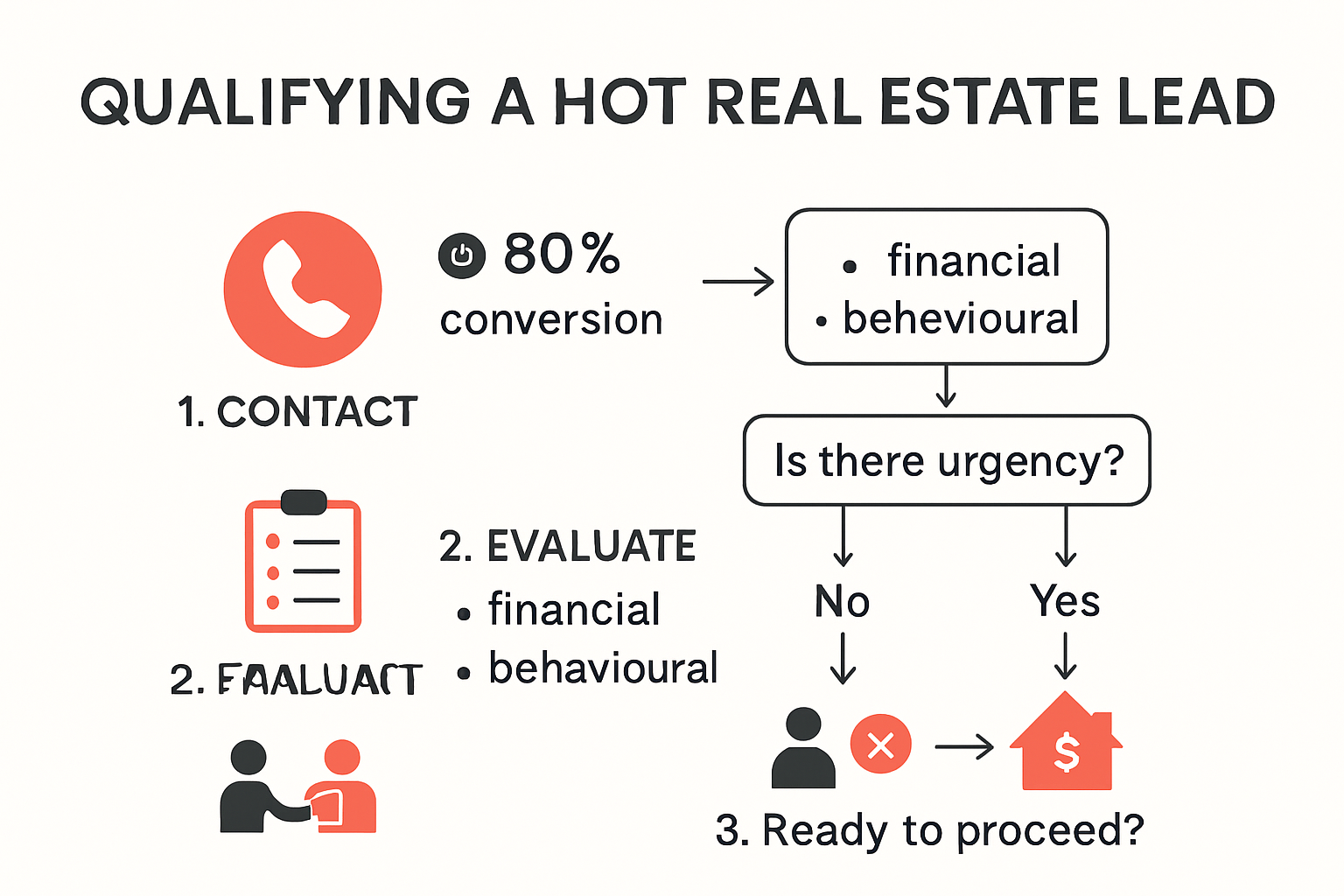
Identifying and qualifying hot leads requires a sophisticated approach that combines data analysis, behavioural tracking, and strategic communication. Real estate professionals employ multiple techniques to transform potential inquiries into high-potential transaction opportunities.
Lead Scoring and Qualification Techniques
Lead scoring represents a systematic method for evaluating potential client interest and transaction readiness. Learn advanced lead qualification strategies that help professionals prioritize their most promising prospects. The process typically involves analyzing several critical dimensions:
- Engagement level with marketing materials
- Specific property search parameters
- Financial readiness and pre-approval status
- Frequency and quality of interactions
- Demonstrated urgency in property transactions
According to Florida Realtors, modern real estate professionals increasingly leverage technological solutions to streamline lead identification. Automated tracking systems can help differentiate between casual browsers and serious potential clients by monitoring nuanced behavioural signals.
Communication and Verification Strategies
Effective lead qualification extends beyond initial data collection. Successful real estate agents implement targeted communication strategies designed to:
- Validate client motivations
- Confirm financial capabilities
- Understand specific transaction timelines
- Assess compatibility with available property inventory
By combining data-driven insights with personalized engagement, real estate professionals can efficiently transform potential leads into active clients ready for property transactions.
Key Characteristics of a Hot Lead
In real estate, hot leads are distinguished by a unique combination of behavioural, financial, and engagement signals that indicate high potential for successful transactions. Understanding these characteristics enables professionals to prioritize and nurture the most promising client interactions.
Financial and Motivational Indicators
Financial readiness serves as a primary differentiator for hot leads. Explore comprehensive lead evaluation techniques that help identify truly high-potential prospects. According to the National Association of Realtors, hot leads typically demonstrate:
- Confirmed mortgage pre-qualification
- Clear budget parameters
- Immediate availability for property transactions
- Specific geographical or property type preferences
- Strong motivation driven by personal or professional circumstances
Engagement and Communication Patterns
Beyond financial metrics, hot leads exhibit distinctive communication behaviours that signal genuine interest. Proactive and responsive communication becomes a critical marker of lead quality. Real estate professionals recognize hot leads through:
- Rapid and consistent communication
- Detailed and specific property inquiries
- Active participation in property viewings
- Prompt follow-up and decision making
- Transparent sharing of transaction objectives
The convergence of financial capability, clear motivation, and engaged communication transforms a standard lead into a high-potential client ready for immediate real estate transactions.

Practical Implications of Working with Hot Leads
Working with hot leads requires a strategic, nuanced approach that balances rapid engagement with thoughtful relationship building. Real estate professionals must recognize that these high-potential clients demand specialized attention and customized communication strategies.
Resource Allocation and Prioritization
Efficient resource management becomes critical when handling hot leads. Discover strategic lead prioritization techniques that maximize conversion potential. According to Baylor University’s Keller Center for Research, successful real estate teams typically invest:
- Immediate personalized communication
- Dedicated response time within one hour
- Comprehensive client background research
- Tailored property recommendation preparation
- Proactive follow-up scheduling
Risk Management and Expectation Setting
Navigating hot leads involves carefully managing client expectations while maintaining professional boundaries. Transparent communication helps prevent misunderstandings and builds trust. Real estate professionals must focus on:
- Clear explanation of market conditions
- Realistic property availability discussions
- Transparent fee and transaction process details
- Consistent and reliable communication channels
- Managed client emotional expectations
Successful hot lead management transforms potential transactions into completed deals by combining strategic communication, rapid responsiveness, and professional expertise.
Turn Hot Leads into Real Clients with AI-Powered Solutions
Are you spending valuable hours chasing after hot leads, only to miss out due to slow response times or inconsistent follow-ups? The article explained how identifying and qualifying hot leads is crucial for success in real estate. But without quick action and precise communication, even the most motivated clients can slip through the cracks. Imagine never missing another high-potential client because your follow-up is always instant, your lead qualification is seamless, and your appointments get booked while you focus on closing deals.

With LeadLinker.co, you can automate every stage of your lead management. Our platform uses advanced AI to qualify leads, respond instantly around the clock, and book appointments directly into your calendar through SMS, email, and social platforms. Read how our AI qualification features can help you connect with ready-to-act buyers and sellers faster. Take the next step to maximize your hot lead conversion today and see why top Canadian agents are transforming their business with LeadLinker. Act now to unlock more closed deals and fewer missed opportunities.
Frequently Asked Questions
What defines a hot lead in real estate?
A hot lead in real estate is a potential client who shows high intent to buy or sell properties, has financial readiness, and demonstrates immediate interest in engaging in transactions.
How can I identify a hot lead?
You can identify a hot lead by looking for signs such as urgent communication, clear financial pre-approval, immediate availability for property viewings, and specific property requirements.
Why are hot leads important for real estate agents?
Hot leads are crucial because they represent opportunities for quick conversions, allowing agents to maximize revenue while effectively streamlining their sales process and reducing time spent on unqualified prospects.
What strategies can be used to qualify hot leads?
To qualify hot leads, agents can use lead scoring methods, assess client motivation and urgency, evaluate financial readiness, and employ targeted communication strategies to confirm their interests and capabilities.