Real estate success rarely comes down to a single great first impression. The average agent needs as many as 12 touchpoints to turn a lead into a loyal client. Think sending more emails or following up just means badgering people? Turns out, top agents grow real relationships by using personalized, multichannel conversations at exactly the right moments—and this approach can quietly double your conversion rates if you know how to play it smart.
Table of Contents
- Understanding Lead Nurturing In Real Estate
- Key Stages Of Successful Lead Nurturing
- Best Practices For Engaging Real Estate Leads
- Tools And Tips For Real Estate Professionals
Quick Summary
| Takeaway | Explanation |
|---|---|
| Lead nurturing builds trust and relationships. | Focus on developing long-term interactions to convert leads into committed clients, rather than immediate sales. |
| Personalized communication enhances engagement. | Tailoring messages to individual preferences significantly increases conversion rates by addressing unique client needs. |
| Multichannel strategies are essential for success. | Utilize various communication platforms like SMS, email, and social media to reach clients where they are most comfortable. |
| Rapid responses increase transaction likelihood. | Fast, intelligent replies to inquiries improve the chances of securing deals, making a responsive system crucial. |
| Ongoing skill development is necessary. | Continuous learning in communication and market knowledge helps agents adapt to changing client needs and industry trends. |
Understanding Lead Nurturing in Real Estate
Lead nurturing in real estate represents a strategic approach to transforming potential client interactions into meaningful relationships that ultimately drive successful property transactions. Unlike traditional sales tactics, this process focuses on building trust, providing value, and guiding prospects through their unique property journey.
The Core Essence of Real Estate Lead Nurturing
At its fundamental level, lead nurturing is about creating a systematic method of engaging potential clients by delivering targeted, relevant information that addresses their specific needs and concerns. Real estate professionals recognize that modern home buyers and sellers are no longer passive recipients of information but active participants seeking personalized guidance.
The process involves multiple touchpoints and communication strategies designed to build credibility and demonstrate expertise. By understanding that each lead has unique motivations, real estate agents can craft customized communication paths that resonate with individual client preferences. According to Zillow’s research, approximately 68% of home buyers prefer agents who provide tailored, contextual information throughout their property search journey.
Strategic Communication and Relationship Building
Effective lead nurturing transcends simple follow-up emails or occasional phone calls. It requires a comprehensive approach that combines technological tools, empathetic communication, and strategic timing. Real estate professionals must leverage multiple communication channels – including SMS, email, social media, and personalized video messages – to maintain consistent engagement.
The goal is not immediate conversion but gradual relationship development. By offering valuable insights about local market trends, providing detailed neighborhood analyses, and addressing potential concerns proactively, agents position themselves as trusted advisors rather than mere transaction facilitators. Our guide on real estate lead nurturing strategies provides deeper insights into creating meaningful client connections.
Modern lead nurturing integrates advanced technologies like AI-powered communication systems that enable 24/7 responsive interactions. These platforms can automatically qualify leads, schedule appointments, and maintain engagement without constant manual intervention. This technological approach ensures no potential client feels overlooked while allowing real estate professionals to focus on high-value personal interactions.
Successful lead nurturing ultimately transforms cold leads into warm relationships, creating a sustainable pipeline of potential clients who view their chosen real estate professional not just as a service provider, but as a knowledgeable partner in their property journey. The investment in strategic, personalized communication pays significant long-term dividends in client trust, referrals, and repeat business.
Key Stages of Successful Lead Nurturing
Successful lead nurturing in real estate is a multi-dimensional process that requires strategic planning, targeted communication, and systematic progression through distinct stages. By understanding and implementing these key stages, real estate professionals can transform potential leads into committed clients.
Initial Lead Capture and Qualification
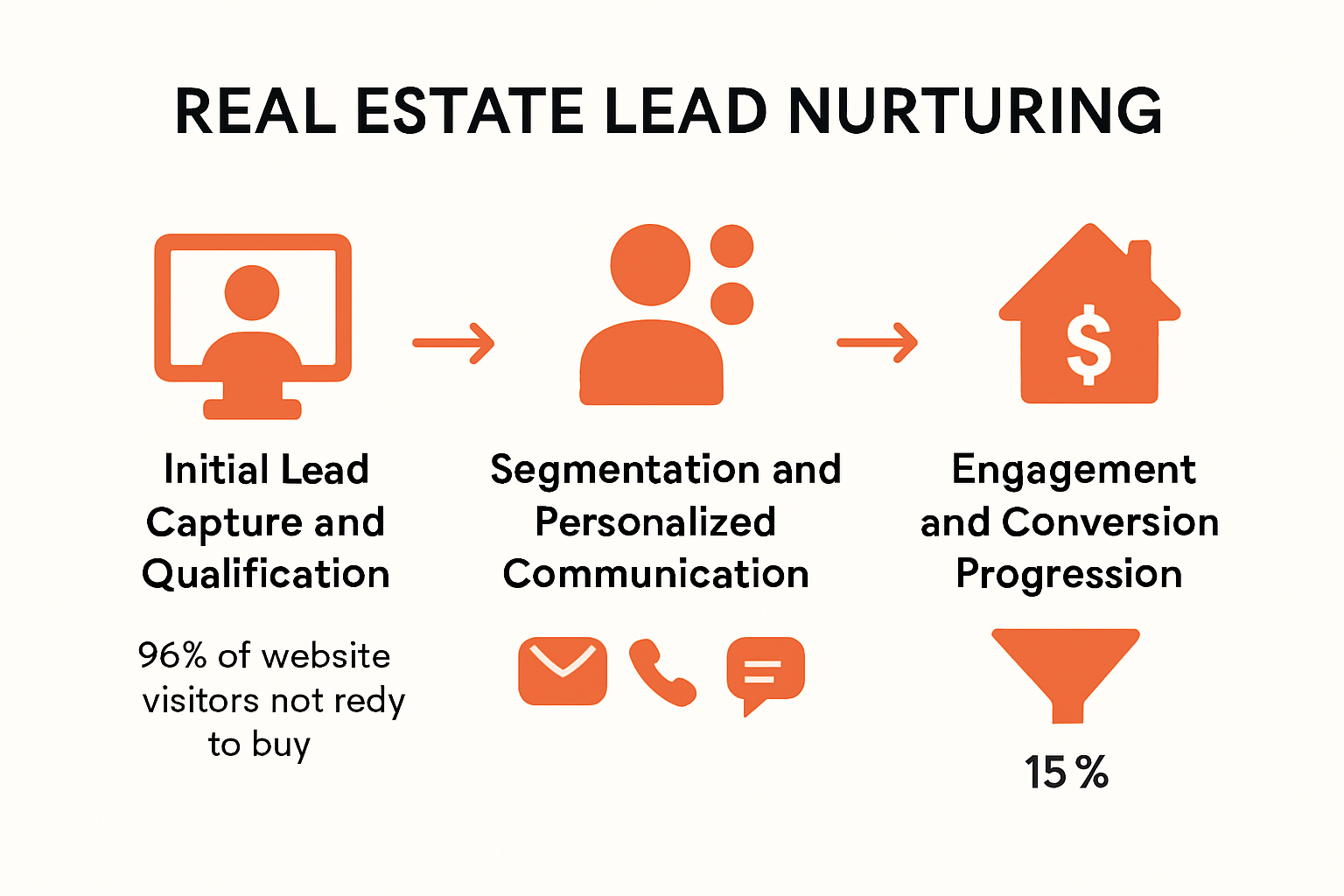
The first critical stage involves capturing and initially qualifying potential leads. According to Marketing Research Insights, approximately 96% of website visitors are not ready to make an immediate purchase decision. Real estate agents must create compelling entry points that encourage potential clients to share their contact information.
Effective lead capture strategies include offering valuable resources such as neighbourhood market reports, first-time homebuyer guides, or property valuation tools. Lead management best practices emphasize the importance of implementing sophisticated lead capture mechanisms that not only collect contact details but also provide initial insights into the lead’s specific interests and requirements.
Segmentation and Personalized Communication
Once leads are captured, the next crucial stage involves segmentation and developing personalized communication strategies. Research from the Digital Marketing Institute indicates that targeted, personalized communications can increase conversion rates by up to 30%.
Segmentation allows real estate professionals to categorize leads based on multiple parameters such as:
- Property type of interest
- Budget range
- Location preferences
- Buyer or seller status
- Current stage in the property journey
By understanding these nuanced characteristics, agents can craft communication that speaks directly to each lead’s unique needs and motivations. This might involve creating tailored email sequences, providing specific market insights, or scheduling personalized consultations that demonstrate genuine understanding and expertise.
Engagement and Conversion Progression
The final stage of lead nurturing focuses on consistent engagement and strategically moving leads through the conversion funnel. This requires a delicate balance of providing valuable information, maintaining regular contact, and subtly guiding leads towards making a transaction decision.
Modern lead nurturing leverages multiple communication channels and technologies to maintain meaningful interactions. Automated follow-up systems, AI-powered chatbots, and intelligent scheduling tools enable real estate professionals to provide 24/7 responsive communication without constant manual intervention.
Key engagement techniques include:
- Sharing localized market trend analyses
- Providing virtual property tours
- Offering free consultation sessions
- Delivering personalized property recommendations
Successful lead nurturing is not about aggressive sales tactics but about building trust, demonstrating expertise, and positioning oneself as a reliable property advisor. By meticulously navigating these stages with empathy, technology, and strategic communication, real estate professionals can transform potential leads into long-term, satisfied clients.
To help clarify the different stages involved in nurturing real estate leads, here’s a summary table outlining the key phases, main actions, and their importance.
| Stage | Main Focus/Action | Importance |
|---|---|---|
| Initial Lead Capture & Qualification | Collect contact info & assess interest | Opens communication and identifies prospects |
| Segmentation & Personalized Communication | Group leads and target messaging | Increases relevance and boosts response rates |
| Engagement & Conversion Progression | Ongoing follow-up and relationship building | Moves leads toward transaction and builds trust |
Best Practices for Engaging Real Estate Leads
Engaging real estate leads requires a sophisticated, multi-dimensional approach that goes beyond traditional communication strategies. Successful engagement demands a combination of technological savvy, personalized communication, and strategic relationship building.
Rapid and Intelligent Response Mechanisms
Speed is critical in lead engagement. Research from the Keller Center indicates that the first agent to make contact with a potential client has a significantly higher probability of securing the transaction. Modern real estate professionals must implement intelligent response systems that enable instantaneous communication.
AI-powered tools can provide immediate, contextually relevant responses across multiple channels. These systems analyze incoming inquiries and generate personalized replies that address specific client questions, demonstrating both efficiency and attentiveness. Lead management best practices emphasize the importance of creating a seamless, responsive communication infrastructure that makes potential clients feel valued and understood.
Multichannel Engagement Strategies
Effective lead engagement transcends traditional communication methods. According to Social Media Marketing Research, modern real estate professionals must develop a comprehensive multichannel approach that includes:
- Social Media Interaction: Regular, meaningful content sharing
- Email Marketing: Personalized, segmented communication campaigns
- SMS Messaging: Quick, direct communication for time-sensitive information
- Video Content: Virtual property tours and personalized consultations
- Webinars and Online Events: Educational content demonstrating professional expertise
By diversifying communication channels, real estate professionals can meet potential clients where they are most comfortable, increasing engagement and building trust. The key is maintaining consistent messaging and providing genuine value through each interaction.
Personalization and Continuous Value Delivery
Personalization is the cornerstone of effective lead engagement. Modern clients expect tailored experiences that reflect their unique preferences and requirements. This means moving beyond generic marketing materials and creating highly targeted, relevant content.
Advanced lead nurturing involves developing comprehensive client profiles that capture not just basic contact information, but detailed insights into their property preferences, financial considerations, and long-term goals. By leveraging data analytics and AI-driven insights, real estate professionals can craft communication strategies that feel intuitive and genuinely helpful.
Successful engagement is about transforming transactional interactions into meaningful relationships. This requires a commitment to continuous value delivery – providing market insights, neighbourhood analyses, investment recommendations, and educational resources that position the agent as a trusted advisor rather than a mere service provider.
Ultimately, the most successful real estate professionals understand that lead engagement is an ongoing process of building trust, demonstrating expertise, and consistently delivering exceptional, personalized experiences that make potential clients feel genuinely supported throughout their property journey.
Tools and Tips for Real Estate Professionals
Successful lead nurturing in real estate demands a strategic approach enhanced by cutting-edge technological tools and professional development techniques. Real estate professionals must continually adapt their strategies to leverage advanced technologies and refine their interpersonal skills.
Technology-Driven Lead Management Solutions
Modern real estate professionals require sophisticated technological infrastructure to manage and nurture leads effectively. Research from the National Association of Realtors reveals that agents using integrated technology platforms can increase their lead conversion rates by up to 40%.
Key technological tools include:
- Customer Relationship Management (CRM) Systems: Comprehensive platforms for tracking lead interactions
- AI-Powered Communication Tools: Automated response and engagement systems
- Data Analytics Platforms: Advanced insights into lead behavior and preferences
- Marketing Automation Software: Targeted communication and segmentation capabilities
Real estate agent time management strategies emphasize the importance of selecting tools that streamline workflow and maximize efficiency. The right technological ecosystem can transform lead management from a time-consuming process to a seamless, intelligent operation.
Below is a table summarizing key technological tools used by successful real estate professionals, along with their primary function and the business value they provide.
| Tool / Technology | Primary Function | Business Value |
|---|---|---|
| CRM Systems | Track/manage client interactions | Improved organization & follow-up |
| AI-Powered Communication Tools | Automated responses & engagement | Faster responses, higher lead retention |
| Data Analytics Platforms | Analyze lead behaviour/preferences | Enhanced targeting & segmentation |
| Marketing Automation Software | Automated emails/notifications | Time savings and consistent communication |
Skill Development and Professional Expertise
Beyond technological tools, successful lead nurturing requires continuous professional development. According to Harvard Business Review, top-performing real estate professionals invest significant time in enhancing their communication, negotiation, and relationship-building skills.
Critical areas of skill development include:
- Emotional Intelligence: Understanding and responding to client needs
- Communication Mastery: Developing clear, empathetic communication strategies
- Market Knowledge: Staying updated on local and national real estate trends
- Digital Marketing Skills: Understanding modern online engagement techniques
Professional development is not a one-time event but a continuous journey of learning and adaptation. Successful real estate professionals commit to ongoing education, attending workshops, participating in industry conferences, and seeking mentorship opportunities.
Strategic Networking and Relationship Building
Effective lead nurturing extends beyond individual skills and technological tools. Networking Research indicates that 85% of business opportunities emerge through personal connections and professional networks.
Strategic networking involves:
- Professional Associations: Active participation in real estate organizations
- Social Media Engagement: Building a strong online professional presence
- Community Involvement: Establishing local connections and credibility
- Collaborative Partnerships: Developing relationships with complementary professionals
The most successful real estate professionals understand that lead nurturing is fundamentally about building trust. This requires a holistic approach that combines technological efficiency, continuous skill development, and genuine human connection.
Ultimately, tools and technologies are most effective when they enhance, rather than replace, the core human elements of real estate professional relationships. By integrating advanced technological solutions with refined interpersonal skills, real estate professionals can create a powerful lead nurturing ecosystem that drives sustainable business growth.
Frequently Asked Questions
What is lead nurturing in real estate?
Lead nurturing in real estate refers to the strategic process of developing relationships with potential clients through targeted communication and valuable insights, ultimately guiding them toward making informed property decisions.
Why is personalization important in lead nurturing?
Personalization is crucial in lead nurturing because it helps real estate professionals tailor their messaging to meet individual client needs and preferences, significantly enhancing engagement and conversion rates.
What are the key stages of effective lead nurturing?
The key stages of effective lead nurturing include initial lead capture and qualification, segmentation and personalized communication, and engagement and conversion progression, each designed to build trust and relationships with potential clients.
How can technology improve lead management for real estate professionals?
Technology improves lead management by providing tools like CRM systems, AI-powered communication, and data analytics, which streamline workflows, enable rapid responses, and deliver personalized content to clients efficiently.
Turn More Real Estate Leads Into Clients With AI-Driven Nurture
Building genuine relationships and responding quickly to inquiries make all the difference in real estate lead nurturing. If you find yourself missing out on opportunities because you cannot keep up with fast follow-ups or personalized engagement, you are not alone. Many agents struggle to maintain consistent multi-channel communication and lose leads before they ever become clients.
You do not have to juggle it all by yourself. LeadLinker.co empowers real estate professionals to automate lead response, qualification, and appointment booking using advanced AI. Connect with more buyers and sellers across SMS, email, Facebook, and Instagram. The platform’s AI assistant works around the clock to instantly answer questions, handle objections, and book meetings right into your calendar. Want to see how top agents use LeadLinker to boost conversions and cut response times? Explore more practical tips in our Uncategorized category or take your business to the next level by trying LeadLinker today. Your opportunity to grow starts here.