
Real estate websites are flooded with dazzling listings and promises of quick results. Yet, most property platforms lose nearly 70 percent of leads before they reach an agent. It sounds like a technology problem, but the real issue often starts with how well you know your audience and what you measure. The secret is not about adding more flashy features, but about understanding the numbers and people behind every click.
Table of Contents
- Step 1: Analyze Your Current Website Performance
- Step 2: Define and Understand Your Target Audience
- Step 3: Optimize Website Content For Engagement
- Step 4: Implement Clear Calls-To-Action
- Step 5: Test and Measure Conversion Rates
- Step 6: Adjust Strategies Based On Insights
Quick Summary
| Key Point | Explanation |
|---|---|
| 1. Analyze website performance metrics dynamically | Utilize tools like Google Analytics to understand visitor behavior and conversion rates to identify improvement areas. |
| 2. Define detailed customer personas pro-actively | Create in-depth profiles of target audiences to tailor content and strategies that meet their needs effectively. |
| 3. Optimize content for active engagement | Use storytelling and visuals to create compelling narratives that resonate with your audience and encourage interaction. |
| 4. Implement compelling and clear calls-to-action | Design CTAs that guide potential clients toward taking specific actions, enhancing engagement and conversion rates. |
| 5. Test and adjust strategies continuously | Regularly measure results and refine tactics based on data insights to sustain improvement in user engagement and conversion. |
Step 1: Analyze Your Current Website Performance
Analyzing your website’s current performance is the critical first step in transforming your digital marketing strategy. This foundational process helps you understand exactly how your online presence is functioning and identifies precise opportunities for improvement. Web performance analysis reveals the hidden story behind your visitor interactions, showing you where potential customers engage or disengage with your content.
To begin your performance analysis, start by gathering comprehensive data from multiple sources. Google Analytics provides an excellent starting point for understanding your website’s core metrics. Focus on key indicators such as total website visitors, bounce rate, average time on page, and conversion rates. These numbers tell a detailed story about how users interact with your digital platform.
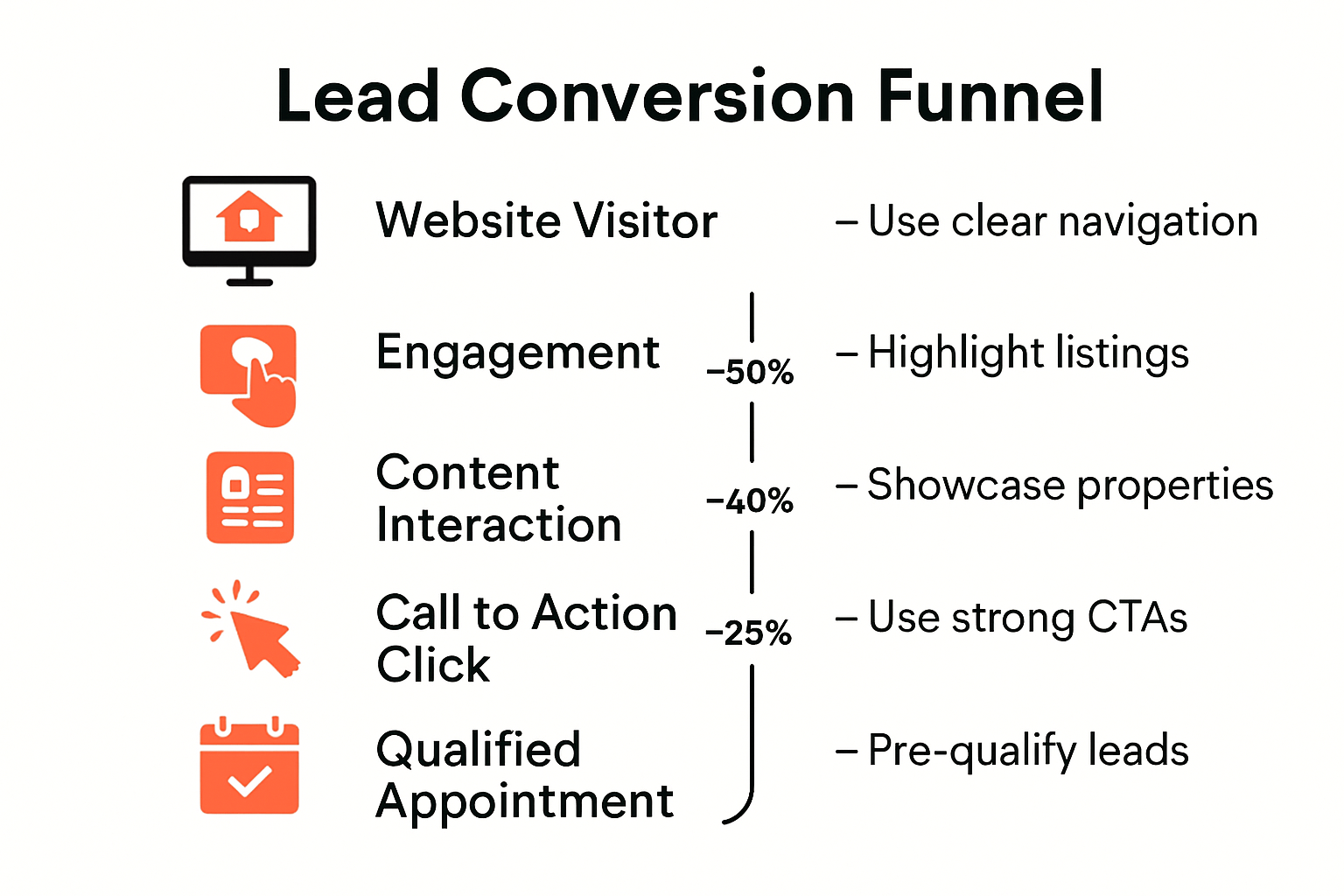
Carefully examine your website’s current conversion funnel. Look for specific points where potential clients drop off or lose interest. Are visitors landing on your page but not taking desired actions? Tracking user journey analytics helps pinpoint exact friction points in your conversion process. For real estate professionals, this might mean tracking how many visitors view property listings versus how many actually request more information or schedule a consultation.
Learn more about optimizing lead capture strategies to complement your performance analysis. Understanding these metrics allows you to make data driven decisions about website improvements. Pay special attention to mobile performance, as an increasing number of potential clients browse properties on smartphones and tablets.
Verify your analysis by cross referencing multiple data sources. Create a baseline report that captures your current website performance metrics. This report will serve as your benchmark for measuring future improvements and will guide subsequent optimization efforts. A thorough initial analysis sets the stage for targeted, effective website conversion strategies that can significantly enhance your real estate marketing results.
Below is a summary table of key metrics and suggested tools to use when analyzing your current website performance. This makes it easier to track the most relevant data points and resources as you build your baseline report.
| Metric | Purpose | Recommended Tool |
|---|---|---|
| Total Website Visitors | Measures overall reach and audience size | Google Analytics |
| Bounce Rate | Identifies engagement and potential pain points | Google Analytics |
| Average Time on Page | Assesses content effectiveness and user interest | Google Analytics |
| Conversion Rate | Tracks success in turning visitors into leads | Google Analytics |
| Mobile Performance | Evaluates mobile user experience and responsiveness | Google Analytics/Mobile Test Tools |
| Conversion Funnel Drop-offs | Pinpoints where visitors leave before converting | Google Analytics |
| Multiple Data Sources | Validates findings and adds depth to insights | Google Analytics, CRM |
Step 2: Define and Understand Your Target Audience
Defining and understanding your target audience is a crucial step in developing an effective website conversion strategy. This process goes beyond basic demographic information and requires deep insights into the motivations, challenges, and preferences of potential clients. Real estate professionals must create a comprehensive profile that captures the essence of their ideal customer, transforming generic marketing approaches into precision targeted communication.
Begin by gathering detailed information about your current and potential clients. Analyze your existing customer database to identify common characteristics such as age range, income levels, property preferences, and life stages. For real estate professionals, this might include first time homebuyers, investors, families seeking larger properties, or retirees looking to downsize. Utilize client interaction records, past transaction data, and feedback to build a nuanced understanding of your audience’s needs and decision making patterns.
Explore advanced audience segmentation techniques to refine your targeting strategy. Create multiple customer personas that represent different segments of your potential market. Each persona should include detailed information about their professional background, personal goals, potential challenges, and specific real estate requirements. Developing these personas allows you to craft tailored messaging that resonates deeply with each audience segment.
Verify your audience understanding through direct research methods. Conduct surveys with existing clients, host focus groups, and engage in one on one conversations to validate your personas. Pay attention to the language they use, their primary concerns, and the communication channels they prefer. This approach ensures that your website and marketing materials speak directly to your audience’s specific needs and expectations, ultimately improving your conversion potential.
Step 3: Optimize Website Content for Engagement
Optimizing website content for engagement transforms passive web pages into powerful conversion tools that actively attract and retain potential clients. Effective content strategy goes beyond mere information delivery, focusing instead on creating compelling narratives that resonate with your target audience’s specific needs and aspirations.
Craft your website content with precision and purpose. Begin by analyzing the language and pain points identified in your target audience research. Write in a conversational tone that speaks directly to potential clients, addressing their specific real estate challenges and goals. Use clear, direct language that demonstrates your expertise while remaining approachable. Incorporate storytelling techniques that showcase successful client experiences, helping visitors imagine their own potential journey with your services.
Discover advanced lead generation strategies that complement your content optimization efforts. Visual elements play a crucial role in engagement, so integrate high quality property images, virtual tour previews, and infographics that break down complex real estate processes. Ensure each page includes clear calls to action that guide visitors toward meaningful interactions, such as scheduling consultations or requesting property information.
Verify your content optimization by tracking key engagement metrics. Monitor time spent on page, interaction rates, and conversion performance. Pay attention to user feedback and be prepared to iterate your content strategy continuously. The most effective websites evolve based on real user data, creating a dynamic platform that consistently meets the changing needs of potential clients. Your goal is to transform your website from a simple information repository into an interactive tool that actively supports your business growth.

Step 4: Implement Clear Calls-to-Action
Implementing clear and compelling calls-to-action represents a critical turning point in transforming website visitors into potential clients. Calls-to-action are the strategic bridges connecting user interest with meaningful engagement, guiding potential customers through your real estate sales funnel with precision and purpose.
Craft your calls-to-action with laser focused intention. Each CTA should communicate a specific, valuable outcome that addresses your target audience’s immediate needs. For real estate professionals, this might mean creating buttons or links that invite visitors to schedule property consultations, download market reports, or receive personalized listing recommendations. Use action oriented language that creates a sense of urgency and value. Phrases like “Get Your Free Home Valuation” or “Unlock Exclusive Property Insights” speak directly to potential client motivations.
Explore strategic lead conversion techniques to enhance your CTA effectiveness. Visual design plays a crucial role in CTA performance. Utilize contrasting colors that stand out from your website background, position CTAs prominently where users naturally focus their attention, and ensure they are easily clickable on both desktop and mobile devices. The size, placement, and visual appeal of your calls-to-action can significantly impact user engagement and conversion rates.
Verify your CTA optimization by tracking key performance metrics. Monitor click through rates, conversion percentages, and user interaction patterns. Conduct periodic A/B testing to compare different CTA designs, wordings, and placements. The most successful websites treat calls-to-action as dynamic elements that evolve based on continuous user feedback and data analysis. Your ultimate goal is to create intuitive, compelling CTAs that feel like natural next steps for potential clients seeking real estate solutions.
Step 5: Test and Measure Conversion Rates
Testing and measuring conversion rates transforms raw website data into actionable insights that drive real business growth. Conversion rate optimization is not a one time event but a continuous improvement process that requires systematic approach and careful analysis. By implementing strategic testing methods, real estate professionals can unlock the hidden potential of their digital marketing efforts.
Start by establishing clear baseline metrics for your current website performance. Utilize tools like Google Analytics to track key performance indicators such as visitor numbers, time spent on page, bounce rates, and actual conversion percentages. Focus on understanding the specific actions that translate into meaningful client interactions, whether those are scheduling consultations, downloading property reports, or requesting additional information. Implement A/B testing strategies that allow you to compare different versions of web pages, calls to action, and content layouts to determine which variations generate the most engaging user experiences.
Discover advanced performance tracking techniques to elevate your conversion optimization strategy. Each test should target a specific hypothesis about user behavior. For instance, you might test whether a more direct call to action increases consultation bookings or if adding client testimonials improves trust signals. Ensure you run tests long enough to gather statistically significant data, typically between two to four weeks depending on your website traffic.
Verify your conversion rate optimization by maintaining a detailed tracking log of all tests, their hypotheses, results, and subsequent implementations. Look for patterns that demonstrate consistent improvement in user engagement and conversion metrics. Remember that successful conversion rate optimization is an iterative process requiring patience, systematic analysis, and a willingness to continuously refine your approach based on empirical evidence.
Step 6: Adjust Strategies Based on Insights
Adjusting strategies based on data insights represents the final transformative stage in your website conversion optimization journey. This step is where strategic understanding meets practical implementation, turning raw analytics into meaningful business improvements that directly impact your real estate performance.
Review your collected data with a critical and objective lens. Look beyond surface level metrics to understand the deeper narrative your website analytics are telling. Identify patterns in user behavior that reveal where potential clients are experiencing friction or losing interest. For real estate professionals, this might mean recognizing that certain property listing descriptions generate more engagement, or that specific call-to-action placements result in higher consultation booking rates. Develop a systematic approach to interpreting these insights, focusing on actionable changes that can meaningfully improve user experience and conversion potential.
Learn advanced lead management techniques to complement your strategy refinement process. Prioritize changes that have the most significant potential impact. This could involve redesigning landing pages, refining messaging to address specific client pain points, or adjusting the user journey to create more intuitive navigation. Remember that strategy adjustment is an incremental process. Implement changes gradually, continually monitor their performance, and be prepared to make further refinements based on ongoing data collection.
Verify the effectiveness of your strategy adjustments by establishing clear before and after benchmarks. Track key performance indicators such as conversion rates, time on site, and user engagement metrics. Maintain a detailed log of all modifications and their corresponding impact. The most successful real estate professionals view their website as a dynamic tool that evolves continuously, always seeking to better serve potential clients and streamline the path from initial interest to successful property transaction.
Here is a step overview table summarizing each stage in the website conversion optimization process, including the main objective and the kind of verification recommended for each step. This will help clarify the workflow at a glance.
| Step | Main Objective | How to Verify Success |
|---|---|---|
| Analyze Website Performance | Identify current strengths and weaknesses | Baseline report, analytics review |
| Define & Understand Target Audience | Refine messaging and offers | Validated personas, client feedback |
| Optimize Website Content for Engagement | Increase user interaction and relevance | Engagement metrics, user feedback |
| Implement Clear Calls-to-Action | Guide users toward desired actions | CTA click and conversion rates |
| Test and Measure Conversion Rates | Uncover what works best | A/B testing, data log |
| Adjust Strategies Based on Insights | Continuously improve and refine | Before/after benchmarks, results log |
Transform Every Lead into a Real Opportunity—Start Elevating Your Conversion Journey
Growing your real estate business should not mean endless lost leads or missed appointments. The actionable tips in this article highlight a problem so many agents face: a website can attract attention, but without fast responses and smart lead nurturing, too many prospects slip away. If you have worked hard to optimize engagement strategies and refine calls-to-action but still feel your follow-up and appointment bookings are falling short, you are not alone. The pain of wasted marketing effort and low conversion rates is a real burden for ambitious agents.

Do not let valuable leads go unnoticed. Discover how LeadLinker.co can automate your follow-up, qualify leads 24/7, and book appointments instantly to maximize every step in your sales funnel. Visit our Uncategorized resource centre for more strategies and case studies from top-performing agents. Take control of your lead management right now for faster response times and more closed deals. See how our AI-powered platform can drive your conversion metrics far beyond your current benchmarks. Try LeadLinker.co today and move from theory to real, measurable results.
Frequently Asked Questions
How can I analyze my website’s current performance?
Start by using tools like Google Analytics to gather data on key metrics such as total visitors, bounce rate, average time on page, and conversion rates. Examine your conversion funnel to identify where potential clients drop off and visualize their website journey.
What strategies can I use to better understand my target audience?
Gather information from your current client base, segmenting them into customer personas based on their demographics, preferences, and specific real estate needs. Conduct surveys and engage in direct discussions to validate these personas.
How do I optimize website content for better engagement?
Focus on writing in a conversational tone that addresses your audience’s specific needs. Incorporate storytelling and visuals that highlight successful client experiences, and include clear calls to action that guide visitors toward meaningful interactions.
What are effective ways to implement calls-to-action on my website?
Craft calls-to-action that clearly convey their value, using action-oriented language that addresses your audience’s needs. Use contrasting colors for visibility, position them prominently, and ensure they’re easily clickable on all devices.