
Every real estate business wants more high-quality leads from their website. Yet most sites lose over 60 percent of visitors within just a few seconds. You might think the biggest problem is low traffic or weak ads but often it comes down to something much simpler. The real issue is how your visitors actually experience your site and small tweaks can spark huge changes in your conversions.
Table of Contents
- Step 1: Analyze Your Current Website Performance
- Step 2: Optimize User Experience for Key Landing Pages
- Step 3: Implement Engaging Calls to Action
- Step 4: Use Targeted Content to Attract Quality Leads
- Step 5: Measure and Adjust Your Conversion Strategies
Quick Summary
| Key Point | Explanation |
|---|---|
| 1. Conduct a thorough website audit | Use tools like Google Analytics to analyze visitor behavior and key performance indicators like bounce rate and page load speed. |
| 2. Optimize landing pages for conversion | Streamline designs, create compelling headlines, and use trust signals to guide potential clients towards action. |
| 3. Create effective calls to action | Position actionable CTAs prominently, use direct language, and ensure they meet visitors’ immediate needs. |
| 4. Develop targeted content for audiences | Create audience-specific content that addresses unique real estate challenges to build trust and attract qualified leads. |
| 5. Continuously measure and adjust strategies | Regularly track key performance metrics and make data-driven adjustments to improve lead generation efforts. |
Step 1: Analyze Your Current Website Performance
Before diving into lead conversion strategies, understanding your current website’s performance is crucial. This initial step provides a comprehensive diagnostic view of how potential clients interact with your digital presence, revealing opportunities for optimization and growth.
Start by conducting a thorough website performance audit using tools like Google Analytics and Google Search Console. These platforms offer detailed insights into visitor behavior, traffic sources, and engagement metrics. Pay special attention to key performance indicators such as page load speed, bounce rate, and average time on page. A website that loads slowly or fails to engage visitors will significantly hinder your lead generation efforts.
Explore advanced website conversion strategies to complement your performance analysis. Focus on tracking specific real estate related metrics: how many visitors view property listings, how long they spend on each page, and what percentage of visitors complete contact forms. These nuanced insights reveal precisely where potential leads are getting stuck or losing interest.
Critical metrics to monitor include:
- Unique visitor count
- Conversion rate for contact forms
- Percentage of mobile versus desktop traffic
- Average session duration
- Pages per session
Utilize heat mapping tools like Hotjar or CrazyEgg to visualize exactly how visitors navigate your website.
Here is a checklist to help you monitor the most critical real estate website performance metrics during your analysis process.
| Metric | What It Measures | Why It Matters |
|---|---|---|
| Unique Visitor Count | Number of distinct site visitors | Shows reach and traffic health |
| Conversion Rate for Contact Forms | Percentage of visitors submitting contact forms | Direct measure of lead generation effectiveness |
| Percentage of Mobile vs Desktop Traffic | Device breakdown of user base | Informs mobile optimisation needs |
| Average Session Duration | Average time users spend on the site | Indicates engagement level |
| Pages per Session | Average number of pages visited | Reveals content or navigation effectiveness |
These tools generate visual representations showing where users click, scroll, and spend the most time. This granular data helps you understand user experience and identify potential friction points that might prevent lead generation.
Once you’ve gathered comprehensive performance data, create a baseline report documenting current metrics. This report serves as your performance benchmark, allowing you to measure future improvements systematically. Remember, website optimization is an ongoing process requiring consistent monitoring and strategic adjustments.
Step 2: Optimize User Experience for Key Landing Pages
Transforming website visitors into qualified real estate leads requires strategic landing page optimization that reduces friction and guides potential clients seamlessly through their journey. This step focuses on creating high-converting pages that capture attention, build trust, and encourage immediate action.
Begin by critically examining your property listing and contact pages from a visitor’s perspective. Simplicity and clarity are paramount. Streamline your design by removing unnecessary fields, minimizing text, and creating a clear visual hierarchy that directs visitors exactly where you want them to go. Professional real estate landing pages should load quickly, display beautifully on mobile devices, and present information in an intuitive, visually appealing manner.
Discover advanced conversion optimization techniques to transform your landing page strategy. Focus on creating compelling headlines that speak directly to potential clients’ needs. Your headline should immediately communicate value, whether it’s solving a housing challenge or presenting an exciting property opportunity. Pair these headlines with high-quality, professional imagery that showcases properties in their best light.
Critical landing page elements to optimize include:
- Clear, prominent call-to-action buttons
- Minimal form fields requiring only essential information
- Trust signals like client testimonials and professional credentials
- Mobile-responsive design with fast loading times
- Straightforward navigation and contact options
Implement strategic psychological triggers that encourage engagement.
This table compares key landing page elements to optimise, with their impact and improvement suggestions for real estate lead generation.
| Landing Page Element | Impact on Conversion | Improvement Suggestions |
|---|---|---|
| Call-to-Action Buttons | Drives visitor action | Make prominent, use action-based text |
| Form Fields | Reduces friction | Minimise to only essential information |
| Trust Signals | Builds confidence | Add testimonials, credentials |
| Mobile Responsiveness | Improves user experience | Ensure fast load, adjust layouts |
| Visual Hierarchy & Navigation | Guides user journey | Streamline, clarify information flow |
Use social proof through client testimonials, display recent successful transactions, and showcase your professional expertise. Consider adding live chat functionality or scheduling widgets that allow immediate interaction. These features demonstrate responsiveness and make potential clients feel valued from their first interaction.
Finally, conduct regular A/B testing to continually refine your landing pages. Small changes in button color, headline phrasing, or image selection can dramatically impact conversion rates. Track your metrics closely, comparing performance before and after each optimization to ensure you’re consistently improving your lead generation capabilities.
Step 3: Implement Engaging Calls to Action
Calls to action represent the critical bridge between website visitor interest and potential client conversion in real estate digital marketing. Your goal is crafting compelling, strategically positioned prompts that transform passive browsing into active engagement and lead generation.
Effective calls to action are more than just buttons – they are carefully designed psychological triggers that motivate potential clients to take the next step. Position your primary CTA prominently, using contrasting colors that stand out from your website’s standard design palette. Typically, this means using bold, warm colors like orange or deep blue that create visual urgency without feeling aggressive. The language should be direct, action-oriented, and speak directly to the visitor’s immediate needs.
Unlock advanced conversion strategies to elevate your real estate lead generation. Craft CTAs that solve specific problems. Instead of generic phrases like “Contact Us,” use more compelling alternatives such as “Schedule Your Free Property Valuation” or “Find Your Dream Home Today.” These specific, benefit-driven statements create immediate value proposition and reduce psychological friction that might prevent potential clients from taking action.
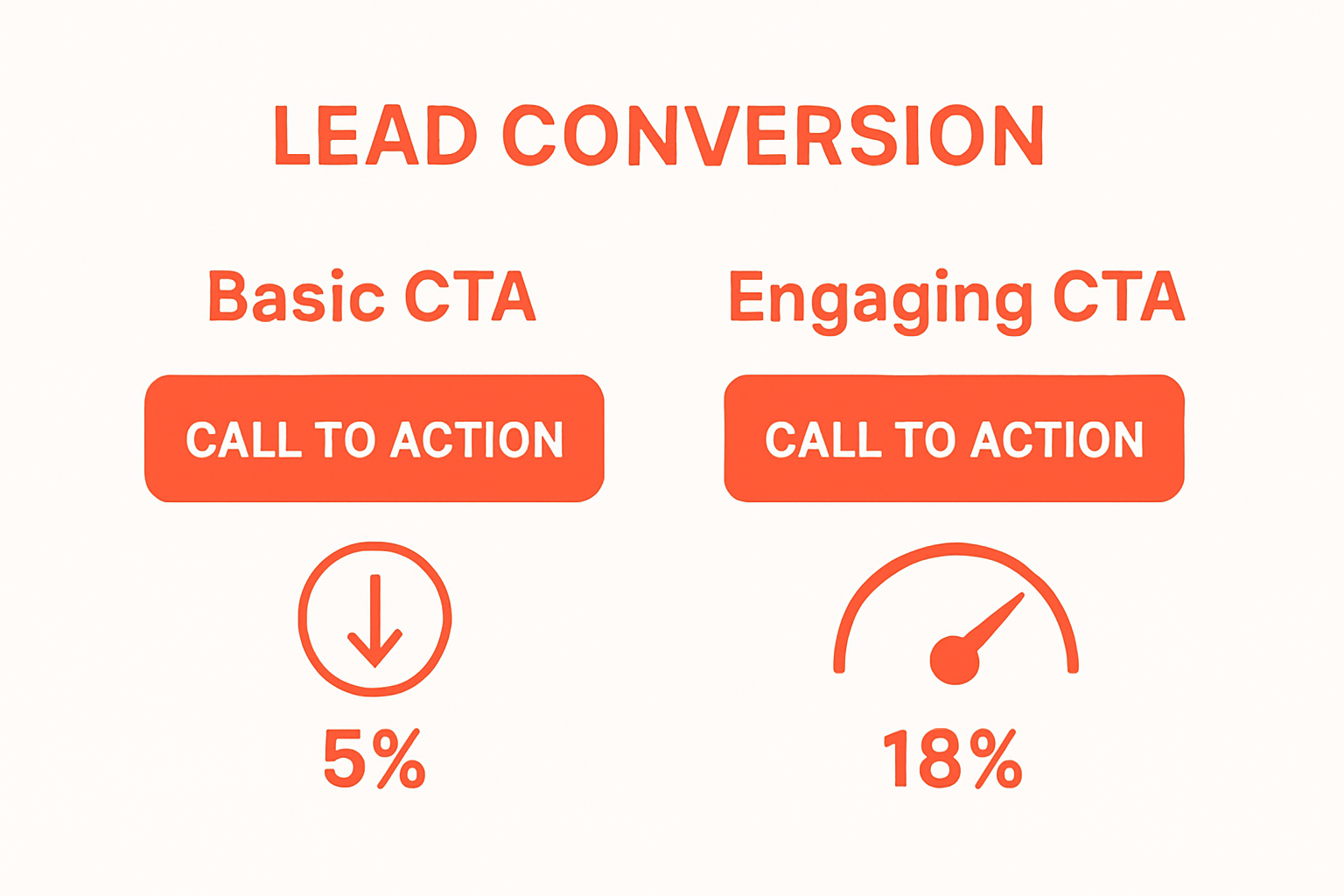
Critical CTA design principles include:
- Use first-person language (“Show Me Available Homes”)
- Create a sense of urgency or immediate benefit
- Make buttons large enough for easy mobile tapping
- Position CTAs both above and below key content sections
- Ensure consistent styling across different pages
Implement strategic placement of your calls to action throughout your website. Consider multiple touchpoints: sidebar widgets, embedded forms within property listings, pop-ups triggered by specific user behaviors, and footer sections. Each CTA should feel like a natural next step in the client’s journey, not an interruption. Experiment with micro-interactions like subtle animations or hover effects that draw attention without feeling intrusive.
Track and analyze your CTA performance meticulously. Use tools like Google Analytics to monitor click-through rates, conversion percentages, and user interaction patterns. Be prepared to continuously test and refine your approach, understanding that small modifications can yield significant improvements in lead generation performance.
Step 4: Use Targeted Content to Attract Quality Leads
Targeted content transforms your website from a passive information repository into an active lead generation machine. This strategic approach involves creating hyper-relevant, audience-specific content that speaks directly to potential clients’ unique real estate needs and challenges.
Understanding your audience is the foundation of effective targeted content. Develop detailed buyer personas representing different client segments such as first-time homebuyers, luxury property investors, or downsizing retirees. Each persona requires a distinct content strategy that addresses their specific motivations, concerns, and decision-making processes. For instance, first-time homebuyers might appreciate educational content about mortgage processes, while luxury investors want market trend analysis and investment potential insights.
Explore advanced lead generation techniques that leverage precise content targeting. Develop a content library that includes neighborhood guides, market reports, buying and selling tips, and interactive tools like mortgage calculators or property valuation widgets. These resources not only provide value but also establish your expertise and build trust with potential clients before they even make direct contact.
Critical elements of targeted content include:
- Localized information specific to neighborhoods and market segments
- Multimedia content including videos, infographics, and interactive tools
- Regular updates reflecting current market conditions
- Personal storytelling that connects emotionally with potential clients
- Transparent, data-driven insights about real estate trends
Implement a strategic content distribution approach across multiple channels. Your website should serve as the central hub, with content syndicated through social media, email newsletters, and targeted advertising platforms. Use SEO best practices to ensure your content ranks for relevant local search terms, making it easier for potential clients to discover your expertise.
Track the performance of your targeted content meticulously. Use analytics to monitor which pieces generate the most engagement, lead conversions, and client inquiries. Be prepared to continuously refine your approach, understanding that effective content marketing is an ongoing process of testing, learning, and adapting to your audience’s evolving needs.
Step 5: Measure and Adjust Your Conversion Strategies
Successful real estate lead conversion requires continuous measurement, analysis, and strategic refinement. This final step transforms raw data into actionable insights that drive meaningful improvements in your digital marketing performance.
Data is the cornerstone of intelligent marketing strategy. Set up comprehensive tracking using tools like Google Analytics, focusing on key performance indicators specific to real estate lead generation. Monitor metrics such as website visitor-to-lead conversion rates, average time on property listing pages, bounce rates, and form completion percentages. These numbers tell a detailed story about how potential clients interact with your digital presence and where potential barriers to conversion might exist.
Discover advanced conversion optimization techniques to elevate your lead generation strategy. Implement A/B testing as a systematic approach to improvement. This involves creating multiple versions of key website elements like landing pages, call-to-action buttons, or contact forms, then comparing their performance. Small changes can yield significant results – a different button color, revised headline, or streamlined form can dramatically increase lead capture rates.
Critical metrics to track consistently include:
- Conversion rate for property inquiry forms
- Cost per lead across different marketing channels
- Traffic sources and their respective quality
- Visitor engagement time on key pages
- Lead-to-client conversion percentage
Develop a structured review process where you analyze these metrics monthly. Look beyond surface-level numbers to understand the underlying patterns. Are certain property types generating more interest? Do specific marketing channels produce higher-quality leads? Which demographic segments show the most engagement? These insights allow you to continuously refine your targeting and messaging.
Remember that measurement is not a one-time event but an ongoing cycle of improvement. Be prepared to make data-driven adjustments quickly, understanding that the real estate market and digital marketing landscape evolve rapidly. Your willingness to adapt based on concrete performance data will separate your lead generation strategy from competitors who rely on guesswork and intuition.

Transform Casual Visitors into High-Value Real Estate Leads
If you have struggled with slow response times, missed inquiries, and lead drop-off despite optimizing your website and landing pages, you are not alone. Many real estate professionals invest in strategies to analyse performance, improve user experience, and craft engaging calls to action, but still face challenges converting digital traffic into qualified appointments. Outdated manual processes, fragmented communications, and missed follow-ups undermine even the best content and website design. For those who want to bridge the gap between digital engagement and signed clients, LeadLinker.co provides a proven solution.

Let our AI-driven platform nurture every incoming lead around the clock through automated SMS, email, Facebook, and Instagram. No more missed messages or slow replies. Our system qualifies prospects, expertly handles objections, and books appointments right into your calendar — giving you more time to focus on selling. See how other top-performing agents have increased conversions and reduced overhead by visiting our Uncategorized Archives for real-world success stories. Take control of your lead management now. Visit LeadLinker.co to accelerate your business and never let another opportunity slip away.
Frequently Asked Questions
What are the key metrics to analyze for improving real estate lead conversion?
To enhance real estate lead conversion, focus on metrics like page load speed, bounce rate, average time on page, unique visitor count, conversion rate for contact forms, and session duration. These insights help identify areas for optimization.
How can I optimize landing pages to increase leads?
To optimize landing pages, ensure a simple design, create clear and compelling headlines, use prominent call-to-action buttons, minimize form fields, and add trust signals such as testimonials. Ensure that your pages are mobile-responsive and load quickly.
What role do calls to action play in converting website visitors?
Calls to action (CTAs) serve as essential prompts that encourage visitors to take specific actions, such as contacting you or scheduling a property viewing. Effective CTAs should be prominently positioned, use strong action-oriented language, and highlight the immediate benefits to the visitor.
How can targeted content improve lead generation in real estate?
Targeted content, tailored to specific audience segments, provides valuable information addressing potential clients’ unique needs. Creating localized guides, market reports, and educational articles establishes trust and expertise, making visitors more likely to engage and convert.