When was the last time you Googled your own name or business and checked what popped up? For real estate professionals, what shows up can make or break a deal in seconds. Yet, over 85 percent of home buyers say they trust online reviews as much as personal recommendations. That level of influence shocks a lot of people, but the real surprise is how many agents miss simple steps that completely transform how they’re seen online.
Table of Contents
- Step 1: Asses Your Current Online Presence
- Step 2: Monitor Online Mentions and Reviews
- Step 3: Develop a Response Strategy for Negative Feedback
- Step 4: Create High-Quality, Positive Content
- Step 5: Implement Consistent Engagement and Monitoring
- Step 6: Evaluate and Adjust Your Strategy Regularly
Quick Summary
| Key Point | Explanation |
|---|---|
| 1. Assess Your Online Presence Thoroughly | Conduct a 360-degree digital audit to understand how clients perceive you across platforms. |
| 2. Monitor All Online Mentions Regularly | Use tools like Google Alerts to stay informed about mentions and reviews related to your business. |
| 3. Develop a Standardized Response Strategy | Create templates for responding to negative feedback to maintain professionalism and resolve issues. |
| 4. Create Positive, High-Quality Content | Generate valuable content like blog posts to enhance your reputation and showcase expertise. |
| 5. Regularly Evaluate and Adjust Strategy | Conduct quarterly reviews of your reputation management efforts to ensure ongoing effectiveness and improvement. |
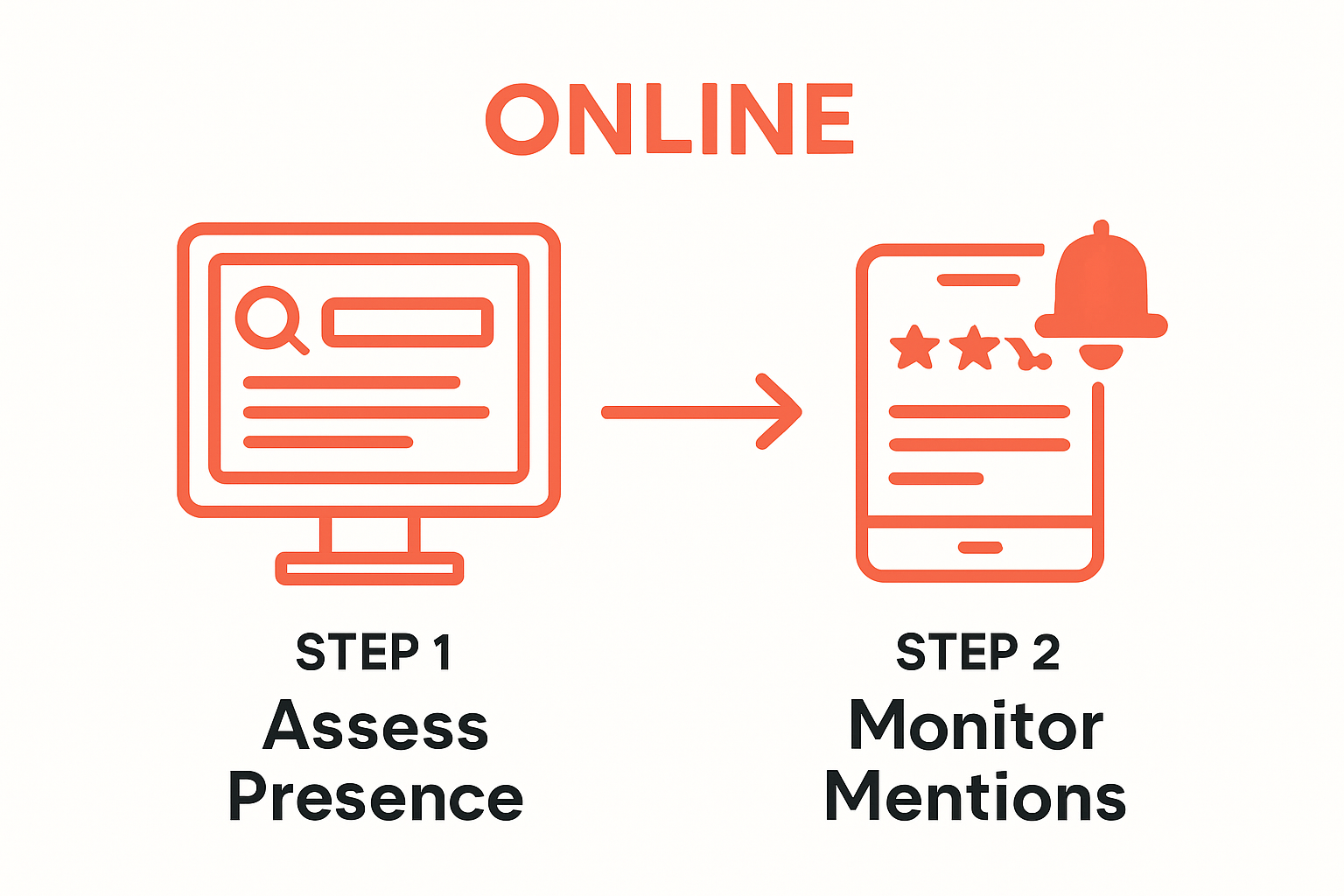
Step 1: Asses Your Current Online Presence
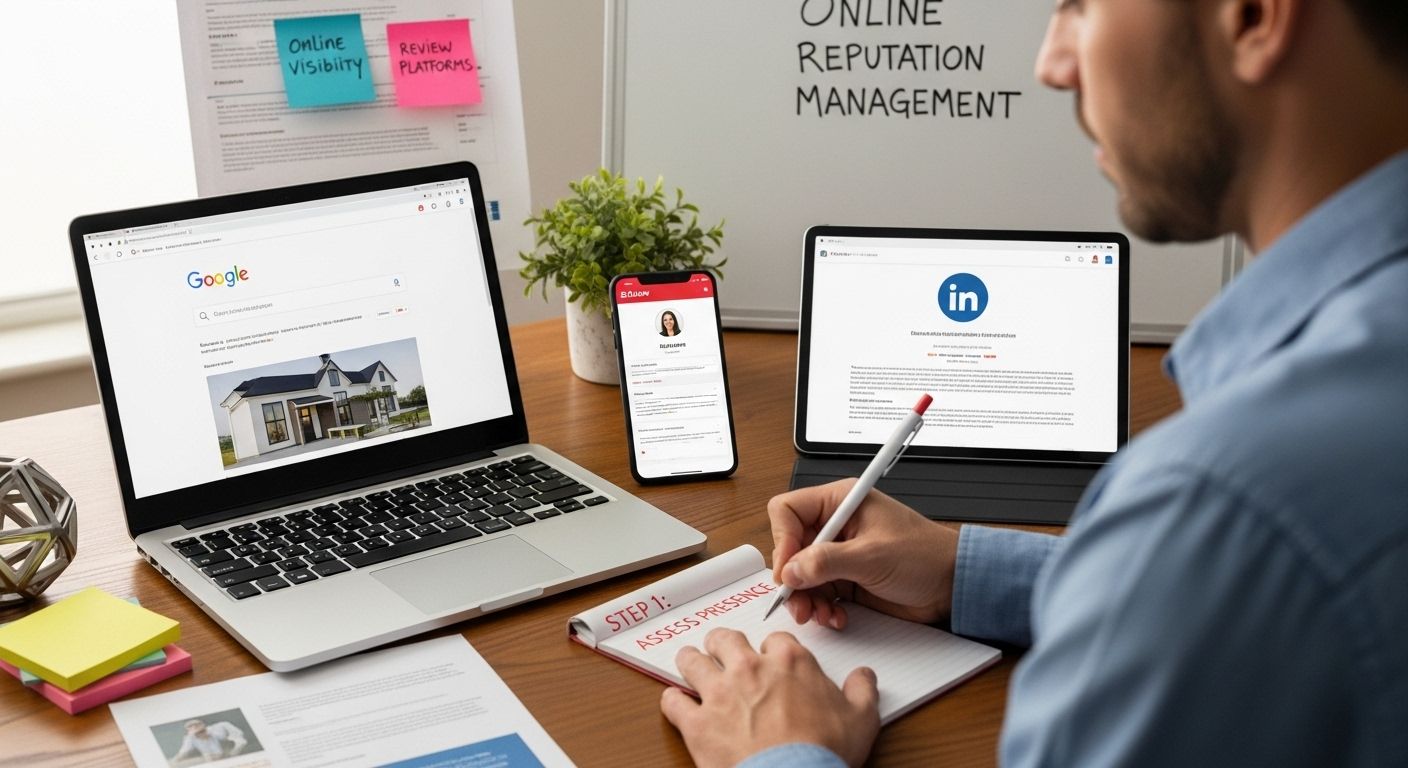
Mastering online reputation management begins with a comprehensive evaluation of your digital footprint. This critical first step involves systematically examining how you currently appear across various online platforms, understanding your existing reputation, and identifying potential areas of improvement.
Start by conducting a thorough 360-degree digital audit of your online presence. Search your name, professional business name, and any digital handles across multiple search engines. Google, Bing, and alternative search platforms will reveal the current landscape of your digital reputation. Pay close attention to the first three pages of search results, as these are most likely to be viewed by potential clients.
Real estate professionals should meticulously review their presence on key platforms. Examine your profiles on professional networks like LinkedIn, real estate specific sites such as Zillow and Realtor.com, social media channels including Facebook and Instagram, and review sites like Google Reviews and Yelp. Look for inconsistencies in your professional information, outdated content, and any negative or neutral reviews that might impact your reputation.
As part of this assessment, track your digital visibility systematically. Document each platform’s current representation of your professional brand. Take screenshots and create a spreadsheet tracking:
- Current profile descriptions
- Quality and quantity of client reviews
- Professional photo consistency
- Contact information accuracy
- Engagement levels on different platforms
Successful completion of this step means you have a clear, comprehensive understanding of your current online reputation. You should be able to articulate precisely how potential clients perceive you digitally and identify specific areas requiring strategic improvement or immediate intervention.
The following table provides a checklist for auditing your online presence, helping ensure consistency and accuracy across all major platforms.
| Audit Item | Description | Completion Status |
|---|---|---|
| Profile descriptions | Ensure up-to-date and consistent bios | |
| Client reviews | Check quality and quantity of client feedback | |
| Professional photo | Confirm use of a professional, consistent profile image | |
| Contact information | Verify correct phone, email, and address details | |
| Engagement levels | Assess frequency and quality of interactions |
Step 2: Monitor Online Mentions and Reviews
Online reputation management requires continuous vigilance. After assessing your current digital presence, the next crucial step involves creating a systematic approach to monitoring and tracking all online mentions and reviews about your real estate business.
Implement a comprehensive digital monitoring strategy that covers multiple platforms simultaneously. Use specialized reputation monitoring tools like Google Alerts, Mention, and Brand24 to track references across search engines, social media channels, review sites, and local business directories. These tools send real-time notifications whenever your name, business name, or specific keywords are referenced online, allowing you to respond quickly and strategically.
Research from digital reputation experts emphasizes the critical nature of proactive monitoring. Set up alerts for variations of your professional name, business name, and common misspellings to ensure comprehensive coverage. Configure these tools to send notifications to your primary email or integrate them with your mobile device, enabling immediate awareness of new mentions.
Establish a consistent review tracking routine by dedicating specific time slots for monitoring. Check platforms like Google Reviews, Zillow, Yelp, Facebook, and LinkedIn at least twice weekly. Develop a systematic process for reviewing and categorizing mentions:
- Positive mentions requiring acknowledgment
- Neutral comments needing clarification
- Negative reviews requiring professional response
- Potential leads or referral opportunities
Successful completion of this monitoring step means you have a robust system for tracking your online reputation in real time. You should feel confident that no significant digital mention goes unnoticed, and you can respond promptly and professionally to maintain and enhance your professional image.
Below is a table summarizing the recommended reputation monitoring tools and their purposes as mentioned in the article.
| Tool | Purpose | Platforms Covered |
|---|---|---|
| Google Alerts | Tracks mentions of your name/business in real time | Search engines, web |
| Mention | Monitors references and social platforms | Social media, web |
| Brand24 | Offers comprehensive tracking and notifications | Social, review sites, web |
| Hootsuite | Manages and monitors engagement and brand mentions | Social media channels |
| Social Mention | Gathers performance analytics and data insights | Multiple digital platforms |
Step 3: Develop a Response Strategy for Negative Feedback
Managing negative online feedback requires a strategic, professional approach that transforms potential reputation damage into an opportunity for demonstrating exceptional customer service. Developing a robust response strategy becomes critical in maintaining your professional image and credibility in the competitive real estate market.
Craft a standardized response framework that provides clear guidelines for addressing different types of negative feedback. This approach ensures consistency and professionalism across all platforms. Create a template that includes empathetic language, commitment to resolution, and an invitation to continue the conversation privately. The goal is to show potential clients that you take customer concerns seriously and are committed to resolving issues transparently.
Research from business reputation experts emphasizes the importance of timely and thoughtful responses. Aim to reply within 24-48 hours of receiving negative feedback. Your response should acknowledge the specific concerns raised, express genuine understanding, and offer a concrete path to resolution. Avoid becoming defensive or argumentative, as this can escalate the situation and potentially damage your online reputation further.
Develop a nuanced approach to different feedback scenarios:
- Minor complaints requiring simple clarification
- Serious allegations needing thorough investigation
- Misunderstandings that can be resolved through direct communication
- Potentially fraudulent or malicious reviews
Successful implementation of this response strategy means you have a systematic method for addressing negative feedback that turns potential reputation challenges into opportunities for demonstrating your professionalism and commitment to client satisfaction. Your approach should consistently reflect your brand values and show potential clients that you are responsive, empathetic, and dedicated to providing exceptional real estate services.
Step 4: Create High-Quality, Positive Content
Creating high-quality, positive content is a strategic approach to actively shape your online reputation and showcase your professional expertise in the real estate market. This step involves deliberately generating authentic, valuable content that highlights your professional strengths and demonstrates your commitment to client success.
Develop a comprehensive content strategy that spans multiple digital platforms. Begin by creating professional blog posts that address common real estate challenges, market insights, and client success stories. Focus on providing genuine value through educational content that positions you as a knowledgeable and trustworthy real estate professional. Share detailed market analyses, first-time homebuyer tips, neighborhood spotlights, and practical advice that potential clients will find genuinely helpful.
Research from business reputation experts emphasizes the importance of authentic storytelling. Leverage client testimonials and success stories across your digital platforms. Request permission from satisfied clients to share their experiences, and craft compelling narratives that demonstrate your professional capabilities. Explore strategies for converting website visitors to maximize the impact of your content marketing efforts.
Expand your content strategy across various channels:
- Professional blog with in-depth real estate insights
- Social media platforms showcasing client success stories
- Video content featuring market updates and property tours
- Email newsletters with valuable market information
Successful implementation of this content creation strategy means you have a robust system for generating positive, valuable content that organically enhances your online reputation. Your digital presence will reflect your expertise, professionalism, and genuine commitment to helping clients achieve their real estate goals.

Step 5: Implement Consistent Engagement and Monitoring
Consistent engagement and monitoring represent the ongoing lifeline of your online reputation management strategy. This critical step transforms reputation management from a reactive process to a proactive, strategic approach that continuously protects and enhances your professional digital presence.
Develop a structured engagement protocol that ensures timely and professional interactions across all digital platforms. Set specific daily or weekly time blocks dedicated to responding to comments, reviews, and messages. Consistency is key in demonstrating your commitment to client communication. Create templates for different types of interactions that maintain a professional tone while allowing personalization for each unique situation. Learn more about effective lead management strategies to streamline your communication approach.
Research from business reputation experts highlights the importance of creating a comprehensive monitoring system. Utilize advanced monitoring tools like Hootsuite, Google Alerts, and Brand24 to track mentions across multiple platforms simultaneously. Set up customized alerts for your name, business name, and relevant keywords. Configure these tools to send real-time notifications to your primary communication channels, ensuring you never miss an important mention or potential client interaction.
Establish a systematic approach to digital engagement:
- Daily review of social media mentions and comments
- Weekly comprehensive reputation audit
- Immediate response to all client communications
- Monthly analysis of engagement metrics
Successful implementation of this step means you have transformed online reputation management into a dynamic, ongoing process. Your approach becomes proactive rather than reactive, allowing you to consistently shape and maintain a positive professional image across all digital platforms.
Step 6: Evaluate and Adjust Your Strategy Regularly
Online reputation management is not a static process but a dynamic, continuously evolved strategy that requires regular assessment and refinement. This final step ensures your approach remains effective, responsive to market changes, and aligned with your professional goals.
Develop a comprehensive quarterly review framework that systematically analyzes your online reputation performance. Create a detailed tracking dashboard that captures key metrics across multiple platforms. Examine engagement rates, review sentiments, response times, and overall digital visibility. Explore conversion optimization techniques to enhance your strategy’s effectiveness and adapt to changing digital landscapes.
Research from reputation management experts emphasizes the importance of data-driven adjustments. Utilize advanced analytics tools like Google Analytics, Social Mention, and platform-specific insights to gather comprehensive performance data. Compare your current metrics against baseline measurements established in previous quarters. Look for trends, identify areas of improvement, and recognize successful strategies that have positively impacted your online reputation.
Establish a systematic approach to strategic evaluation:
- Quarterly comprehensive reputation audit
- Monthly performance metric tracking
- Bi-annual competitive landscape analysis
- Continuous learning and skill development
Successful implementation of this step transforms online reputation management from a reactive task to a strategic, proactive process. Your approach becomes adaptive, ensuring you remain responsive to market dynamics, technological changes, and emerging digital communication trends. By committing to regular evaluation and strategic adjustment, you position yourself as a forward-thinking real estate professional who understands the critical importance of maintaining an exceptional digital reputation.
Take Control of Your Online Reputation and Never Miss a Real Estate Lead Again
Struggling with inconsistent client reviews, slow response times, or missed opportunities—even after following every step in mastering your online reputation? These pain points can cost you both trust and business. The article revealed that real estate success depends on fast, consistent engagement and a strong digital presence. LeadLinker.co is here to transform your real estate reputation management by automating lead response and converting more prospects into satisfied clients through reliable AI-powered communication.

Why wait for your competitors to win the clients searching online right now? Secure every opportunity and keep your brand trusted 24/7. Experience instant follow-up, lead qualification, and seamless appointment bookings by exploring LeadLinker’s intelligent platform. Take the next step towards scalable success and clean up your digital presence today. Visit LeadLinker.co and see how easily you can turn reputation management into tangible growth.
Frequently Asked Questions
How can I assess my current online presence in real estate?
To assess your online presence, conduct a 360-degree digital audit by searching your name and business name on various platforms like Google and real estate sites. Document your profile information, reviews, and engagement metrics to identify areas for improvement.
What tools can I use to monitor my online reputation?
You can use reputation monitoring tools such as Google Alerts, Mention, and Brand24 to track mentions of your name and business across search engines, social media, and review sites to stay aware of your online reputation.
What steps should I take to respond to negative online feedback?
Develop a standardized response framework that acknowledges the concerns raised, shows understanding, and invites private conversation for resolution. Aim to respond within 24-48 hours to demonstrate your commitment to client satisfaction.
How can creating positive content improve my online reputation?
Creating high-quality, positive content, such as blog posts and client success stories, demonstrates your expertise and commitment to clients. This content helps shape a favorable impression and can enhance your visibility online.