
Renting has become the go-to move for people seeking flexibility and freedom in where they live. Many believe owning a home is the only path to long-term stability, but things have changed fast. The lowest income households now spend about 37 percent of their expenses on housing and new rental options are giving them more choices than ever before. That flips an old idea on its head since renting is no longer just a temporary fix but a strategic way to adapt in a shifting economy and evolving society.
Table of Contents
- Defining Renting: What It Means In Real Estate
- Key Benefits Of Renting: Why Many Choose To Rent
- Challenges Of Renting: Potential Drawbacks To Consider
- Financial Implications: How Renting Affects Your Budget
- The Long-Term Perspective: Why Renting Matters In Today’s Market
Quick Summary
| Takeaway | Explanation |
|---|---|
| Renting provides financial flexibility. | Renting requires lower upfront costs compared to buying property, making it accessible for many individuals. |
| Leases dictate tenant rights and responsibilities. | A well-defined lease outlines obligations, payment terms, and maintenance expectations, crucial for both parties. |
| Renters have limited property modification options. | Tenants face restrictions on personalizing their living space, impacting their comfort and sense of home. |
| Renting avoids long-term financial commitments. | Individuals can navigate life changes more easily without being tied to a property investment. |
| Rental markets adapt to economic changes. | Renting offers flexibility and resilience, becoming a strategic choice amidst shifting demographics and job market conditions. |
Defining Renting: What It Means in Real Estate
Renting represents a fundamental transaction within real estate where an individual or entity obtains temporary access and occupancy rights to a property owned by another party, without transferring permanent ownership. This arrangement creates a structured legal relationship between the tenant (renter) and the property owner (landlord), governed by specific contractual agreements.
The Basic Mechanics of Rental Agreements
At its core, renting involves exchanging financial compensation for temporary property usage. According to the United Nations Statistics Division, rental services encompass residential properties like houses, apartments, and mobile home sites. The rental process typically includes several critical components:
- A signed lease document specifying rental terms
- Predetermined monthly or periodic payment amounts
- Clear expectations regarding property maintenance
- Defined duration of occupancy
Key considerations for renters include understanding the specific rights and responsibilities outlined in their lease agreement. These documents detail everything from utility obligations to restrictions on property modifications.
Financial and Legal Implications
Rental agreements represent more than simple housing transactions. They are complex legal arrangements with significant financial implications. Real estate professionals recognize that renting provides flexibility for individuals who may not want long-term property ownership commitments.
The rental market offers various property types, from residential apartments to commercial spaces. Each category has unique characteristics and contractual nuances. For residential rentals, tenants typically pay a security deposit, first and last month’s rent, and agree to maintain the property in good condition.
Financial experts often view renting as a strategic housing option that allows individuals to live in desirable locations without the substantial upfront costs associated with property purchases. This flexibility is particularly attractive in dynamic urban markets where property values and personal circumstances can change rapidly.
Understanding the intricacies of renting requires recognizing it as a dynamic, multifaceted real estate transaction that balances tenant needs with property owner interests.
Key Benefits of Renting: Why Many Choose to Rent
Renting offers strategic advantages that make it an attractive housing option for diverse populations, from young professionals to families seeking flexibility and financial prudence. Understanding these benefits helps individuals make informed decisions about their living arrangements.
Financial Flexibility and Lower Upfront Costs
One of the most compelling reasons to rent is the significantly reduced initial financial investment compared to purchasing property. According to Zillow Research, renting eliminates substantial upfront expenses like down payments, closing costs, and extensive property maintenance budgets.
The financial benefits of renting include:
- Predictable monthly housing expenses
- No responsibility for major repair costs
- Greater geographical mobility
- Lower insurance and property tax obligations
- Minimal long-term financial commitment
Young professionals and individuals in transitional life stages particularly appreciate these financial advantages. Renting allows them to allocate resources towards career development, travel, or other personal investments without being tied to a specific property.
Lifestyle and Mobility Advantages
Renting provides unparalleled lifestyle flexibility that homeownership cannot match. Tenants can easily relocate for career opportunities, personal growth, or changing life circumstances without the complex process of selling a property.
Modern urban professionals value the ability to live in premium locations that might be financially unattainable for purchase. Rental markets in metropolitan areas offer access to desirable neighborhoods, amenities, and proximity to workplace centers without the substantial capital required for property ownership.
Additionally, renters enjoy reduced maintenance responsibilities. Property repairs, landscaping, and major system replacements become the landlord’s responsibility, freeing tenants from time-consuming and potentially expensive home maintenance tasks.
Risk Mitigation and Personal Freedom
Renting acts as a risk mitigation strategy in uncertain economic environments. By avoiding long-term property investments, individuals can remain adaptable to market fluctuations, career changes, and personal life transitions.
The rental model offers a form of financial and personal freedom that resonates with contemporary lifestyle preferences. It represents a strategic choice for those prioritizing flexibility, reduced financial risk, and the ability to make quick, responsive life decisions without being anchored to a specific property.
Challenges of Renting: Potential Drawbacks to Consider
While renting provides significant advantages, potential tenants must carefully evaluate the inherent limitations and potential challenges associated with this housing approach. Understanding these drawbacks enables more informed decision making about residential arrangements.
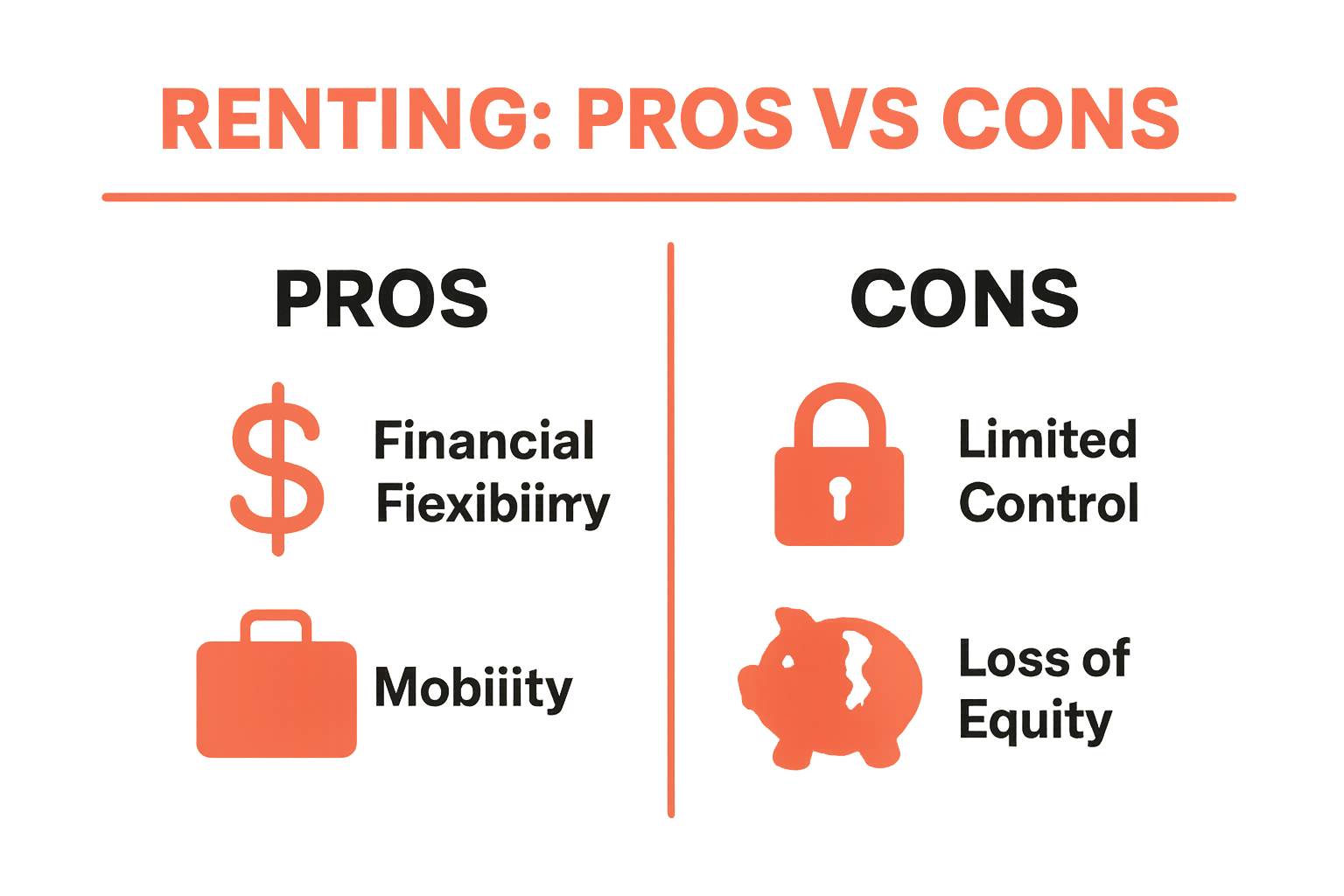
To clarify the advantages and drawbacks discussed, the table below compares the key pros and cons of renting property as outlined in the article.
| Aspect | Pros of Renting | Cons of Renting |
|---|---|---|
| Upfront Costs | Lower initial investment, minimal deposits | No asset accumulation, regular payments required |
| Mobility & Flexibility | Easy relocation, adaptable to life changes | Potential for unexpected moves if lease ends |
| Maintenance Responsibilities | Landlord handles major repairs and maintenance | Dependent on landlord for quality and timeliness |
| Control & Customization | Less responsibility for property upkeep | Limited ability to personalize or renovate |
| Financial Planning | Predictable monthly expenses, lower insurance and taxes | No equity building, exposure to rent increases |
| Risk Management | Avoids real estate market risks, less financial commitment | No benefit from property value appreciation |
Limited Control and Personal Customization
Renting fundamentally restricts a tenant’s ability to modify and personalize living spaces. According to OpenStax, renters face substantial constraints on home improvements, decorations, and structural changes.
Typical limitations include:
- Restrictions on painting walls
- Prohibitions on major renovations
- Limited landscaping options
- Rules about hanging artwork or making permanent modifications
- Constraints on pet ownership
These restrictions can significantly impact personal comfort and create a sense of temporary living, which may feel unsettling for individuals seeking a true sense of home. For those interested in understanding millennial home buying trends, these constraints represent a critical consideration in housing decisions.
Financial Instability and Long-Term Uncertainty
Rental arrangements introduce notable financial uncertainties that can challenge long-term personal and financial planning. Tenants are vulnerable to unpredictable rent increases, potential lease terminations, and lack of equity accumulation.
Property owners can adjust rental rates based on market conditions, potentially creating sudden financial strain for tenants. Moreover, the absence of property ownership means renters do not build equity or benefit from potential property value appreciation, representing a significant opportunity cost.
Housing Quality and Dependency Risks
Renters are inherently dependent on landlords for property maintenance, repairs, and overall living conditions. This dependency can create potential risks related to housing quality and responsiveness to maintenance needs.
Unaddressed maintenance issues, delayed repairs, and inconsistent property management can negatively impact living experiences. Some rental properties may have underlying structural problems or inadequate maintenance that tenants cannot independently resolve.
Furthermore, the potential for unexpected relocation due to property sale, owner decisions, or significant renovations creates additional personal and logistical challenges. Tenants must always be prepared for potential disruptions to their living arrangements, which can be emotionally and practically demanding.

Financial Implications: How Renting Affects Your Budget
Renting represents a complex financial commitment that extends far beyond monthly rent payments. Understanding the comprehensive economic impact helps individuals make informed housing decisions and develop strategic financial planning approaches.
Monthly Expenses and Predictable Costs
According to the Hamilton Project, housing expenses can consume a substantial portion of household expenditures, with the lowest income quintile spending approximately 37% of total expenses on housing.
Typical rental-related expenses include:
- Base monthly rent
- Utility payments
- Renter’s insurance
- Parking fees
- Additional amenity charges
- Potential pet deposits
These predictable costs offer financial stability, allowing renters to budget effectively for their real estate needs. Unlike homeownership, rental expenses remain relatively consistent and do not include unexpected maintenance or repair costs.
To help readers grasp the typical financial responsibilities associated with renting, the table below summarizes common rental-related expenses and their characteristics as described in the article.
| Expense Type | Description | Who Pays? | Predictability |
|---|---|---|---|
| Monthly Rent | Regular payment for occupancy | Tenant | Fixed (per lease) |
| Utilities | Electricity, water, gas, etc. | Tenant, varies | Variable |
| Renter’s Insurance | Protects tenant’s personal property | Tenant | Fixed/Variable |
| Parking Fees | Fee for parking space (if applicable) | Tenant | Fixed/Variable |
| Amenity Charges | Access to building facilities (gym, pool, etc.) | Tenant | Fixed/Variable |
| Pet Deposits | Refundable/Non-refundable deposit for pets | Tenant | One-time |
Opportunity Cost and Wealth Accumulation
Renting presents significant opportunity costs regarding long-term wealth generation. The Consumer Financial Protection Bureau emphasizes that monthly rent payments do not contribute to personal asset accumulation or equity building.
Financial experts highlight a stark wealth disparity between renters and homeowners. While homeowners can potentially benefit from property appreciation and mortgage principal reduction, renters do not experience similar financial advantages. This fundamental difference impacts long-term financial strategies and retirement planning.
Strategic Financial Management
Successful financial management for renters requires proactive budgeting and strategic planning. Individuals must carefully allocate resources, understanding that rental expenses represent a consistent financial obligation without potential property value appreciation.
Renters should prioritize:
- Creating robust emergency savings
- Investing in alternative wealth-building strategies
- Maintaining excellent credit profiles
- Exploring supplemental income opportunities
By approaching renting as a deliberate financial choice rather than a temporary solution, individuals can optimize their economic potential and create sustainable financial frameworks that accommodate their lifestyle and long-term goals.
The Long-Term Perspective: Why Renting Matters in Today’s Market
The rental market represents a dynamic and increasingly significant component of contemporary housing strategies. As economic landscapes shift and demographic patterns evolve, renting has transformed from a temporary solution to a strategic long-term housing approach for diverse population segments.
Shifting Demographics and Housing Preferences
According to the Brookings Institution, rental housing has experienced substantial transformations in recent decades. Young professionals, particularly millennials, are redefining traditional housing expectations by prioritizing flexibility and urban mobility over permanent property ownership.
Key demographic trends driving rental market growth include:
- Increased job market mobility
- Delayed marriage and family formation
- Preference for urban living environments
- Rising student debt burdens
- Desire for lifestyle flexibility
These factors have significantly reshaped housing preferences, making renting an increasingly attractive option. For deeper insights into millennial home buying trends, professionals can explore evolving market dynamics.
Economic Resilience and Market Adaptability
Rental markets demonstrate remarkable economic resilience by offering adaptable housing solutions during periods of economic uncertainty. Unlike traditional homeownership, renting provides individuals with greater geographical and financial flexibility to navigate complex economic landscapes.
Modern renters represent a sophisticated demographic that strategically uses rental arrangements to manage personal and professional transitions. The ability to relocate quickly, avoid long-term financial commitments, and maintain financial liquidity has become increasingly valuable in today’s rapidly changing economic environment.
Technological and Social Evolution
Technological advancements and changing social norms have further legitimized renting as a viable long-term housing strategy. Digital platforms, remote work capabilities, and evolving workplace cultures have dismantled traditional expectations surrounding property ownership.
The rental market now offers diverse housing options that cater to sophisticated lifestyle preferences:
- Co-living spaces
- Flexible lease terms
- Fully furnished apartments
- Smart home integrated rentals
- Community-oriented housing developments
These innovations demonstrate that renting is no longer a compromise but a deliberate, strategic choice aligned with contemporary lifestyle aspirations and economic realities.
Unlock a New Future in Rental Real Estate with Proven Lead Management
If you have ever struggled with the unpredictable nature of renting or worried about missed opportunities in a competitive rental market, you understand how critical it is to act fast and stand out. This article highlighted the importance of financial flexibility, rapid adaptation, and risk management. Yet, many real estate professionals lose potential clients and valuable deals due to slow response times and poor lead nurturing. Growing your business in a market defined by limited control and uncertainty means using every tool possible to capture and convert quality leads.

Ready to stop missing real opportunities among renters and landlords? Experience how LeadLinker.co helps you turn knowledge from resources like “Understanding the Pros and Cons of Renting Property” into real business growth. Our AI-driven platform manages and qualifies rental inquiries using SMS, email, and social channels, so you never let a promising lead slip away. Visit LeadLinker.co now to accelerate your response times, automate appointment scheduling, and finally create a sustainable edge in the rental market. Start transforming how you manage and nurture leads today.
Frequently Asked Questions
What are the main benefits of renting a property?
Renting a property provides financial flexibility, lower upfront costs compared to buying, lifestyle mobility, and reduced maintenance responsibilities. These advantages make renting an attractive option for individuals looking for adaptable housing solutions.
What are the key challenges associated with renting?
Key challenges of renting include limited control over property modifications, financial instability due to potential rent increases, and dependency on landlords for maintenance and property quality. These factors may impact tenants’ overall living experience.
How does renting impact long-term financial planning?
Renting can introduce challenges in long-term financial planning, as monthly rent payments do not build equity or contribute to asset accumulation. Renters may need to adopt alternative financial strategies to achieve their wealth-building goals.
What factors should I consider when entering a rental agreement?
When entering a rental agreement, consider the lease terms, monthly payment amounts, property maintenance responsibilities, and the duration of the lease. Understanding these elements will help ensure that your rights and responsibilities as a tenant are clear.