
Real estate lead management sounds like a boring backend task for agents chasing deals all day. And yet, the impact is massive. Effective lead management can actually increase conversion rates by up to 300 percent compared to traditional methods. Most people think it is just about collecting phone numbers and emails. The real change comes from blending smart tech and human touch so agents stop losing opportunities and start building lasting relationships.
Table of Contents
- Understanding What Is Lead Management In Real Estate
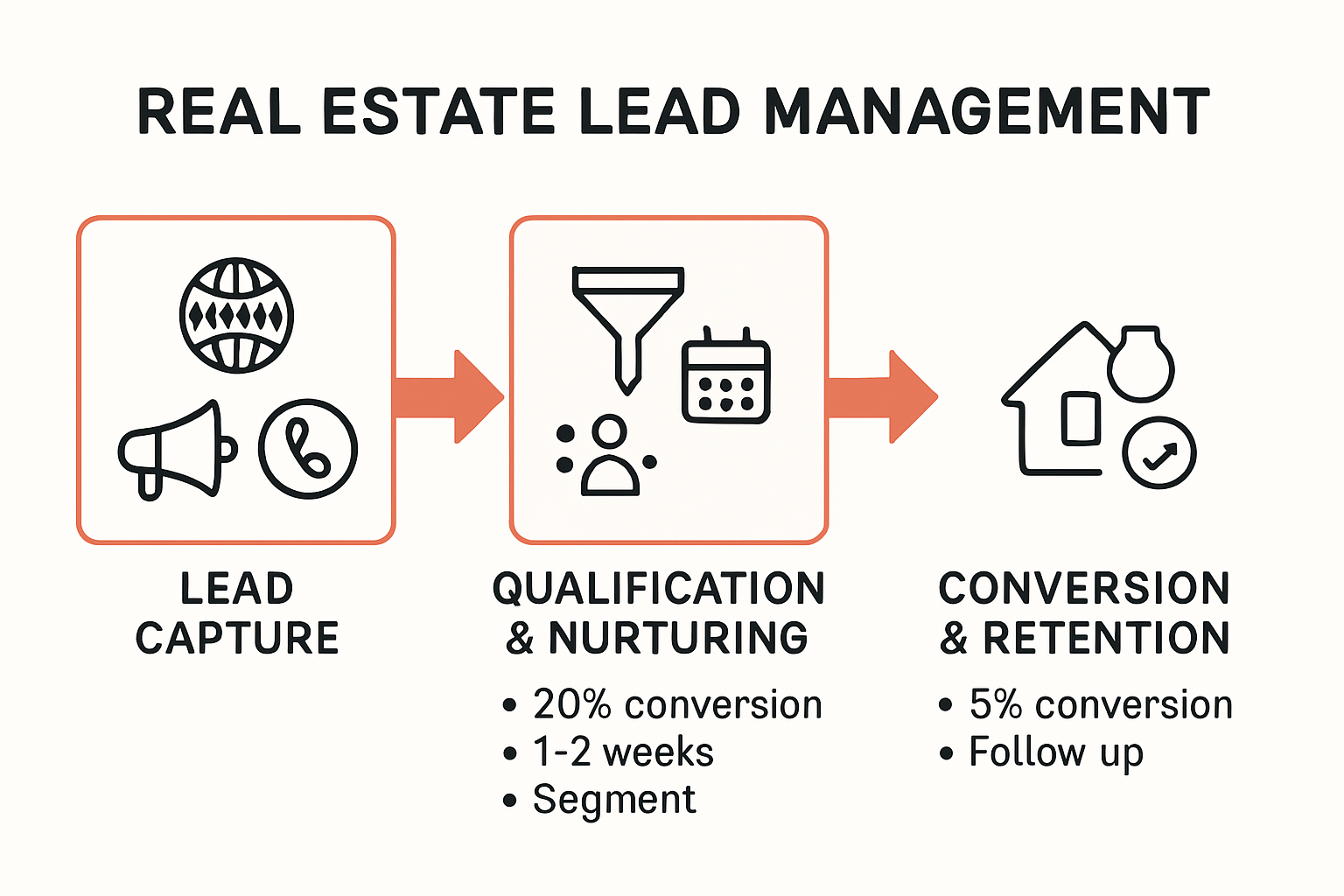
- Key Steps In The Lead Management Process
- Best Practices For Real Estate Lead Management
- Choosing Tools For Effective Lead Management
Quick Summary
| Takeaway | Explanation |
|---|---|
| Implement a Lead Tracking System | Use a robust system to monitor client interactions, ensuring effective follow-up and engagement. |
| Prioritize Lead Qualification | Assess the readiness and interest of leads to focus efforts on the most promising prospects. |
| Leverage Technology for Automation | Utilize AI and CRM tools to streamline communications and personalize interactions at scale. |
| Engage with Personalized Communication | Tailor messages based on individual client needs to build trust and enhance relationships. |
| Maintain Continuous Follow-Up | Regularly check in with leads using various channels to keep your services top of mind. |
Understanding What Is Lead Management in Real Estate
Lead management represents a critical strategy for real estate professionals to transform potential inquiries into successful property transactions. At its core, lead management is a systematic approach to tracking, nurturing, and converting potential clients throughout their property buying or selling journey.
The Fundamental Components of Real Estate Lead Management
Real estate lead management goes beyond simple contact collection. It involves a comprehensive process of identifying, capturing, qualifying, and strategically nurturing potential clients. Learn more about effective lead strategies that can dramatically improve an agent’s conversion rates.
Professional real estate agents understand that not all leads are created equal. According to research from the National Association of Realtors, effective lead management can increase conversion rates by up to 300% compared to traditional contact methods. This process typically involves several key stages:
- Lead Capture: Collecting potential client information through various channels like website forms, social media, open houses, and referral networks
- Lead Qualification: Assessing the potential client’s readiness, financial capability, and genuine interest in buying or selling property
- Lead Nurturing: Developing targeted communication strategies to maintain engagement and build trust over time
Technology’s Role in Modern Lead Management
Technological advancements have revolutionized how real estate professionals approach lead management. As research from the Real Estate Technology Association indicates, modern AI-driven platforms can automate significant portions of the lead management workflow, enabling agents to focus on high-value interactions.
The evolution of customer relationship management (CRM) systems and AI-powered communication tools has made it possible to:
- Instantly respond to inquiries
- Segment leads based on specific criteria
- Track interaction history
- Predict potential conversion likelihood
- Personalize communication at scale
Successful lead management requires a strategic blend of human touch and technological efficiency. Real estate professionals who master this approach can significantly reduce response times, improve client engagement, and ultimately increase their conversion rates. By implementing robust lead management systems, agents transform raw contact information into meaningful relationships that drive business growth.
The key is not just collecting leads but creating a structured, responsive, and personalized approach that guides potential clients through their real estate journey with precision and care.
Key Steps in the Lead Management Process
The lead management process is a strategic pathway that transforms potential inquiries into successful real estate transactions. Understanding and executing these key steps effectively can significantly improve an agent’s conversion rates and overall business performance.
To provide a clear overview of the main stages in real estate lead management, the table below summarizes the key steps, their purpose, and notable best practices discussed in the article.
| Step | Purpose | Notable Best Practices |
|---|---|---|
| Lead Generation & Initial Capture | Collect potential client info via digital, traditional, & local marketing | Use multiple channels; track sources |
| Lead Qualification & Segmentation | Assess client readiness, interests, and financial capability | Apply scoring models; categorize leads |
| Lead Nurturing & Conversion Strategy | Build trust, provide value, and guide leads towards transactions | Personalize communication; follow-up timely |
Lead Generation and Initial Capture
The first critical stage of lead management begins with generating and capturing potential client information. Discover advanced lead prioritization techniques that can help agents focus their efforts more efficiently. According to research from the National Association of Realtors, successful real estate professionals utilize multiple channels for lead generation:
- Digital Channels: Website forms, social media platforms, online advertising
- Traditional Channels: Open houses, networking events, referral programs
- Local Marketing: Community events, direct mail campaigns, local advertising
Professional agents recognize that not all leads are equal. The initial capture process requires sophisticated tracking mechanisms to record essential contact details and initial interaction points.
Lead Qualification and Segmentation
After capturing leads, the next crucial step involves qualifying and segmenting potential clients. Industry research from the Real Estate Technology Association highlights the importance of a systematic approach to lead assessment. This stage involves:
- Evaluating the lead’s genuine interest in buying or selling property
- Assessing financial readiness and qualification
- Determining specific property preferences
- Categorizing leads based on urgency and potential conversion likelihood
Advanced real estate professionals use sophisticated scoring models that consider multiple factors such as engagement level, communication responsiveness, and specific market indicators. These models help agents prioritize their most promising leads and allocate resources more effectively.
Lead Nurturing and Conversion Strategy
The final stage of lead management focuses on developing a personalized approach to converting potential clients. This involves creating targeted communication strategies that build trust, provide value, and guide leads through their real estate journey. Successful nurturing requires:
- Consistent and personalized communication
- Providing relevant market insights
- Offering tailored property recommendations
- Maintaining regular follow-up touchpoints
Real estate agents who master these steps can transform initial inquiries into long-term client relationships. The key is to blend technological tools with a human-centric approach that demonstrates genuine understanding and commitment to the client’s unique needs.
By implementing a comprehensive lead management process, real estate professionals can dramatically improve their conversion rates, reduce wasted effort, and create a more predictable and scalable business model.
Best Practices for Real Estate Lead Management
Effective lead management requires strategic implementation of proven techniques that maximize conversion potential and build sustainable client relationships. Real estate professionals must adopt a comprehensive approach that combines technological tools, personalized communication, and systematic follow-up strategies.
Developing a Robust Lead Tracking System
Learn about advanced lead management strategies that can transform your approach to client acquisition. According to research from the National Association of Realtors, successful agents implement sophisticated tracking mechanisms that go beyond basic contact collection.
Key components of an effective lead tracking system include:
- Comprehensive Contact Profiles: Collecting detailed information about potential clients
- Interaction Logging: Documenting all communication touchpoints
- Lead Source Tracking: Identifying the origin of each potential client
- Real-Time Status Updates: Maintaining current information on lead progress
Professional real estate agents understand that data-driven approaches provide critical insights into lead behavior and conversion potential. As research from the Small Business Development Center suggests, unifying sales and marketing efforts is crucial for creating a seamless lead management experience.
Personalization and Targeted Communication
Successful lead management goes beyond generic communication. It requires a nuanced approach that demonstrates genuine understanding of each potential client’s unique needs and preferences. This involves:
- Segmenting leads based on specific criteria
- Creating tailored communication strategies
- Providing relevant market insights
- Establishing trust through consistent and meaningful interactions
The College of the Canyons SBDC emphasizes the importance of defining a clear target customer profile and mapping out a comprehensive sales cycle. Real estate professionals must develop communication strategies that adapt to each lead’s specific stage in the buying or selling journey.
Continuous Lead Nurturing and Follow-Up
Maintaining engagement is critical in converting potential leads into actual clients. This requires a systematic approach to follow-up that combines multiple communication channels and provides consistent value. Top-performing real estate agents implement:
- Automated communication workflows
- Timely and personalized follow-up sequences
- Educational content that addresses potential client concerns
- Multiple touchpoints across different communication platforms
The National Association of Home Builders highlights the importance of building trust through strategic communication. This means going beyond simple sales pitches and focusing on providing genuine value and addressing potential clients’ specific needs and concerns.
By implementing these best practices, real estate professionals can create a more efficient, responsive, and ultimately successful lead management process. The key is to combine technological tools with a human-centric approach that prioritizes client relationships and personalized communication.
Choosing Tools for Effective Lead Management
Selecting the right technological tools is crucial for real estate professionals seeking to optimize their lead management process. The landscape of digital solutions offers numerous options, but understanding how to choose and implement the most effective tools can significantly impact an agent’s success.
Essential Features of Lead Management Technology
Discover advanced lead prioritization strategies that can transform your approach to client acquisition. According to research from Northern Kentucky University’s Business Administration program, successful lead management requires a comprehensive technological approach that combines multiple functionalities.
Key features to consider in lead management tools include:
The following table organizes the essential features and considerations for choosing lead management technology as highlighted in the article. This helps agents see at a glance which functions and criteria to prioritize when evaluating solutions.
| Feature/Consideration | Purpose/Description |
|---|---|
| Comprehensive Contact Management | Store and organize detailed client information |
| Automated Communication Workflows | Trigger timely and personalized follow-ups |
| Lead Scoring Capabilities | Prioritize and assess lead potential |
| Multi-Channel Integration | Consolidate all communications across platforms |
| Analytics and Reporting | Provide insights on lead conversion and system effectiveness |
| Ease of Integration | Compatibility with existing business tools |
| Scalability | Ability to grow and adapt as the business expands |
- Comprehensive Contact Management: Ability to store and organize detailed client information
- Automated Communication Workflows: Systems that can trigger personalized follow-ups
- Lead Scoring Capabilities: Tools that help prioritize and assess lead potential
- Multi-Channel Integration: Platforms that consolidate communications across various channels
Professional real estate agents recognize that technology is not just about collecting information, but about creating meaningful connections. As research from I-Square.org suggests, the right Customer Relationship Management (CRM) software can be a game-changer in managing and nurturing potential clients.
Evaluating and Implementing Lead Management Solutions
Choosing the right lead management tool requires a strategic approach. Real estate professionals must consider multiple factors beyond basic functionality. This involves:
- Assessing the specific needs of their real estate practice
- Comparing different platforms’ features and pricing
- Considering ease of integration with existing systems
- Evaluating the platform’s scalability and future potential
The Mid-America Association of Real Estate Investors highlights the importance of automated follow-up systems. These tools can dramatically improve conversion rates by ensuring consistent and timely communication with potential clients. Key considerations include the system’s ability to:
- Automate initial and follow-up communications
- Provide detailed analytics and reporting
- Offer personalization options
- Integrate with existing marketing and communication platforms
Integration and Continuous Optimization
Successful implementation of lead management tools goes beyond initial selection. Real estate professionals must commit to:
- Regular training and skill development
- Continuous system optimization
- Periodic review of tool effectiveness
- Adapting to changing technological landscapes
The most effective lead management approach combines cutting-edge technology with a human-centric approach. While tools can automate many processes, the personal touch remains crucial in converting leads into long-term clients.
By carefully selecting and implementing the right lead management tools, real estate professionals can create a more efficient, responsive, and ultimately successful approach to client acquisition and relationship building. The key is to view these tools as strategic partners in business growth, not just technological solutions.

Frequently Asked Questions
What is lead management in real estate?
Lead management in real estate is a systematic approach to tracking, nurturing, and converting potential clients throughout their property buying or selling journey.
Why is lead qualification important for real estate professionals?
Lead qualification is crucial because it helps agents assess the readiness and interest of leads, allowing them to focus their efforts on the most promising prospects and increase conversion rates.
How does technology enhance lead management for real estate agents?
Technology enhances lead management by automating processes such as lead tracking, communication workflows, and data analysis, enabling agents to focus on building stronger relationships with clients.
What are the best practices for effective lead nurturing in real estate?
Best practices for effective lead nurturing include consistent personalized communication, providing relevant market insights, and maintaining regular follow-up touchpoints to build trust and convert leads into clients.
Transform Missed Inquiries Into Booked Appointments With Smart Lead Management
Are you frustrated by slow response times, missed opportunities and the constant juggle of lead nurturing? The article highlighted how traditional lead management often leads to lost prospects, delayed follow-ups and inconsistent communication. If you want to capture every potential client, qualify leads automatically and increase conversion rates, you need more than just manual tracking and reminders.

Experience a faster, smarter way to work with LeadLinker.co. Automate your real estate lead response, qualification, and appointment scheduling using advanced AI. Connect instantly with clients through SMS, email, Facebook, and Instagram. Watch how top agents reduce response times and scale results without extra staffing. Take back your evenings and win more deals—start building stronger client relationships now by visiting LeadLinker.co or explore how automated lead management best practices can drive your business forward.