
Strong community connections are the secret to thriving in real estate, and yet so many professionals still rely on outdated, surface-level networking. Over 60 percent of real estate deals come directly from personal referrals and authentic relationships. At first, it might seem obvious that mingling at events and shaking hands is enough to build trust. The real surprise is that true success comes from a structured, strategic approach where tracking, measurement, and honest self-reflection turn ordinary contacts into lifelong advocates.
Table of Contents
- Step 1: Assess Your Current Community Engagement
- Step 2: Identify Key Community Stakeholders
- Step 3: Develop a Strategic Outreach Plan
- Step 4: Execute Community Engagement Activities
- Step 5: Evaluate Relationship Impact And Adjust Strategies
Quick Summary
| Key Point | Explanation |
|---|---|
| 1. Assess Your Community Engagement | Start by evaluating your current engagement to identify strengths and gaps in your connections. |
| 2. Identify Key Community Stakeholders | Map out important stakeholders to understand your local network and potential partnerships. |
| 3. Develop a Strategic Outreach Plan | Create a detailed plan for consistent engagement across various channels and activities. |
| 4. Execute Community Engagement Activities | Actively participate in local events to build trust and credibility with the community. |
| 5. Evaluate Relationship Impact and Adjust Strategies | Regularly assess your engagement effectiveness and adjust strategies based on feedback and outcomes. |
Step 1: Assess Your Current Community Engagement
Building community relationships in real estate requires a strategic and thoughtful approach, beginning with a comprehensive assessment of your current engagement levels. This initial step helps you understand your existing connections, identify potential gaps, and create a roadmap for meaningful community interactions.
Understanding Your Current Community Landscape
To start your assessment, conduct a thorough review of your current community interactions. This means examining your past networking efforts, community event participation, local business relationships, and professional connections. Real estate professionals must recognize that community engagement is more than casual interactions—it’s about creating lasting, meaningful relationships.
Your assessment should include a detailed audit of your existing connections. Map out your current network by categorizing relationships into different groups: local business owners, community leaders, potential clients, past clients, and professional colleagues. Look beyond surface-level interactions and analyze the depth and quality of these connections.
Explore our comprehensive guide on online reputation management to understand how digital presence impacts community perception. Digital footprint plays a significant role in how community members view your professional brand and commitment.
Key evaluation metrics for your community engagement assessment include:
- Number of local networking events attended in the past year
- Frequency of meaningful interactions with community stakeholders
- Referral rates from existing community connections
- Social media engagement with local community groups
- Participation in local professional and community organizations
Successful assessment requires honest self-reflection. Be critical about your current approach and identify areas where you can improve community connections. This might mean recognizing that your current engagement strategies are limited or sporadic.
Document your findings systematically. Create a detailed report that highlights your strengths, weaknesses, opportunities, and potential strategies for deeper community integration. This document will serve as a baseline for measuring future improvements in your community relationship building efforts.
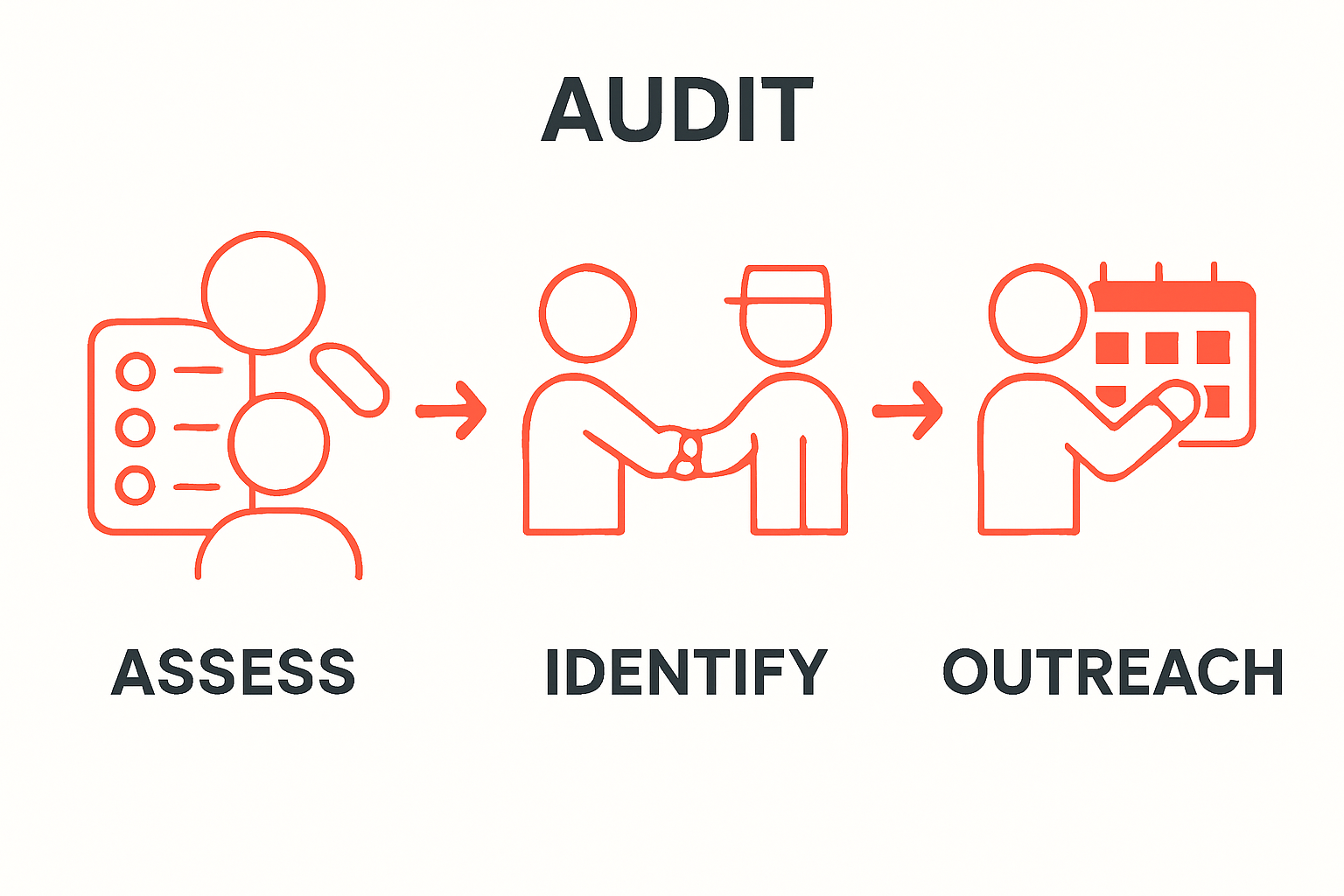
A comprehensive assessment is not a one-time event but an ongoing process. Real estate professionals who consistently evaluate and refine their community engagement strategies will develop more robust, meaningful professional networks that translate into long-term business success.
Step 2: Identify Key Community Stakeholders
Identifying key community stakeholders is a critical step in building robust relationships that will support your real estate professional goals. This process requires strategic thinking, active networking, and a comprehensive understanding of your local community’s diverse ecosystem.
Begin by creating a systematic approach to mapping out potential stakeholders across different sectors. Real estate success depends on understanding the interconnected networks that influence local market dynamics. Your stakeholder identification should encompass a broad range of professionals and community leaders who can provide insights, referrals, and collaborative opportunities.
Start by researching local organizations and groups that represent various community sectors. This includes chambers of commerce, neighborhood associations, business networking groups, local government offices, economic development councils, and professional associations. Each of these entities represents a potential gateway to valuable connections and deeper community understanding.
Enhance your online reputation management strategy as part of your stakeholder identification process. Digital presence can significantly impact how potential stakeholders perceive and engage with you.
Key stakeholder categories to consider include:
- Local business owners and entrepreneurs
- Community leaders and elected officials
- Real estate professionals in complementary fields
- Financial service providers
- Local media representatives
- Educational institution representatives
- Non-profit organization leaders
- Neighborhood association representatives
As you identify potential stakeholders, develop a systematic approach to documenting and tracking these connections. Create a detailed spreadsheet or customer relationship management system that captures essential information about each contact, including their role, organization, contact details, and potential areas of mutual benefit.
Engaging with stakeholders requires a genuine approach. Attend local events, participate in community meetings, and seek opportunities to provide value before expecting anything in return. Building trust is the foundation of meaningful professional relationships.
Your stakeholder identification is successful when you have a comprehensive, well-organized network that represents diverse community perspectives. This network should provide multiple channels for information exchange, referrals, and collaborative opportunities that can enhance your real estate business’s growth and reputation.
Step 3: Develop a Strategic Outreach Plan
Developing a strategic outreach plan transforms your community relationship building from random interactions into a purposeful, systematic approach. This critical step requires careful planning, consistent execution, and a clear understanding of your professional objectives and community needs.
Your outreach strategy must be comprehensive, targeted, and adaptable. Begin by creating a detailed timeline that outlines specific engagement activities, communication methods, and desired outcomes. This roadmap will serve as your guide for building meaningful community connections and positioning yourself as a trusted local real estate professional.
Learn more about converting website visitors into potential community connections to enhance your digital outreach efforts. Online platforms provide powerful tools for expanding your community network beyond traditional networking methods.
Your strategic outreach plan should incorporate multiple communication channels and engagement methods. Consider developing a balanced approach that includes in-person networking, digital communication, community event participation, and targeted professional interactions. Each interaction should be purposeful, demonstrating genuine interest in community development and individual relationships.
Key elements of an effective outreach strategy include:
- Regular attendance at local community and professional events
- Consistent social media engagement with local groups
- Personalized follow-up communications
- Offering value through informative content and resources
- Tracking and documenting relationship development
Implement a systematic approach to tracking your outreach efforts. Create a comprehensive database or customer relationship management system that allows you to monitor interactions, record important details about community contacts, and identify potential opportunities for collaboration or referrals.
Prioritize quality over quantity in your community interactions. Meaningful connections are built through genuine engagement, not superficial networking. Focus on creating authentic relationships by listening actively, understanding community needs, and demonstrating your commitment to local economic and social development.
Successful outreach requires continuous refinement. Regularly assess the effectiveness of your strategy by measuring key performance indicators such as new professional connections, referral rates, community event participation, and overall network growth. Be prepared to adjust your approach based on feedback and changing community dynamics.
A well-executed strategic outreach plan transforms you from a transactional real estate professional into a valued community partner. Your commitment to meaningful engagement will distinguish you in a competitive market and create a strong foundation for long-term professional success.
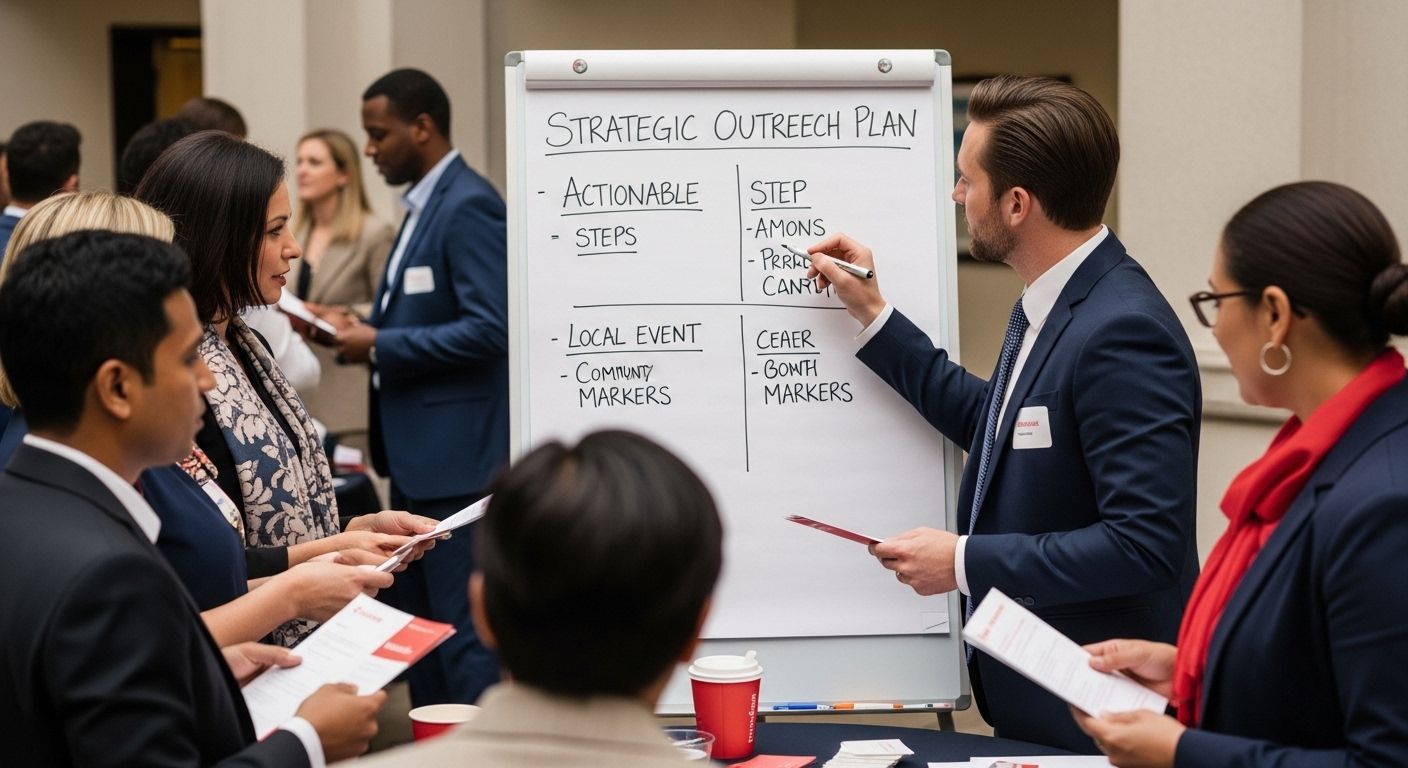
Step 4: Execute Community Engagement Activities
Executing community engagement activities transforms your strategic plan into tangible, meaningful interactions that build trust and credibility within your local network. This critical step requires intentional, consistent effort and a genuine commitment to creating value for your community.
Community engagement is not about selling—it’s about connecting. Start by scheduling regular participation in local events, networking gatherings, and professional meetings. These interactions provide opportunities to demonstrate your expertise, understand community dynamics, and build genuine relationships that extend beyond transactional real estate interactions.
Optimize your online reputation management to complement your in-person engagement efforts. Digital presence amplifies your community involvement and helps create a consistent professional brand.
Develop a diverse range of engagement activities that cater to different community segments. This might include hosting educational workshops about real estate trends, participating in local charity events, offering free community property valuation seminars, or sponsoring neighborhood improvement initiatives. Each activity should provide tangible value and demonstrate your commitment to local development.
Key engagement activities to consider:
- Monthly community information sessions
- Neighborhood cleanup and beautification projects
- Local business networking events
- Real estate market trend presentations
- Collaborative projects with local nonprofits
Document and track your engagement efforts meticulously. Create a comprehensive log of interactions, noting key contacts, discussion points, and potential follow-up opportunities. This systematic approach ensures that your community relationships remain intentional and strategic.
Effective community engagement requires active listening and genuine curiosity. During interactions, focus on understanding community needs, challenges, and aspirations. Ask thoughtful questions, show sincere interest in local developments, and position yourself as a knowledgeable resource rather than a traditional sales professional.
Remember that building community relationships is a long-term investment. Not every interaction will result in immediate business, but consistent, authentic engagement creates a strong professional reputation that generates referrals and opportunities over time.
Your engagement activities are successful when community members begin to view you as a trusted local resource—someone who contributes meaningfully to neighborhood growth and understands the unique characteristics of your local real estate market. Patience, authenticity, and genuine commitment are your most powerful tools in this process.
Step 5: Evaluate Relationship Impact and Adjust Strategies
Evaluating the impact of your community relationship strategies is crucial for continuous improvement and long-term success in real estate professional development. This final step transforms your community engagement efforts from static interactions into a dynamic, responsive approach that evolves with changing community needs.
Measurement is the key to meaningful relationship building. Develop a comprehensive evaluation framework that goes beyond surface-level metrics to capture the depth and quality of your community connections. This requires a systematic approach to tracking, analyzing, and interpreting your engagement efforts.
Learn how to manage your online reputation effectively to support your relationship evaluation process. Digital feedback and online interactions provide valuable insights into your community perception.
Implement a multi-dimensional assessment strategy that includes both quantitative and qualitative measurement tools. Create a detailed tracking system that captures key performance indicators such as referral rates, community event participation, professional network growth, and feedback from local stakeholders. These metrics provide a holistic view of your community relationship effectiveness.
Critical evaluation metrics to track:
- Number of new professional connections established
- Referral sources and conversion rates
- Engagement levels at community events
- Feedback from community stakeholders
- Social media and digital interaction quality
Conduct regular reflection sessions to analyze your collected data. This involves critically examining your current strategies, identifying successful approaches, and recognizing areas that require improvement.
The following table provides an overview of key community engagement evaluation metrics and what they help you measure to assess your relationship-building strategies.
| Metric | What It Measures | Example Outcome |
|---|---|---|
| Number of new connections | Growth of professional network | 15 new contacts/quarter |
| Referral sources & conversion | Success of referral strategies | 10% conversion rate |
| Event engagement levels | Participation and rapport at community events | High attendance/positive feedback |
| Stakeholder feedback | Quality and perception of community relationships | Positive comments/suggestions |
| Social/digital interactions | Online presence and local digital engagement | 200 local social media interactions/month |
| Be prepared to make strategic adjustments based on your findings, demonstrating flexibility and commitment to continuous growth. |
Seek direct feedback from community stakeholders through structured surveys, informal conversations, and professional networking interactions. Create multiple channels for receiving honest input, including anonymous feedback mechanisms that encourage candid responses. This approach provides nuanced insights that numerical metrics might miss.
Your evaluation process should be ongoing and iterative. Treat community relationship building as a dynamic journey, not a destination. Schedule quarterly review sessions to reassess your strategies, incorporate new insights, and realign your approach with evolving community dynamics.
Successful evaluation goes beyond collecting data—it requires thoughtful interpretation and actionable insights. Use your findings to refine your engagement strategies, develop more targeted approaches, and demonstrate your genuine commitment to community development. The most effective real estate professionals view relationship building as a continuous process of learning, adapting, and growing.
Transform Your Community Relationships into Real Results
Are you frustrated by missed opportunities from inconsistent follow-ups and overflowing inboxes, even after applying the strategies outlined in “Building Community Relationships: A Real Estate Guide”? You have invested in community engagement, mapped out your network, and attended countless local events, yet still struggle to capture every lead or keep the connections warm. The real challenge is juggling multiple tasks while trying to build deeper relationships and never letting a valuable contact slip through the cracks.
It’s time to unleash the power of LeadLinker.co and move beyond the barriers holding you back. Our AI platform acts as your tireless partner, qualifying leads, responding instantly to community outreach, and scheduling appointments with ease. Automate your multi-channel communications and ensure your new community relationships are nurtured around the clock. Discover how to turn every engagement into a growth opportunity—try LeadLinker.co now and experience a smarter way to manage your real estate network.
Frequently Asked Questions
What is the first step in building community relationships as a real estate professional?
Building community relationships begins with assessing your current engagement levels. This involves reviewing past networking efforts, participation in community events, and quality of your existing connections to identify strengths and areas for improvement.
How can I effectively identify key stakeholders in my community?
Identify key stakeholders by mapping out local organizations, business owners, community leaders, and relevant professionals. Research local chambers of commerce, neighborhood associations, and professional groups to establish a diverse network that can offer insights and referrals.
What are some effective community engagement activities for real estate professionals?
Engagement activities can include hosting educational workshops, participating in local charity events, sponsoring neighborhood improvement initiatives, and attending community meetings. These activities create genuine connections and demonstrate your commitment to community development.
How should I evaluate the impact of my community relationship strategies?
Evaluate your strategies by developing a framework that includes quantitative metrics like referral rates and community engagement levels, as well as qualitative feedback from community members. Regularly assess your strategies to refine your approach based on insights gained and community dynamics.