
Managing appointments can feel like a full time job for real estate agents. Many professionals spend hours every week just shuffling between calendars and chasing down clients for confirmations. Most people assume better scheduling is all about new apps or fancy tech. That sounds good, but the biggest difference usually comes from six surprisingly simple steps anyone can put into action right away.
Table of Contents
- Step 1: Evaluate Your Current Scheduling Tools
- Step 2: Define Clear Appointment Objectives
- Step 3: Organize Your Calendar Effectively
- Step 4: Communicate Availability To Clients
- Step 5: Implement A Confirmation System
- Step 6: Review And Adjust For Future Improvements
Quick Summary
| Key Point | Explanation |
|---|---|
| 1. Evaluate current scheduling tools | Audit all scheduling platforms to identify inefficiencies and areas for improvement. |
| 2. Define clear appointment objectives | Establish specific and measurable outcomes for each appointment type to enhance focus and effectiveness. |
| 3. Organize your calendar effectively | Implement a colour-coded system and strategic buffer times for appointments to improve productivity. |
| 4. Communicate availability to clients | Offer multiple scheduling options and establish automated confirmation systems to streamline client interactions. |
| 5. Review and adjust scheduling processes | Conduct monthly reviews of scheduling metrics to identify trends and areas for continuous improvement. |
Step 1: Evaluate Your Current Scheduling Tools
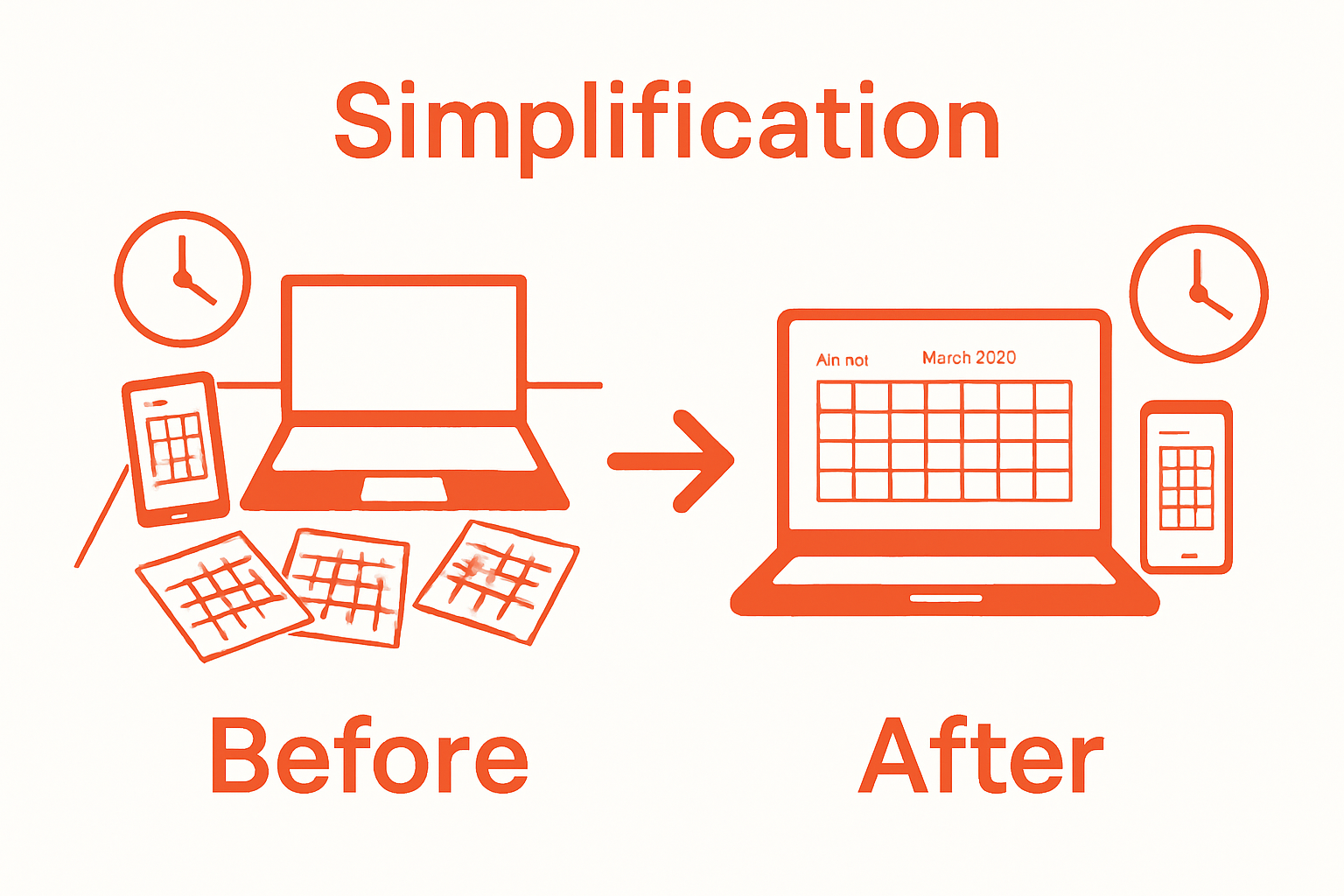
Effective appointment scheduling starts with a critical and honest assessment of your current tools and processes. Real estate professionals often struggle with fragmented scheduling systems that waste time and create unnecessary complexity. The goal of this initial step is to gain a comprehensive understanding of your existing scheduling workflow and identify areas for immediate improvement.
Begin by conducting a thorough audit of all scheduling platforms and methods you currently use. This means mapping out every single touchpoint where appointments are scheduled including your CRM, email calendar, mobile apps, and any manual booking processes. Pay special attention to time spent managing these systems and note where inefficiencies emerge. Are you constantly switching between multiple platforms? Do you find yourself manually confirming appointments or experiencing significant scheduling conflicts?
Discover advanced scheduling strategies that can transform your workflow. According to Harvard Business Review, strategic scheduling can dramatically enhance professional productivity.
The evaluation process requires documenting key metrics such as:
- Average time spent scheduling per week
- Number of platforms used simultaneously
- Frequency of scheduling errors or conflicts
- Client communication response times
- Manual versus automated scheduling tasks
Successful evaluation means identifying not just technical limitations but also understanding how your current approach impacts client relationships and business efficiency. Real estate is a relationship driven industry where responsiveness and professionalism can make or break potential deals. Your scheduling tools should ultimately serve two primary objectives: maximizing your time and creating seamless client interactions.
Once you have a clear picture of your current scheduling ecosystem, you will be prepared to make informed decisions about potential upgrades or integrations that can streamline your workflow and enhance your professional effectiveness.
Below is a table summarizing key verification criteria for effective scheduling tool evaluation, helping you ensure your current system supports professional goals.
| Verification Criteria | Description |
|---|---|
| Time spent scheduling per week | Total average hours dedicated weekly to scheduling tasks |
| Number of platforms used | Count of different apps, tools, or methods currently in use |
| Frequency of errors or conflicts | How often scheduling mistakes or overlaps occur |
| Client communication response times | Time taken to reply and confirm appointments with clients |
| Manual vs automated scheduling tasks | Proportion of tasks handled manually versus by automation |
| Impact on client relationships | Influence of scheduling process on client satisfaction and business outcomes |
| Business efficiency impact | Effectiveness of tools in reducing wasted time and improving workflow |
Step 2: Define Clear Appointment Objectives
Successful real estate meetings require precise and strategic objective setting. This critical step transforms your appointment scheduling from a passive administrative task into a proactive business development strategy. Without well defined objectives, your meetings become unfocused conversations that waste both your time and your potential client’s energy.
Start by establishing specific outcomes for each type of real estate appointment. Different meetings demand different goals whether you are conducting initial client consultations, property viewings, listing presentations, or negotiation sessions. Consider the unique purpose behind each interaction and outline exactly what you want to accomplish. For a first time buyer consultation, your objective might be understanding their precise housing preferences, budget constraints, and timeline. For a seller listing presentation, your goal could involve demonstrating your marketing strategy and establishing trust.
Unlock strategic real estate planning techniques that can elevate your appointment effectiveness. According to goal setting research, objectives work best when they follow the SMART framework: Specific, Measurable, Achievable, Relevant, and Time Bound.
Your appointment objectives should include quantifiable metrics that help you track progress and success. This means going beyond vague intentions and creating concrete measurable targets. For instance, instead of saying “discuss property options” you might specify “identify three properties matching client criteria and schedule follow up viewings within one week”.
Key verification criteria for successful objective setting include:
- Clear written description of meeting purpose
- Specific desired outcomes
- Measurable success indicators
- Predetermined next steps
- Alignment with broader business goals
Remember that objectives are not just about what happens during the meeting but what you want to happen after the meeting concludes. Each appointment should move you closer to a tangible business result whether that means securing a listing, finding a buyer, or building a long term client relationship.
The following table organizes the recommended verification criteria for setting clear appointment objectives, making it easy to ensure objectives are well-defined and actionable.
| Criteria | Purpose |
|---|---|
| Clear written description | Clearly states the purpose of the meeting |
| Specific desired outcomes | Defines what should be achieved or decided by the end of the appointment |
| Measurable success indicators | Outlines metrics or tangible results to determine goal achievement |
| Predetermined next steps | Identifies actions to be taken following the meeting |
| Alignment with business goals | Ensures the meeting objective supports broader professional objectives |
| Post-meeting result orientation | Clarifies how the appointment advances business relationships or targets |
Step 3: Organize Your Calendar Effectively
Effective calendar organization is the backbone of professional real estate success. Your calendar is more than just a scheduling tool it is a strategic roadmap that guides your daily business activities, client interactions, and professional growth. The key is to transform your calendar from a passive recording device into an active management system that maximizes your productivity and minimizes scheduling chaos.
Begin by implementing a color coded system that provides immediate visual clarity about your different types of appointments. Assign specific colors for various meeting categories such as property viewings, client consultations, team meetings, and administrative tasks. This visual strategy allows you to quickly scan your calendar and understand the distribution of your professional activities at a glance. For instance, use green for client meetings, blue for property showings, and red for critical administrative tasks that require uninterrupted focus.
Discover advanced calendar management techniques that can revolutionize your scheduling approach. According to research from the National Institutes of Health, structured digital calendar systems significantly reduce scheduling conflicts and improve professional coordination.
Consider implementing buffer times between appointments to account for travel, preparation, and unexpected delays. Real estate professionals often underestimate transition periods, which can lead to cascading scheduling complications. A standard buffer of 30 minutes between client meetings provides breathing room for documentation, route planning, and potential overruns. This approach prevents the stressful domino effect of running late and maintains your professional reputation for reliability.
Key verification criteria for effective calendar organization include:
- Consistent color coding across all meeting types
- Strategic buffer times between appointments
- Clear categorization of professional activities
- Integrated digital and physical calendar synchronization
- Regular weekly calendar review and optimization
Remember that your calendar is a living document. Schedule a weekly review to assess your time allocation, identify potential inefficiencies, and make necessary adjustments. This proactive approach ensures your calendar remains a dynamic tool that supports your business objectives rather than a static record of past events.
Use the checklist below to confirm that your calendar organization approach is thorough and consistent, supporting both efficiency and productivity.
| Organizing Task | Description |
|---|---|
| Colour coding of meeting types | Assigns colours to easily distinguish types of appointments |
| Strategic buffer times | Schedules breaks to allow for travel or preparation between appointments |
| Clear categorization | Arranges professional activities in logical, organized categories |
| Digital/physical calendar synchronization | Ensures updates reflect across all devices and platforms |
| Weekly review and optimization | Reviews calendar each week to improve time allocation and process |

Step 4: Communicate Availability to Clients
Communicating your availability effectively is a critical skill that transforms potential client interactions from frustrating exchanges to smooth professional experiences. Real estate professionals must develop a strategic approach to sharing their scheduling options that balances accessibility with professional boundaries. The goal is to create a transparent system that allows clients to understand exactly when and how they can connect with you.
Start by establishing multiple communication channels for scheduling. This means offering a comprehensive suite of booking options that cater to different client preferences. Some clients prefer traditional phone calls, while others appreciate the convenience of online scheduling platforms. Implement a digital booking system that provides real time availability updates, allowing potential clients to see open time slots and book appointments directly. This approach reduces back and forth communication and demonstrates your commitment to client convenience.
Learn advanced client communication strategies that can dramatically improve your professional interactions. According to research on client communication, transparent scheduling options significantly improve client satisfaction and appointment attendance rates.
Consider creating an automated response system that provides immediate confirmation and detailed information when clients request appointments. This system should include specific details such as expected response time, potential meeting formats (in person, video call, phone consultation), and what clients should prepare before the meeting. By setting clear expectations upfront, you minimize potential misunderstandings and demonstrate professionalism.
Key verification criteria for effective availability communication include:
- Consistent messaging across all communication platforms
- Clear display of real time availability
- Automated confirmation and follow up processes
- Multiple scheduling channel options
- Transparent communication about response times
Remember that effective availability communication is an ongoing process. Regularly review and update your scheduling systems to ensure they continue meeting both your professional needs and your clients evolving expectations. Your objective is to create a seamless booking experience that reflects your commitment to exceptional client service.
This table presents the recommended verification steps for creating an effective client availability communication system in your real estate practice.
| Communication Element | Function |
|---|---|
| Consistent messaging | Uniform availability details shared across all platforms |
| Real time availability display | Clients can see current open slots for meetings |
| Automated confirmation/follow-ups | Immediate confirmation and further instructions sent automatically |
| Multiple scheduling channels | Offers options like phone, online forms, or apps |
| Transparent response time communication | Clearly states how soon clients will receive responses |
Step 5: Implement a Confirmation System
A robust confirmation system is the linchpin of professional appointment management in real estate. This critical step transforms potential scheduling uncertainties into predictable, reliable interactions that respect both your time and your clients expectations. The primary objective is to create a systematic approach that minimizes no shows, reduces last minute cancellations, and demonstrates your commitment to professional communication.
Begin by developing a multi channel confirmation strategy that provides clients with multiple touchpoints for appointment verification. This means implementing automated confirmations through SMS, email, and potentially automated voice messages. Each communication should include specific details about the upcoming appointment including date, time, location, and any preparatory instructions. The key is to strike a balance between being informative and not overwhelming your client with excessive communication.
Explore advanced appointment management techniques that can streamline your confirmation process. According to research on appointment systems, implementing automated confirmation mechanisms can significantly reduce no show rates and improve overall client engagement.
Design a strategic confirmation timeline that includes multiple reminder intervals. An effective approach typically involves an initial confirmation upon booking, a reminder 48 hours before the appointment, and a final confirmation 24 hours in advance. Each reminder should provide an easy option for clients to confirm, reschedule, or cancel their appointment. This approach demonstrates respect for your clients time while also protecting your professional schedule from last minute disruptions.
Key verification criteria for an effective confirmation system include:
- Automated multi channel confirmation messages
- Clear and concise appointment details
- Multiple reminder intervals
- Easy rescheduling or cancellation options
- Tracking and logging of client responses
Remember that your confirmation system is not just about reducing no shows it is an opportunity to reinforce your professional brand. Each confirmation message is a touchpoint that reflects your attention to detail, technological sophistication, and commitment to exceptional client service. Continuously refine your approach based on client feedback and response rates to ensure your system remains effective and client friendly.
Refer to this table to ensure all key confirmation system elements are implemented for reducing missed appointments and enhancing professionalism.
| Confirmation Step | Benefit |
|---|---|
| Automated multi-channel reminders | Sends confirmations via SMS, email, and voice to improve reach |
| Clear appointment details | Ensures date, time, and location are always included |
| Multiple reminder intervals | Sets reminders at strategic points (e.g., at booking, 48h, 24h before) |
| Easy rescheduling/cancellation | Lets clients easily update or cancel appointments if needed |
| Client response tracking | Tracks confirmations or changes to avoid uncertainty |
Step 6: Review and Adjust for Future Improvements
Continuous improvement is the hallmark of successful real estate professionals. The final step in mastering appointment scheduling involves creating a systematic approach to evaluating and refining your processes. This is not a one time task but an ongoing commitment to professional excellence that requires consistent attention and strategic analysis.
Begin by establishing a monthly review process that thoroughly examines your scheduling performance. Collect and analyze key metrics such as appointment conversion rates, no show percentages, average response times, and client satisfaction scores. Look beyond surface level numbers to understand the underlying patterns and potential areas of improvement. Pay special attention to periods of high scheduling complexity or unusual patterns that might indicate systemic challenges in your current approach.
Discover advanced performance optimization strategies that can transform your professional workflow. According to research on scheduling systems, strategic evaluation can lead to significant improvements in operational efficiency and client engagement.
Develop a structured feedback mechanism that incorporates input from multiple sources. This means collecting insights not just from successful appointments but also from missed opportunities, client interactions, and team members who support your scheduling processes. Create a simple yet comprehensive feedback template that allows for both quantitative ratings and qualitative comments. The goal is to build a 360 degree view of your scheduling effectiveness that goes beyond numerical data.
Key verification criteria for effective review and adjustment include:
- Consistent monthly performance analysis
- Comprehensive metrics tracking
- Multi source feedback collection
- Documented improvement strategies
- Measurable performance benchmarks
Remember that the most successful real estate professionals view their scheduling system as a living, breathing entity that requires constant nurturing and refinement. Each review is an opportunity to eliminate inefficiencies, enhance client experiences, and ultimately drive your business forward. Approach this process with curiosity, openness, and a commitment to continuous learning and improvement.
This table outlines a monthly review checklist to make sure your appointment scheduling continues to improve and adapt to your business needs.
| Review Action | Objective |
|---|---|
| Monthly performance analysis | Regularly tracks and reviews key scheduling metrics |
| Comprehensive metrics tracking | Gathers data from all relevant sources and systems |
| Multi-source feedback collection | Collects feedback from clients and team members |
| Documented improvement strategies | Records actionable steps based on findings |
| Measurable performance benchmarks | Uses specific targets to assess progress and effectiveness |
Transform Your Appointment Scheduling with LeadLinker
Are you struggling with appointment no-shows, manual scheduling errors, or lost time switching between tools? The tips in this article highlight just how much fragmented systems and slow response times can cost real estate professionals. If your biggest challenges are missed opportunities, inefficient scheduling, or communication gaps with leads and clients, it is time to see how technology can change everything.

Experience automated appointment booking, 24/7 AI-powered lead response, and seamless calendar integration with LeadLinker.co. Real estate professionals using LeadLinker eliminate missed appointments by letting an AI assistant handle multi-channel communication, qualify buyers or sellers instantly, and book meetings directly into their calendars. Want to reduce stress and free up more hours for client relationships?
Take control of your workflow and never lose a lead to slow follow up again. Visit LeadLinker.co now and discover how top-performing agents boost conversion rates and save on staffing with smarter, automated scheduling. Ready for fewer no-shows, more meetings, and smoother days? Start transforming your business today.
Frequently Asked Questions
How can I evaluate my current scheduling tools for real estate meetings?
To evaluate your current scheduling tools, conduct a thorough audit of all platforms and methods you use, such as CRM, email calendars, and manual booking processes. Document key metrics like average time spent scheduling and the frequency of scheduling conflicts to identify inefficiencies in your workflow.
What should I include in my appointment objectives as a real estate professional?
Your appointment objectives should be specific, measurable, achievable, relevant, and time-bound (SMART). Clearly define desired outcomes for each meeting type, such as identifying client preferences in consultations or demonstrating marketing strategies in listing presentations.
How can I organize my calendar effectively for real estate appointments?
Implement a color-coded system to categorize different meeting types, assign buffer times between appointments for transitions, and ensure synchronization between your digital and physical calendars. Regular reviews of your calendar can help optimize scheduling further.
What steps can I take to communicate my availability to clients clearly?
Establish multiple communication channels for scheduling, such as phone calls and online booking platforms. Utilize an automated response system to confirm appointments and provide necessary details. Being transparent about your availability ensures clients know when and how to connect with you.